Ridglea Residential Electrician: Common Home Issues

You’re rushing around trying to get ready for work when you flip the bathroom light switch and… nothing. Complete darkness. You try it again – maybe you didn’t flip it hard enough? Still nothing. Now you’re fumbling around in the dark, stubbing your toe on the toilet, and muttering words your grandmother wouldn’t approve of.
Sound familiar?
We’ve all been there. That sinking feeling when something electrical just stops working, usually at the absolute worst possible moment. It’s like your house has a sixth sense for inconvenience – the garbage disposal decides to die right before Thanksgiving dinner, or the outlet in your home office gives up the ghost five minutes before that important Zoom call.
Here’s the thing though… most of us living in Ridglea know our neighborhood pretty well. We know which restaurants have the best tacos (shout out to that little place on Camp Bowie), we know the shortcuts when 30 goes crazy during rush hour, and we definitely know our houses have, well, let’s call them “character traits.”
Some of that character comes in the form of electrical quirks that make you wonder what the previous homeowner was thinking. Did they really think it was okay to have just one outlet in the entire living room? And don’t get me started on those mysterious light switches that seem to control absolutely nothing – I swear every Ridglea home has at least three of those.
But here’s what’s actually happening behind your walls, and why understanding common electrical issues isn’t just about fixing immediate problems – it’s about preventing the kind of disasters that turn a regular Tuesday into a very expensive Tuesday.
Your home’s electrical system is basically the nervous system of your house. When it’s working properly, you don’t think about it at all. But when something goes wrong? Everything else starts falling apart too. That flickering light in the kitchen isn’t just annoying – it could signal a loose connection that’s creating heat, creating fire risk, creating the kind of problem that makes you really appreciate having good insurance.
The tricky part is knowing when to grab a screwdriver and when to grab your phone to call a professional. I mean, changing a light bulb is one thing, but when you’re staring at your electrical panel (you know, that metal box that looks like mission control for a spaceship), suddenly everything feels a lot more complicated.
And let’s be honest – electrical work can be intimidating. There’s something about the possibility of getting shocked, or worse, that makes even the most DIY-confident homeowner pause. Which is smart, actually. Electricity doesn’t mess around, and neither should you when it comes to safety.
But that doesn’t mean you need to call an electrician every time a breaker trips or an outlet stops working. Sometimes the fix really is that simple – you just need to know what you’re looking at and what steps are safe to take on your own.
That’s where things get interesting for us Ridglea folks. Our homes span decades of electrical standards and building codes. You might have a house from the 1950s sitting next to one built last year, and trust me, their electrical personalities are completely different. What works for your neighbor might not work for you, and what seems like a small problem in a newer home could be a sign of something much bigger in an older one.
Over the years, I’ve talked to dozens of local electricians – the good ones who actually know our area, not just the companies that show up when you Google “electrician near me.” They all say the same thing: most electrical problems start small and predictable. A loose outlet here, a flickering light there, a breaker that trips just a little too often…
The homeowners who stay ahead of these issues? They save money, avoid headaches, and sleep better knowing their family is safe. The ones who ignore the warning signs? Well, let’s just say emergency electrical calls are never cheap, and they always seem to happen during holidays or right before vacation.
So whether you’re dealing with something right now or just want to be prepared for whatever your house decides to throw at you next, understanding these common issues – and knowing when you can handle them versus when to call in backup – is probably one of the most practical things you can learn as a homeowner.
Your Home’s Electrical System – The Hidden Highway
Think of your home’s electrical system like the circulatory system in your body – you’ve got this intricate network of pathways carrying power instead of blood, and when something goes wrong… well, you definitely notice.
Most of us take electricity for granted until we flip a switch and nothing happens. That’s when we realize we’re completely dependent on this invisible force flowing through our walls. But here’s the thing – electrical systems aren’t mysterious black magic (though they can feel that way when you’re standing in a dark kitchen at 7 PM).
The Basic Players in Your Electrical Game
Your electrical panel is basically mission control – it’s where power from the utility company gets divided up and sent to different areas of your house. Think of it as a really sophisticated traffic director, making sure electricity goes where it needs to go without causing chaos.
Those circuit breakers? They’re like overprotective parents. The moment they sense too much electrical current flowing through a circuit – maybe you’ve got the space heater, microwave, and hair dryer all running on the same circuit – they shut everything down to prevent damage. Annoying in the moment, but they’re actually saving your house from potential fires.
Then you’ve got outlets, switches, and all the wiring that connects everything together. It’s like having thousands of tiny highways running behind your walls, and just like real highways, they can develop problems over time.
Why Electrical Issues Happen (And Why They’re Sneaky)
Here’s what’s counterintuitive about electrical problems – they often start small and invisible. A loose wire connection might work fine for months, maybe even years, before it becomes a real issue. It’s like a slow leak in your roof that you don’t notice until there’s a water stain on the ceiling.
Age plays a huge role too. If your home was built before the 1980s, chances are it wasn’t designed for our modern electrical demands. Back then, nobody imagined we’d have multiple computers, smart TVs, gaming systems, and about seventeen different phone chargers all running simultaneously. Your electrical system is basically trying to handle a traffic load it was never designed for.
The Safety Reality Check
Let’s be honest about something – electrical work can be dangerous. I’m not trying to scare you, but electricity doesn’t give you a second chance if you mess up. Unlike plumbing, where the worst-case scenario is usually water damage and some soggy carpets, electrical mistakes can cause fires or serious injury.
That said, understanding what’s normal versus what’s concerning can help you make smart decisions about when to call a professional. Some things – like replacing a light switch or outlet cover – are pretty straightforward for most homeowners. Other issues? Yeah, those need professional attention.
Modern Homes, Ancient Problems
What’s fascinating (and sometimes frustrating) is how modern technology creates new versions of old problems. Take GFCI outlets – those outlets with the little test and reset buttons, usually found in bathrooms and kitchens. They’re designed to shut off power in milliseconds if they detect even tiny electrical leaks that could be dangerous around water.
But here’s where it gets confusing – sometimes GFCI outlets trip for reasons that seem completely random. Your bathroom outlet stops working, and you’re wondering if it’s broken or just being overly cautious. Usually, there’s a logical explanation, but finding it… well, that’s where experience comes in handy.
The Ridglea Factor
Living in an established neighborhood like Ridglea means dealing with homes that have character – and electrical systems with, let’s call it, “personality.” Many of these homes were built when electrical codes were different, and they’ve been updated over the decades by various homeowners and contractors with varying levels of expertise.
You might find modern GFCI outlets installed next to original 1950s wiring, or discover that someone added a circuit for a hot tub but never upgraded the main panel to handle the extra load. It’s like archaeological layers of electrical work, each telling a story about the home’s evolution.
The good news? Most electrical issues in residential homes follow predictable patterns. Once you understand the basics – and know when to call for backup – you can keep your home’s electrical system running smoothly without breaking the bank or losing sleep over every flickering light.
When Your Circuit Breaker Keeps Tripping (And It’s Not What You Think)
You know that annoying moment when you’re blow-drying your hair and suddenly half your bathroom goes dark? Most people immediately think “overloaded circuit” – but here’s what your electrician won’t tell you right away: it might actually be a loose wire connection that’s been heating up for months.
Before calling anyone, try this simple test. Turn off everything on that circuit – I mean everything. Reset the breaker. Now plug in just one small device, like a phone charger. If it still trips? You’ve got a wiring issue, not an overload problem. This little trick can save you from unnecessary panic… and help you explain the real issue when you do call for help.
Here’s another insider tip: if your breaker trips immediately when you flip it back on (before you’ve even plugged anything in), that’s usually a dead short. Don’t keep trying to reset it – you’re essentially asking for trouble.
The Outlet That Works Sometimes (Spoiler: It’s Probably GFCI-Related)
Those outlets that seem to have mood swings? They work fine Tuesday morning, then decide to take Wednesday off entirely. Nine times out of ten, there’s a GFCI outlet somewhere in your home that’s thrown a tantrum and taken its friends down with it.
Start your detective work in the most obvious places – bathrooms, kitchen counters, garage, outdoor outlets. Look for those outlets with the little “test” and “reset” buttons. Press reset on every single one you find, even if they don’t look tripped. GFCI outlets can fail in the “off” position without showing any obvious signs.
But here’s where it gets tricky – and this is something most homeowners never realize. That dead outlet in your bedroom might be protected by a GFCI in your garage. Seriously. Builders sometimes wire things in ways that would make a logical person weep. I’ve seen bathroom outlets controlled by kitchen GFCIs, and don’t even get me started on the creative wiring in some older Ridglea homes.
Your Lights Are Dimming (And It’s Not for Romance)
When your lights dim every time the air conditioner kicks on, your house is basically telling you it’s struggling. Think of your electrical system like your body during a workout – if you’re gasping for air every time you climb stairs, something’s not quite right.
The quick fix? Check if you’re running too much on one circuit. But the real issue might be voltage drop – your electrical panel is like a heart that can’t quite pump hard enough to reach all the extremities. This is especially common in homes where the electrical panel is original but the power demands have grown over the decades.
Here’s a practical test you can do safely: note exactly which lights dim and when. Is it just the kitchen lights when the microwave runs? Or is it lights throughout the house when major appliances start up? The pattern tells the story, and it’ll help your electrician zero in on the problem faster.
That Burning Smell You Keep Ignoring
Let’s be honest – we’ve all caught a whiff of something electrical and thought, “I’ll deal with that later.” But here’s the thing about electrical smells: they don’t get better with time, like a fine wine. They get worse, like… well, like potential house fires.
If you smell burning plastic, unplug everything in the area immediately. Then start your investigation. Check outlet covers – do any feel warm to the touch? Look for any discoloration around outlets or switch plates. These are your early warning signs.
Actually, that reminds me… one of the most overlooked culprits is old extension cords. People forget they’ve had that same power strip since 1995, and the internal wiring starts breaking down. If you’ve got any cords that feel warm during use, or have any visible damage to the outer jacket, just toss them. It’s not worth the risk.
The Switch That Controls… Nothing?
Every Ridglea home seems to have at least one mystery switch. You flip it hopefully, expecting something magical to happen, but… nothing. Before you assume it’s broken, grab a flashlight and check if it controls an outlet somewhere in the room. Many switches are wired to control just the top or bottom half of an outlet – it’s actually code in many areas for living rooms.
The real secret? That “useless” switch might actually be your new best friend for controlling lamps.
When Your Breaker Keeps Tripping (And You’re Ready to Lose It)
Okay, let’s be honest – there’s nothing more frustrating than flipping a breaker back on, only to hear that telltale *click* as it trips again thirty seconds later. You’re standing there in your pajamas, holding a flashlight, wondering if your house is trying to burn down or if you’re just cursed.
Most of the time, it’s actually your electrical system doing its job. Breakers trip because they’re protecting you from overloaded circuits. Think of it like… well, imagine your electrical system is a highway, and you keep trying to squeeze eighteen-wheelers down a one-lane road. Something’s gotta give.
The real challenge? Figuring out what’s causing the overload without turning into an amateur electrician (which, trust me, never ends well). Start by unplugging everything on that circuit – and I mean everything. Coffee maker, space heater, that ancient desktop computer you swear you’ll upgrade someday. Then flip the breaker. If it stays on, you’ve got an overload situation. Add things back one at a time until you find your culprit.
But here’s where it gets tricky… if the breaker trips immediately when you flip it back on – before you’ve even plugged anything in – you’ve likely got a short circuit or ground fault. That’s electrician territory, my friend. Don’t mess around with it.
The Great Outlet Mystery: Why Some Just Stop Working
You know what’s weird? When an outlet just… quits. Like, it was working fine yesterday when you plugged in your phone charger, and today it’s as dead as your motivation on a Monday morning.
Before you assume you need to rewire your entire house (because that’s where our minds go, right?), check if it’s connected to a GFCI outlet. These are those outlets with the little “test” and “reset” buttons – usually found in bathrooms, kitchens, and garages. Sometimes one GFCI controls multiple outlets throughout your home, and if it trips, it takes its buddies down with it.
I’ve seen homeowners spend hours troubleshooting a dead bedroom outlet, only to discover the GFCI in their garage bathroom had tripped. It’s like that game where you’re looking for your glasses while they’re sitting on top of your head.
The real challenge comes when you’ve checked all the obvious stuff and the outlet is still dead. Could be a loose wire connection behind the outlet, could be a problem at your electrical panel… honestly, this is another one where calling a professional isn’t giving up – it’s being smart about safety.
Flickering Lights: More Than Just a Horror Movie Effect
Flickering lights are genuinely unnerving, aren’t they? Makes you feel like you’re living in some low-budget thriller. But most of the time, there’s a perfectly reasonable explanation that doesn’t involve ghosts or imminent electrical fires.
The challenge is that flickering can mean so many different things. If it’s just one light fixture, you might have a loose bulb (try tightening it), a failing bulb, or loose wiring in that specific fixture. If it’s multiple lights throughout your home, though… that’s when you need to pay attention.
When your lights dim every time the air conditioner kicks on, that’s actually pretty normal – especially in older homes. Your AC is like that friend who borrows your car and brings it back with an empty gas tank. It’s drawing a lot of power, causing a temporary voltage drop.
But here’s what should concern you: lights that flicker randomly, without any obvious cause. Or if you notice burning smells, warm outlets, or scorch marks around switches. Those are red flags that scream “call an electrician now, not next week.”
The Hidden Challenge: Knowing When to Stop DIY-ing
Look, I get it. YouTube makes everything look doable, and there’s something satisfying about fixing things yourself. But electrical work has this nasty habit of being unforgiving when you mess up.
The hardest part for most homeowners? Recognizing when they’re in over their head. You can troubleshoot, you can check breakers, you can even replace a simple outlet if you know what you’re doing… but when you start second-guessing yourself, when the problem keeps coming back, or when you find yourself Googling “is this normal” at 2 AM – that’s your cue to call in the professionals.
Your safety – and your home’s safety – is worth more than the cost of a service call.
What to Expect During Your Electrical Service Call
Here’s the thing about electrical work – it’s rarely as straightforward as you’d hope. You know how you call thinking it’ll be a quick 30-minute fix, and suddenly your electrician’s explaining why your entire panel needs updating? Yeah, that happens more than you’d think.
Most service calls start with a diagnostic period. Your electrician isn’t being slow or thorough just to rack up hours – they’re actually doing detective work. That flickering light might seem simple, but it could be loose wiring, a failing fixture, or (plot twist) an overloaded circuit that’s been hanging on by a thread.
Expect the initial assessment to take 15-30 minutes, sometimes longer if you’ve got an older home. Those beautiful 1950s houses in Ridglea Hills? They’re charming, but their electrical systems… well, let’s just say they weren’t designed for today’s power-hungry lifestyle. Your electrician might need to trace wiring through walls or check connections in multiple locations.
Don’t be surprised if the problem turns out to be different – or bigger – than what you originally thought. It’s not a bait-and-switch; it’s just reality when dealing with hidden systems that have been doing their thing behind your walls for decades.
Timeline Realities (The Honest Version)
Small fixes – replacing an outlet, installing a new switch, fixing a loose connection – these usually wrap up in 1-2 hours. Pretty straightforward, assuming no surprises lurk behind your walls.
Medium jobs get trickier. Adding new circuits, upgrading outlets to GFCI, or rewiring a room? You’re looking at half a day to a full day, depending on your home’s layout and how cooperative your existing wiring wants to be. Sometimes what looks like a simple addition turns into “Oh, we need to run new wire because this old stuff is… well, let’s replace it.”
Panel upgrades – the big kahuna – typically take 6-8 hours, sometimes spread across two days. Your power will be off during portions of this work, so plan accordingly. Stock up on phone battery packs, maybe arrange to work somewhere else if you’re remote, and definitely don’t plan any dinner parties.
Actually, here’s something nobody tells you: electrical work often reveals other issues. Your electrician might discover knob-and-tube wiring you didn’t know existed, or notice that DIY project from the previous homeowner that’s… let’s call it “creative.” These discoveries can extend timelines, but honestly? You want to know about them.
The Permit Question (Because Someone Always Asks)
Major electrical work requires permits in Fort Worth – panel upgrades, new circuits, significant rewiring. This isn’t your electrician trying to complicate things; it’s about safety and code compliance. The permit process adds a few days to a week to your timeline, but it also means an inspector will verify everything’s done correctly.
Minor repairs and replacements usually don’t need permits. Your electrician will know which is which, but don’t hesitate to ask if you’re curious.
After the Work Is Done
Here’s what normal looks like post-electrical work: everything should function properly immediately. Lights should light, outlets should outlet (that’s not a verb, but you get it). If something’s not working right, speak up before your electrician packs up.
You might notice your breakers are labeled now – that’s not extra; that’s good practice. You’ll probably get some basic maintenance tips too. Listen to these! Things like “don’t overload this outlet” or “if this breaker trips again, call us” aren’t upselling – they’re preventing future headaches.
When to Call Back (Without Feeling Awkward)
Good electricians warranty their work, typically 90 days to a year. If something starts acting up that’s related to what they fixed, don’t hesitate to call. That’s what the warranty is for.
But here’s the thing – if your kitchen outlet stops working six months later and it’s completely unrelated to the bedroom rewiring they did, that’s a separate issue. Don’t feel bad about this; electrical systems are interconnected but problems aren’t always related.
The key is communication. Describe what’s happening, when it started, and mention the previous work. A good electrician will help you figure out if it’s warranty-related or something new that’s decided to join the party.
When Your Home Needs a Little Extra Care
You know that feeling when you finally understand what’s been bothering you about your house? Maybe it’s the way the lights dim when you start the dishwasher, or how you’ve been avoiding that one outlet in the kitchen because… well, something just doesn’t feel right about it. These electrical quirks aren’t just minor annoyances – they’re your home trying to tell you something important.
Living in Ridglea, you’ve probably noticed how our beautiful older homes have their own personalities. That character we love so much? Sometimes it comes with electrical systems that have seen decades of Texas heat, storms, and the inevitable wear that comes with time. It’s not about having a “bad” house – it’s about having a home that needs the right kind of attention.
The thing is, electrical issues have this sneaky way of starting small. That flickering light might seem harmless today, but electrical problems rarely stay put. They tend to grow, spread, and eventually demand attention at the most inconvenient times. I’ve heard too many stories from homeowners who wished they’d addressed that “little thing” before it became a big, expensive thing.
But here’s what I really want you to remember – you don’t have to figure this out alone. Those moments when you’re standing in your kitchen, wondering if that warm outlet is normal, or lying in bed listening to a buzzing sound you can’t quite locate… those moments of uncertainty don’t have to stretch on indefinitely.
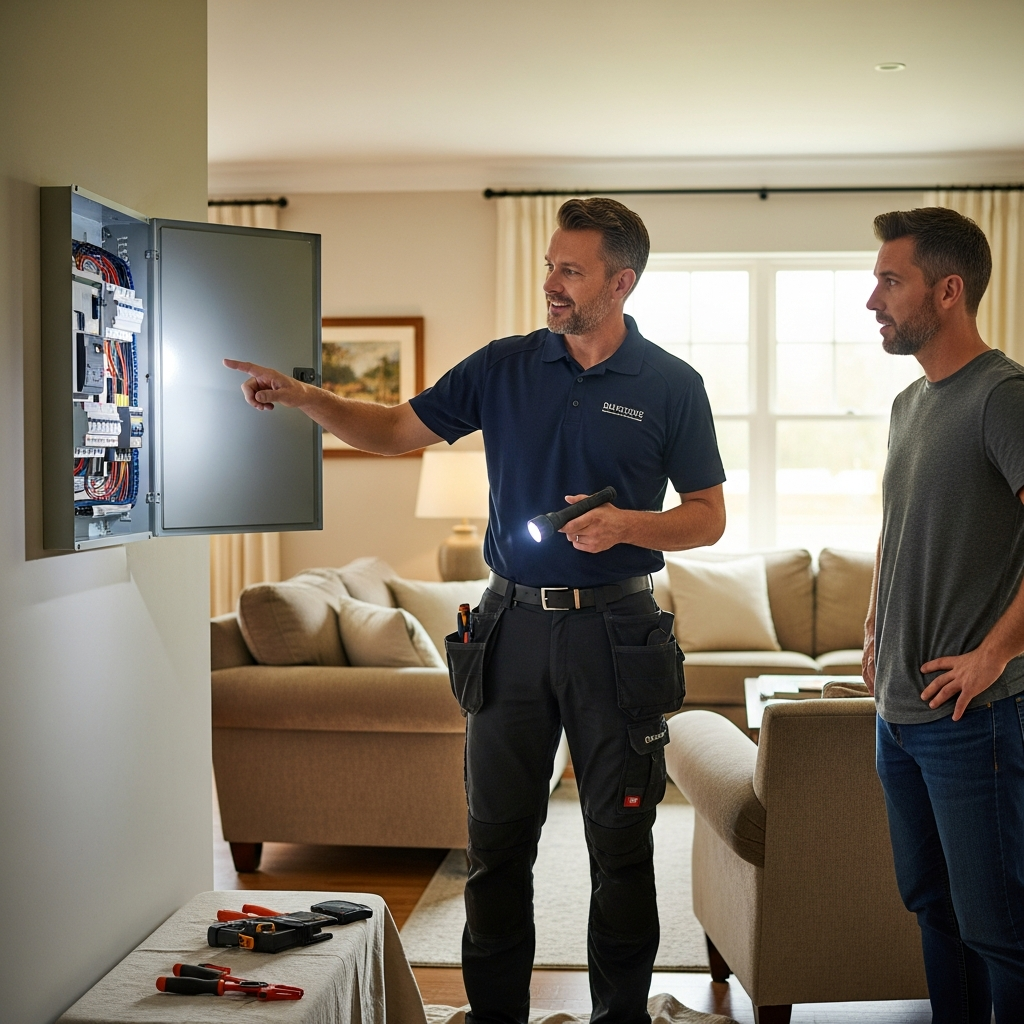
Professional electricians aren’t just there for emergencies (though they’re absolutely essential then too). They’re there for the questions, the concerns, the “am I being paranoid or is this actually something?” conversations. A good electrician will walk through your home, listen to your concerns – even the ones that feel silly – and help you understand what’s normal aging and what needs attention.
Your home should feel safe. It should feel secure. You shouldn’t have to wonder whether using the hair dryer and the coffee maker at the same time is going to trip a breaker… again. You deserve to flip switches with confidence and plug things in without that little voice in your head wondering “what if?”
Ready to Give Your Home the Care It Deserves?
If any of this sounds familiar – if you’ve been living with electrical uncertainty or working around problems that shouldn’t be problems – it might be time for a conversation with someone who can help. Our team understands Ridglea homes, from the charming vintage properties to the newer builds, and we’re here to answer questions, address concerns, and help you create the safe, comfortable home you deserve.
Don’t wait until a small concern becomes a big problem. Reach out today – whether it’s for a quick consultation, a thorough safety inspection, or to finally fix that thing that’s been bothering you for months. Your peace of mind is worth the call, and your home will thank you for it.