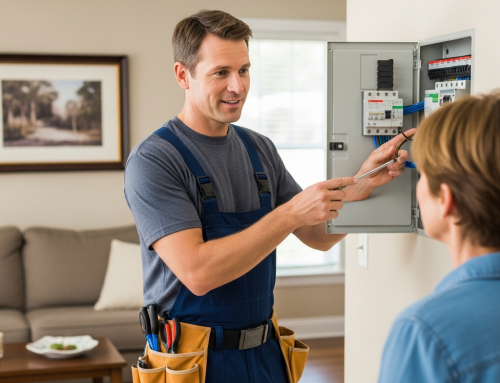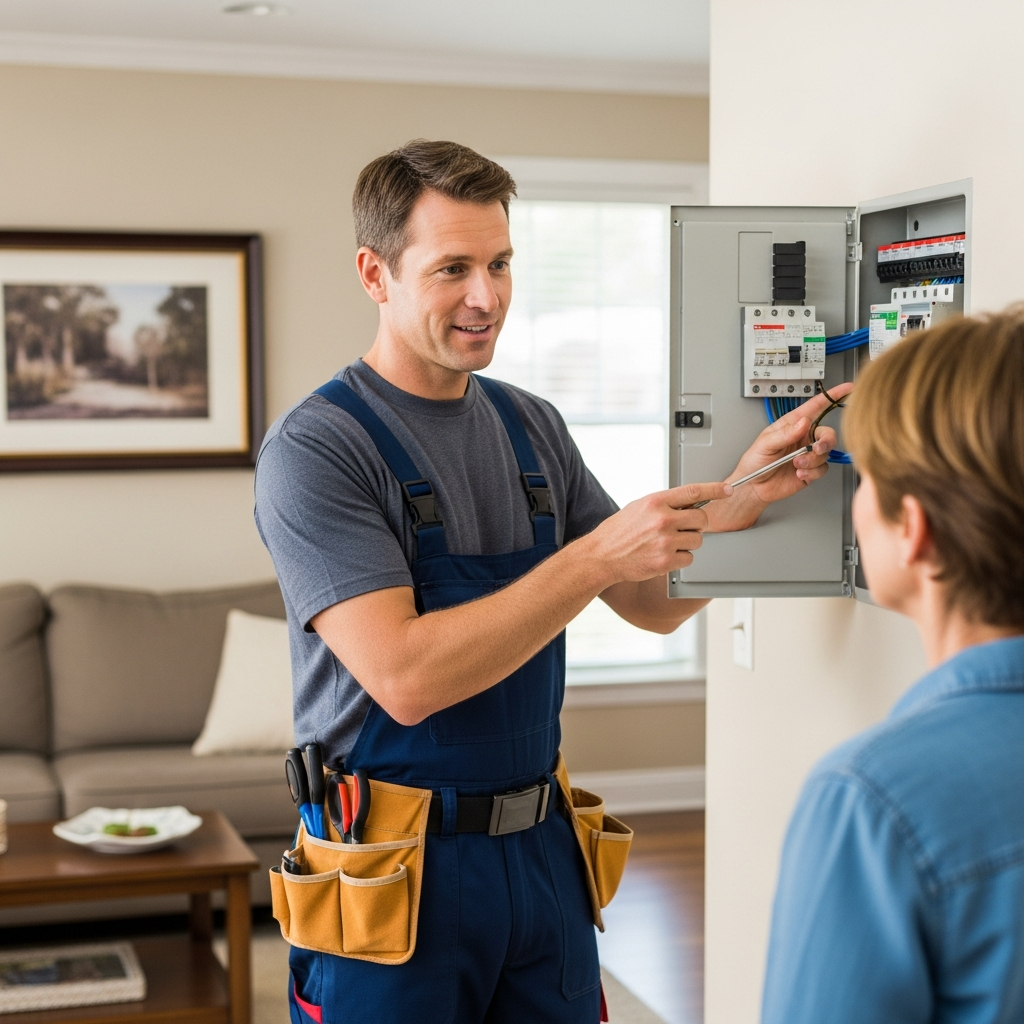
How an Electrical Contractor Plans Safe Installations
You’re flipping the light switch in your hallway for the hundredth time today, and… nothing. Again. The bulb’s fine – you just replaced it last week. But somehow, that innocent-looking switch has turned into your nemesis, leaving you fumbling around in the dark like you’re playing some twisted game of electrical roulette.
Sound familiar?
Here’s the thing though – that flickering light isn’t just annoying. It’s your home’s way of whispering (okay, maybe shouting) that something’s not quite right behind those walls. And trust me, when electricity starts acting up, it’s not exactly forgiving about mistakes.
I’ll bet you’ve stood in your kitchen at some point, maybe making coffee before dawn, and wondered about all those wires snaking through your walls. Are they… safe? Did someone actually plan where they went, or did they just wing it? Because let’s be honest – most of us know absolutely nothing about what happens after we flip that switch.
The scary truth? Not all electrical work is created equal.
You’ve probably heard horror stories – maybe from your neighbor who tried to save a few bucks on that bathroom renovation, or your coworker whose “friend of a friend” electrician left them with outlets that spark like tiny fireworks shows. These aren’t just inconveniences we’re talking about. House fires, electrical shocks, insurance nightmares… the works.
But here’s what’s fascinating (and honestly, pretty reassuring once you understand it): professional electrical contractors don’t just show up and start connecting wires. Nope. There’s this whole intricate planning process that happens before they even touch a single wire – like a chess master thinking fifteen moves ahead.
Think about it this way – when you’re planning a dinner party, you don’t just throw random ingredients together and hope for the best, right? You plan the menu, check what’s in your pantry, figure out timing, maybe even do a practice run of that tricky dessert. Electrical contractors? They’re doing something similar, except instead of worrying about whether the soufflé will fall, they’re making sure your house won’t burn down.
The difference between a contractor who plans properly and one who doesn’t… well, it’s the difference between sleeping soundly at night and lying awake wondering if that weird humming sound from the basement is normal. (Spoiler alert: it’s probably not.)
Here’s what really gets me excited about this topic – once you understand how the pros actually approach electrical installations, everything changes. Suddenly, you’re not just a helpless homeowner crossing your fingers every time you plug in the vacuum. You become someone who can spot red flags, ask the right questions, and make sure your family’s safety isn’t left to chance.
You know those HGTV shows where they’re always running into “electrical issues” that somehow add $10,000 to the budget? Yeah… a lot of that drama could’ve been avoided with proper planning from day one.
So what exactly goes into planning a safe electrical installation? It’s way more involved than you might think – and honestly, it’s pretty clever stuff. We’re talking about load calculations that determine whether your circuits can handle that new hot tub you’re dreaming about. Code requirements that exist for very good reasons (trust me on this one). Site assessments that reveal whether your 1950s wiring is still up for the job.
There’s the whole dance of coordinating with other trades, because apparently electricians can’t just ignore what the plumbers and HVAC folks are doing. Who knew? And then there’s equipment selection – not all breakers are created equal, and neither are outlets, switches, or any of the hundreds of components that keep your lights on and your phone charged.
The best part? Once you get a peek behind the curtain, you’ll never look at that light switch the same way again. Instead of taking electricity for granted (or fearing it), you’ll actually understand the careful thought process that makes it all work safely.
Ready to become the kind of person who impresses electricians with smart questions instead of watching helplessly while they poke around your electrical panel? Let’s talk about how the real pros plan installations that actually keep families safe…
Think of Your Home as a River System
You know how water always finds the easiest path downhill? Well, electricity behaves pretty much the same way – it’s constantly looking for the shortest route back to the ground. And just like a river can carve dangerous new channels if you don’t give it proper banks to follow, electricity will create its own path if you don’t plan for it correctly.
That’s where electrical contractors come in. They’re basically the engineers designing the riverbanks for your electrical system.
The Three Non-Negotiables Every Contractor Lives By
Before any wire gets pulled or outlet gets installed, every electrical contractor has three fundamental principles burned into their brain. Think of these as the holy trinity of electrical work.
Grounding – This is your safety net, literally. Every electrical system needs a clear path back to the earth because electricity always wants to go home. It’s like… imagine you’re at a party and you need to know where the exits are. Grounding gives electricity its exit strategy so it doesn’t get trapped and cause problems.
Load calculations – Here’s where things get a bit mathematical (I know, I know). Contractors have to figure out how much electrical demand your home will actually have. It’s not just counting outlets – they’re thinking about your dishwasher running while someone’s blow-drying their hair upstairs and the AC kicks on. Too little capacity and you’re constantly tripping breakers. Too much and you’re paying for infrastructure you’ll never use.
Code compliance – The National Electrical Code isn’t exactly bedtime reading, but it exists for good reason. These aren’t arbitrary rules – they’re written in response to actual fires, accidents, and “well, that didn’t go as planned” moments from decades of electrical work.
Why Planning Beats Winging It Every Single Time
Here’s something that might surprise you – the actual installation work is often the easy part. It’s the planning phase where contractors earn their keep, and frankly, where most DIY projects go sideways.
A good electrical contractor is part detective, part fortune teller. They’re walking through your space thinking about how you’ll actually live there. Where will you want to plug in your phone charger at 2 AM? What happens when you decide to add that home office in five years? How about when electric vehicles become as common as smartphones?
This is where experience really shows. I’ve seen contractors spot potential problems that wouldn’t occur to most people – like realizing that beautiful kitchen island you’re planning will need its own dedicated circuit, or that your teenager’s bedroom is going to need way more outlets than the minimum code requires (trust me on this one).
The Permit Dance – More Important Than You Think
Okay, let’s talk about permits for a second. I get it – paperwork is boring, and permits feel like bureaucratic hurdles. But here’s the thing… permits aren’t just about following rules. They’re about getting a second set of expert eyes on the plan before anything permanent happens.
When a contractor pulls a permit, they’re essentially saying “here’s what we’re planning to do” to the local electrical inspector. That inspector – who’s probably seen every possible way electrical work can go wrong – gets to review the plan and catch potential issues before they become expensive problems.
Understanding Your Home’s Electrical Appetite
Every home has an electrical personality, if you will. Some houses sip power delicately – maybe it’s a small bungalow with basic appliances and LED bulbs throughout. Others are power-hungry beasts with electric heating, hot tubs, workshop tools, and enough gadgets to stock a Best Buy.
Contractors spend a lot of time figuring out your home’s electrical appetite because getting this wrong is… well, let’s just say it’s expensive to fix later. They’re looking at everything from your HVAC system’s power requirements to whether you might want to install a electric car charger someday.
The tricky part? Your electrical needs aren’t static. What works perfectly today might leave you frustrated in a few years when your lifestyle changes or technology evolves. Smart contractors plan for this – building in some extra capacity and flexibility so your electrical system can grow with you.
It’s kind of like buying a winter coat. You don’t want it so tight you can’t move, but you also don’t want to be swimming in extra fabric. Finding that sweet spot takes experience.
Reading the Invisible: Load Calculations That Actually Work
Here’s something most homeowners never realize – your electrical panel is like your body’s circulatory system. Just as your heart can only pump so much blood before it gets overwhelmed, your electrical system has limits. And trust me, you don’t want to find out what happens when you exceed them.
Smart contractors don’t just eyeball the situation and hope for the best. They pull out their calculators and do the math – every single appliance, every light fixture, even that forgotten outlet in the basement. The rule? Take your total square footage, multiply by 3 watts per square foot for general lighting and receptacles. Then add the big players: 1500 watts for each small appliance circuit in the kitchen, 5000 watts for electric dryers, and don’t even get me started on electric vehicle chargers…
But here’s the insider trick: experienced contractors always plan for what you *might* add later. That hot tub you’ve been dreaming about? The workshop you want to build in the garage? They’re already factoring that in, even if you haven’t mentioned it yet.
The Art of Strategic Circuit Planning
You know how some people can pack a suitcase perfectly while others end up sitting on it to get it closed? Circuit planning is exactly like that – it’s about smart distribution, not just cramming everything in.
The best contractors think in zones. Kitchen circuits stay separate from living areas because – and this is crucial – when you’re running the microwave, toaster, and coffee maker simultaneously on Sunday morning, you don’t want the TV flickering in the next room. Each major appliance gets its own dedicated circuit. Period.
Here’s what they’re really doing behind the scenes: mapping out your daily routines. They know that bedrooms need fewer outlets but require careful placement for bedside lamps and phone chargers. Bathrooms need GFCI protection (those outlets with the test/reset buttons) within three feet of any water source. And laundry rooms? They’re planning for that inevitable upgrade to a larger washer and dryer.
Future-Proofing: The 20-Year Vision
This is where good contractors separate themselves from the rest – they’re not just solving today’s problems. They’re thinking about your life in 2045. Sounds dramatic? It’s not.
Smart contractors are already running conduit for fiber optic cables, even if you’re not ready for it. They’re installing 240V outlets in garages for electric vehicles, whether you drive one or not. Because adding these later means tearing open walls, and nobody wants that headache.
The secret sauce? Oversized service panels. Instead of installing a 100-amp panel that barely meets today’s needs, they’re recommending 200-amp services. Yes, it costs more upfront, but when you want to add that home office, swimming pool, or workshop later, you’ll thank them.
Safety Margins: The Buffer Zone Principle
Here’s something that might surprise you – the electrical code is the absolute minimum standard, not the gold standard. Think of it like speed limits on highways… just because you *can* go 65 doesn’t mean you should in a thunderstorm.
Professional contractors build in safety margins everywhere. If the code says 20% extra capacity, they’re planning for 30%. If a wire is rated for 20 amps, they’re designing the circuit to run at 16 amps maximum. It’s like having insurance for your insurance.
They’re also obsessive about grounding and bonding – the invisible safety nets that protect you from electrical faults. Every metal component gets bonded to the grounding system. Every circuit gets proper GFCI or AFCI protection where required (and honestly, in places where it’s just smart, even if not required).
The Documentation Obsession
You know what separates professional contractors from the rest? They document everything like they’re expecting a safety inspection tomorrow. Because they might be.
They’re creating detailed panel schedules – essentially road maps of your electrical system. Each circuit gets labeled not just with generic terms like “lights” but with specific locations: “Master bedroom outlets, north wall.” They photograph everything before closing up walls. They keep detailed records of wire sizes, conduit runs, and connection points.
This isn’t just professional pride (though that’s part of it) – it’s practical wisdom. When you need repairs or additions years later, these records become gold. The next electrician won’t have to play detective, tracing wires through walls and making educated guesses about what connects where.
When Reality Hits: The Planning Problems Nobody Talks About
You know what’s funny? All the electrical code books in the world won’t prepare you for Mrs. Henderson calling at 7 PM because she “forgot to mention” the century-old knob-and-tube wiring hidden behind her kitchen walls. That’s when you realize planning safe installations isn’t just about calculations and code compliance – it’s about expecting the unexpected and having backup plans for your backup plans.
The truth is, even seasoned contractors get thrown curveballs that make their carefully crafted installation plans look like… well, like something the dog dragged in.
The “Surprise, There’s Asbestos!” Moment
Here’s what happens more often than anyone wants to admit: you’re three hours into a job, ready to run new circuits, when you discover the existing electrical system is basically held together with hope and electrical tape from the Carter administration. Or worse – there’s asbestos insulation wrapped around everything like a toxic Christmas present.
The real solution? Build mystery time into every project estimate. I’m talking 20-30% buffer time and budget for discoveries. Yeah, clients might balk at first, but explain it this way: would they rather pay for potential problems upfront or deal with change orders and delays when you’re elbow-deep in their walls?
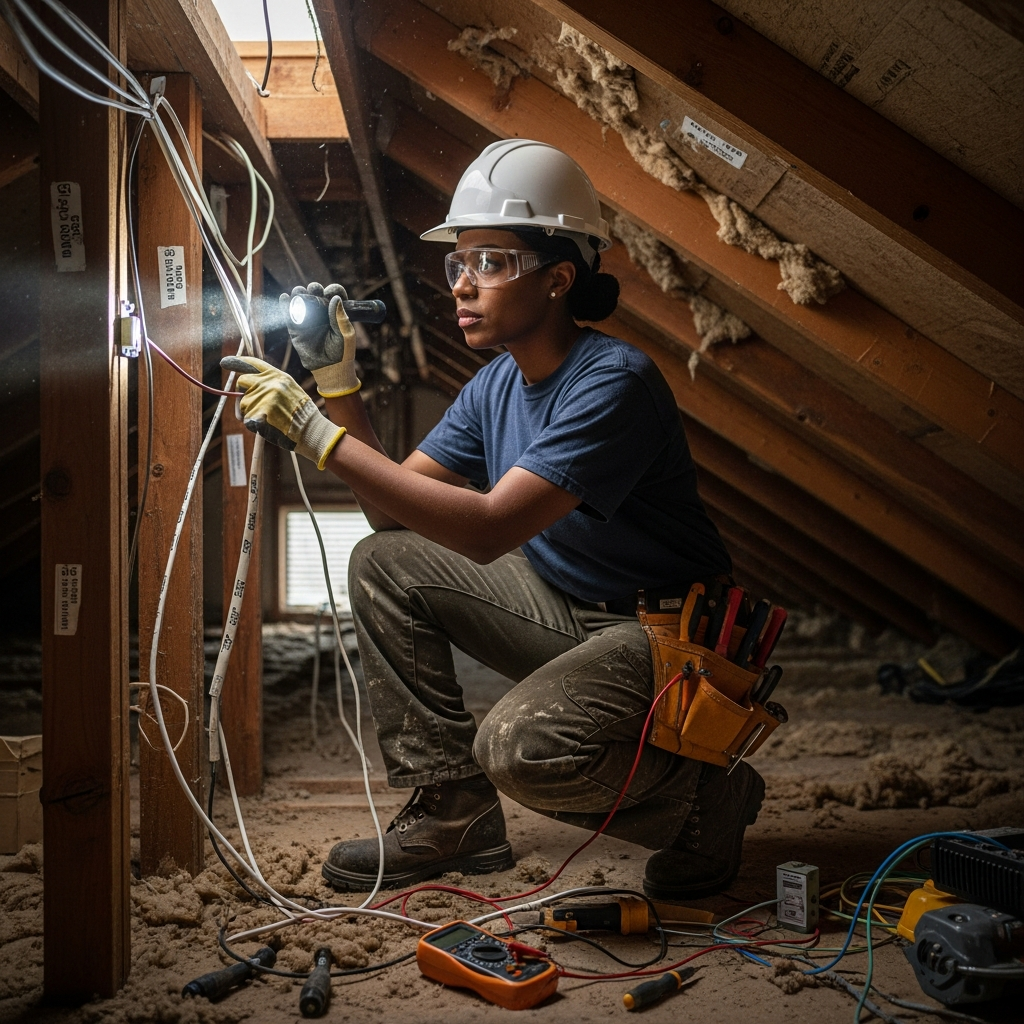
Also – and this might sound obvious but you’d be surprised – always do a thorough walkthrough before quoting. Bring a flashlight. Look in crawl spaces. Ask uncomfortable questions about the house’s history. That extra hour of investigation can save you days of headaches later.
Load Calculations That Don’t Add Up (In Real Life)
The electrical load calculations look perfect on paper. Everything’s within code. Then reality shows up wearing steel-toed boots.
Maybe the homeowner decides they actually want that 240V electric car charger *and* the hot tub *and* the new induction cooktop all running simultaneously during their dinner party. Suddenly your perfectly planned 200-amp service feels like trying to drink from a fire hose through a cocktail straw.
What actually works: Stop relying solely on standard load calculations. Talk to people about how they actually live. Do they work from home and run multiple computers all day? Are they the type to blast the AC while running every appliance known to humanity?
Create what I call a “reality load calculation” – take the code minimums, then add 25-40% for how people actually use electricity. Yes, it means bigger panels and more circuits upfront, but it prevents those “why does my breaker keep tripping?” calls at midnight.
The Permit Process Nightmare
Let’s be honest about permits – they’re often where good installation plans go to die a slow, bureaucratic death. You submit perfectly compliant plans, then get feedback that feels like it was written by someone who learned electrical work from a cereal box.
Different inspectors want different things. City A requires detailed panel schedules; City B just wants a basic layout. The inspector who approved your last three jobs? He retired, and his replacement has… different ideas about code interpretation.
The survival strategy: Build relationships with your local electrical department. Seriously. Bring donuts. Ask questions before submitting plans. Find out what each inspector’s pet peeves are – some hate certain panel brands, others get cranky about wire routing methods that are technically compliant but not their preference.
Keep a “lessons learned” file for each jurisdiction. Document what worked, what didn’t, and any verbal guidance you received. It’ll save your sanity on future projects.
When Clients Change Their Minds (Again)
“Can we move that outlet six inches to the left? And add two more? Oh, and my wife wants under-cabinet lighting now too.”
Client changes aren’t just annoying – they can completely mess up your safety planning. Moving that outlet might affect your GFCI protection scheme. Those extra circuits could overload your planned panel capacity. And don’t get me started on trying to add accent lighting to a job that was originally spec’d for basic receptacles…
The fix: Set clear change order policies from day one, but also design flexibility into your initial plans. Run a few extra conduits. Size panels with room to grow. Plan wire routes that can accommodate additions.
And here’s the uncomfortable truth – sometimes you need to say no. If a change compromises safety or code compliance, explain why it won’t work instead of trying to make everything fit. Your reputation isn’t worth the headache of a failed inspection or, worse, an unsafe installation.
The best installation plan isn’t the one that looks perfect on paper – it’s the one that can handle real-world chaos while keeping everyone safe.
What to Expect During the Planning Phase
Here’s the thing about electrical work – it’s not like ordering takeout where you get instant gratification. A good electrical contractor doesn’t just show up with a toolbox and start pulling wire. There’s actually quite a bit that happens behind the scenes before anyone touches a single outlet.
The initial consultation usually takes anywhere from 30 minutes to two hours, depending on your project’s complexity. Don’t be surprised if your contractor asks what feels like a million questions. They’re not being nosy – they’re trying to understand how you actually *live* in your space. Do you work from home? Planning to add an electric vehicle? Got teenagers who seem to charge seventeen devices simultaneously?
After that first meeting, expect a waiting period. I know, I know… you want everything done yesterday. But your contractor needs time to create detailed plans, pull permits (if required), and source materials. For smaller projects, this might take a week or two. Larger installations? We’re talking potentially a month or more.
Actually, that reminds me – permit timelines are completely out of your contractor’s control. Some municipalities are lightning-fast, others… well, let’s just say they operate on geological time.
The Reality of Installation Timelines
Once work begins, resist the urge to hover. I get it – watching someone rewire your kitchen feels a bit like performing surgery on your house. But constantly asking “how much longer?” won’t make the electrons flow any faster.
A typical whole-house rewire might take anywhere from three to ten days, depending on size, accessibility, and what surprises lurk behind your walls. Because trust me, there are always surprises. That “simple” outlet addition could turn into a half-day adventure if your contractor discovers knob-and-tube wiring from 1952.
Smaller projects move faster, obviously. Adding a few outlets or installing a new panel might only take a day or two. But here’s what many people don’t realize – the actual installation is often the quickest part. It’s all that planning and prep work that takes time.
Normal Hiccups You Should Know About
Let’s talk about what’s completely normal versus what should concern you. Finding outdated wiring? Normal. Discovering your electrical panel is located in the world’s most inconvenient spot? Frustratingly normal. Having to make multiple trips to the supply house because that specific breaker is backordered? Also normal.
Your contractor might need to adjust the timeline if they uncover code violations or safety issues. This isn’t them trying to upsell you – it’s them keeping your house from burning down. When they say something needs to be brought up to code, listen. Your future self will thank you.
Communication gaps happen too. Maybe your contractor doesn’t call when they said they would, or shows up an hour later than expected. These things… they’re annoying but not necessarily red flags. However, if you’re consistently left in the dark about major delays or changes, that’s worth addressing.
Preparing Your Space (And Yourself)
Before work begins, you’ll need to clear access routes and protect your belongings. Think about it – electricians need to access walls, crawl spaces, and potentially your entire electrical panel. That beautiful gallery wall in the hallway? It might need to come down temporarily.
Stock up on patience and maybe invest in some good headphones. Electrical work involves drilling, hammering, and occasionally creative vocabulary when something doesn’t cooperate. If you work from home, consider relocating to a coffee shop for particularly noisy phases.
Moving Forward With Confidence
The best contractors will keep you informed throughout the process, explaining what they’re doing and why. Don’t hesitate to ask questions – though maybe save them for natural break points rather than interrupting mid-task.
You should receive documentation for all work performed, including permits, inspection certificates, and warranty information. Keep these safe. Future you (or future homeowners) will need them.
Most importantly, remember that good electrical work is an investment in your home’s safety and functionality. Yes, it takes time. Yes, it can be disruptive. But when it’s done right, you’ll have reliable, safe power for decades to come. And honestly? That peace of mind is worth a few weeks of inconvenience.
The key is working with someone who respects both the complexity of the job and your need to understand what’s happening every step of the way.
When Safety Meets Peace of Mind
You know what’s funny? Most of us flip light switches hundreds of times without giving it a second thought. But behind every safe electrical installation is someone who’s thought about it… a lot. Someone who’s planned, measured, calculated, and double-checked because they understand that your family’s safety isn’t negotiable.
The truth is, electrical work isn’t just about connecting wires – it’s about connecting your life to reliable, safe power. When a skilled contractor walks through your space, they’re not just seeing where outlets should go. They’re seeing load calculations, code requirements, potential hazards, and future needs all at once. It’s like watching a chess master think five moves ahead, except the stakes are your home’s safety.
What really strikes me is how much goes on behind the scenes that we never see. The permit applications, the careful selection of materials rated for your specific needs, the methodical testing… There’s something reassuring about knowing that level of care exists, isn’t there?
And here’s the thing about proper planning – it actually saves you money in the long run. Sure, cutting corners might seem cheaper upfront (we’ve all been tempted), but electrical shortcuts have a way of becoming expensive problems later. Sometimes dangerous ones.
I think about the contractors I’ve met over the years, and the best ones all share something in common: they genuinely care about doing it right. They’re the ones who’ll explain why certain approaches matter, who won’t rush through a job just to get to the next one. They understand that your electrical system needs to work reliably for decades – not just pass inspection today.
The planning process might seem overwhelming if you’re facing electrical work at your home or business. All those codes and calculations, the permit requirements, the coordination with other trades… But that’s exactly why you want someone who knows how to navigate all of it smoothly. Someone who’s done this dance many times before.
What I find most comforting is knowing that when electrical work is planned and executed properly, you can trust your system completely. No wondering if that new outlet is safe, no concerns about whether your panel can handle that new appliance. Just reliable power when you need it, where you need it.
We’re Here When You Need Us
If you’re dealing with electrical needs – whether it’s a simple outlet installation or a complete panel upgrade – you don’t have to figure it all out alone. The planning process, the code requirements, the safety considerations… it’s a lot to wrap your head around.
That’s where we come in. Our team has helped countless homeowners and businesses navigate electrical projects safely and efficiently. We’re not just here to do the work – we’re here to explain the process, answer your questions (even the ones you think might be silly), and make sure you feel confident about every step.
Ready to talk about your electrical project? Give us a call or send us a message. We’d love to discuss how we can help make your electrical goals a safe reality. No pressure, no hard sell – just honest conversation about what you need and how we can help make it happen.