How Electrical Wiring Problems Can Increase Fire Risk
You’re lying in bed at 2 AM when you smell something… off. Not quite smoke, but that metallic, burning scent that makes your stomach drop. You pad through the house in your pajamas, checking the stove (off), the dryer (empty), that weird outlet in the hallway that always feels warm to the touch (still warm, actually… maybe too warm?).
Sound familiar? That middle-of-the-night panic when something just doesn’t seem right with your home’s electrical system – it’s more common than you’d think. And honestly? Your instincts are probably spot-on.
Here’s the thing most of us don’t want to think about: the electrical system humming quietly behind your walls is either your home’s silent guardian or its biggest threat. Every time you flip a switch, plug in your phone charger, or fire up the coffee maker, you’re asking a network of wires, outlets, and connections to handle power that could literally burn your house down if something goes wrong.
I know, I know – that sounds dramatic. But stick with me here.
The National Fire Protection Association doesn’t mess around with statistics, and their numbers are… well, they’re the kind that make you want to check every outlet in your house right now. We’re talking about tens of thousands of house fires every year – fires that destroy homes, displace families, and sometimes worse. And the kicker? Most of these could’ve been prevented if someone had just paid attention to the warning signs their electrical system was practically screaming at them.
But here’s what really gets me: we’ve all become so comfortable with electricity that we barely think about it anymore. It’s like driving – you do it every day without really considering that you’re piloting a two-ton machine at 65 mph. Electricity feels safe because it’s invisible, predictable, contained. Until it isn’t.
You know that outlet that sparks a little when you unplug the vacuum? Or the circuit breaker that trips every time you run the microwave and the toaster at the same time? That light switch that’s warm to the touch, or the extension cord you’ve been using as a “temporary” solution for… oh, about three years now?
Yeah, those aren’t just minor annoyances. They’re your electrical system’s way of sending up flares.
The tricky part about electrical fires is that they don’t always announce themselves with dramatic sparks and immediate flames. Sometimes they’re slow burns – literally. A loose connection behind a wall might spend months getting gradually hotter, slowly charring the wood around it, building up to that moment when everything goes from “slightly concerning” to “call 911” in a matter of seconds.
And here’s what really keeps me up at night (besides that mysterious burning smell): most homeowners have no idea what to look for. We can spot a leaky faucet, a squeaky door, or a crack in the driveway. But electrical problems? They’re sneaky. They hide behind walls, inside outlet boxes, in places we never see until it’s too late.
That’s exactly why I wanted to pull back the curtain on this stuff. Not to scare you – though honestly, a healthy respect for your electrical system isn’t a bad thing – but to give you the knowledge you need to spot trouble before trouble finds you.
Over the next few minutes, we’re going to walk through the most common electrical problems that increase fire risk in homes just like yours. I’ll show you the warning signs that are easy to miss (and the obvious ones you might be ignoring). We’ll talk about which problems you can handle yourself – spoiler alert: not many – and when it’s time to call in a professional before something goes seriously wrong.
Most importantly, you’ll learn how to think about your home’s electrical system the way it deserves to be thought about: as something that needs attention, respect, and occasional maintenance. Just like your car, your roof, or your relationships.
Because here’s the truth – electrical fires are devastating, but they’re also largely preventable. And prevention? It starts with understanding what you’re looking at when something seems… not quite right.
Your Home’s Nervous System (And Why It Sometimes Short-Circuits)
Think of your home’s electrical system like your body’s nervous system – it’s got pathways carrying energy to every corner, powering everything from your morning coffee maker to that lamp you always forget to turn off. And just like your nervous system, when something goes wrong… well, things can get dangerous pretty quickly.
Most of us flip switches and plug things in without giving it much thought. Which makes sense – electricity is invisible, and when it’s working properly, it’s beautifully silent. But here’s the thing that might surprise you: electricity really, really wants to find the easiest path to the ground. Always. It’s like water flowing downhill, except water won’t burn your house down if it takes an unexpected detour.
The Heat Problem (It’s Not What You Think)
Here’s where things get a bit counterintuitive – and honestly, this confused me for years until an electrician explained it with a brilliant analogy. Electrical fires aren’t usually caused by sparks flying around like some Hollywood movie. Most of the time, it’s about heat. Slow, steady, sneaky heat.
When electricity flows through a wire, it’s like cars driving down a highway. If the highway’s in good shape and there’s plenty of room, traffic flows smoothly. But what happens when you’ve got construction, potholes, or you’re trying to squeeze too many cars down a road that wasn’t built for rush hour traffic? Everything slows down, gets congested, and… things heat up.
That’s exactly what happens with damaged or overloaded wiring. The electricity has to work harder to get where it’s going, and that extra effort creates heat. And heat plus flammable materials – like the wood framing in your walls – well, you can see where this is heading.
When Good Wires Go Bad
Electrical wiring doesn’t usually fail overnight. It’s more like that favorite pair of jeans you’ve had forever – the breakdown happens gradually, often in places you can’t see.
The insulation around wires (think of it as the wire’s protective jacket) can crack, get chewed by rodents – yes, mice apparently find copper quite tasty – or simply break down over time. When that happens, you’ve got exposed copper wire that might touch other wires, metal, or even wooden structures. That’s when electricity starts looking for alternative routes, and not all of those routes are safe.
Age is a huge factor here. Homes built before the 1970s often have wiring that was perfectly fine for its time but wasn’t designed for today’s electrical demands. We’re asking these systems to power flat-screen TVs, computers, microwaves, and about seventeen different phone chargers – loads they were never meant to handle.
The Overload Reality
Actually, that reminds me of something my neighbor discovered the hard way… She kept blowing fuses every time she used her space heater and hair dryer at the same time. Turns out her 1960s electrical panel was basically saying, “I can’t handle this much demand – I’m tapping out.”
Circuit breakers and fuses aren’t just annoying obstacles – they’re your electrical system’s emergency brake. When they trip, they’re protecting you from a potentially dangerous overload situation. Ignoring repeated trips or – heaven forbid – bypassing them with a higher-rated breaker is like removing the speed governor from your car because you want to go faster. Technically possible, but not exactly wise.
The Invisible Danger
Here’s what makes electrical fire risk so tricky: most of the warning signs happen inside your walls where you can’t see them. That slight burning smell that comes and goes? The outlet that’s warm to the touch? These aren’t just minor annoyances – they’re your house trying to tell you something important.
The scary part is that electrical problems can smolder for hours or even days before actually igniting. Unlike a stovetop fire that announces itself immediately, electrical fires often start small and hidden, giving them time to really take hold before anyone notices.
And here’s something that really drives the point home – according to electrical safety experts, faulty wiring causes more home fires than any other single electrical issue. Not space heaters, not overloaded outlets (though those are problems too), but the wiring itself. The stuff we never see, never think about, until something goes very wrong.
Know the Warning Signs Before It’s Too Late
Look, I’m going to be straight with you – most people ignore the early warning signs until something goes seriously wrong. But you’re smarter than that, right?
Start with your circuit breakers. If they’re tripping frequently, that’s not just annoying… it’s your home’s way of screaming for help. Sure, maybe you’ve got too many holiday lights plugged in, but if it keeps happening with normal usage? Time to call an electrician. And here’s something most people don’t know: if you have to reset the same breaker more than once in a month, you’ve got a problem that won’t fix itself.
Check your outlets – actually get down there and look at them. Scorch marks around the openings? That’s arcing, and it means electricity is literally jumping where it shouldn’t. The plastic should be cool to the touch (well, room temperature anyway). If an outlet feels warm or hot, unplug everything immediately and don’t use it until a professional takes a look.
The Flickering Lights Mystery Solved
You know how in horror movies, flickering lights mean something scary’s about to happen? Well, in real life, they often mean something expensive is about to happen to your wallet – or worse, something dangerous to your family.
But not all flickering is created equal. If lights dim when you turn on a major appliance like your vacuum or microwave, that’s usually normal (though it might mean your electrical panel needs an upgrade). What you really need to worry about is random flickering when nothing’s changed, or lights that get brighter and dimmer without any pattern.
Here’s a trick electricians use: turn off all the lights on a circuit except one. If that single light still flickers, you’ve probably got a loose connection somewhere in the wiring. If it stops flickering, the problem might be too many lights drawing power on that circuit.
Extension Cord Reality Check
I get it – we all use extension cords. They’re convenient, and sometimes you just need power where there isn’t an outlet. But let’s talk about doing it safely, because I’ve seen way too many people treat extension cords like permanent wiring solutions.
First rule: extension cords are temporary. If you’ve had one running across your floor for six months, it’s time to install a proper outlet. Second rule: match the cord to the job. That little indoor extension cord? It’s not meant to power your space heater, no matter how much you want it to reach your favorite chair.
Look at the gauge number on your extension cord – lower numbers mean thicker wire that can handle more power. A 12-gauge cord can handle up to 20 amps, while a skinny 16-gauge cord maxes out around 13 amps. Your hair dryer probably draws 12-15 amps, so… you do the math.
And please, for the love of all that’s good, don’t daisy-chain extension cords. Plugging one into another is like asking for trouble to come find you.
When DIY Becomes Don’t-Try
I’m all for DIY projects – there’s something satisfying about fixing things yourself. But electrical work isn’t like painting a room or installing a shelf. The difference between doing it right and doing it wrong can literally be life and death.
Here’s where you should absolutely call a professional: anything involving your main electrical panel, adding new circuits, or working with 240-volt outlets (like for electric dryers or stoves). Also, if you’re dealing with aluminum wiring (common in homes built between 1965-1973), don’t touch it. Aluminum wiring connections can loosen over time and create serious fire hazards – this needs special connectors and techniques that most homeowners don’t know about.
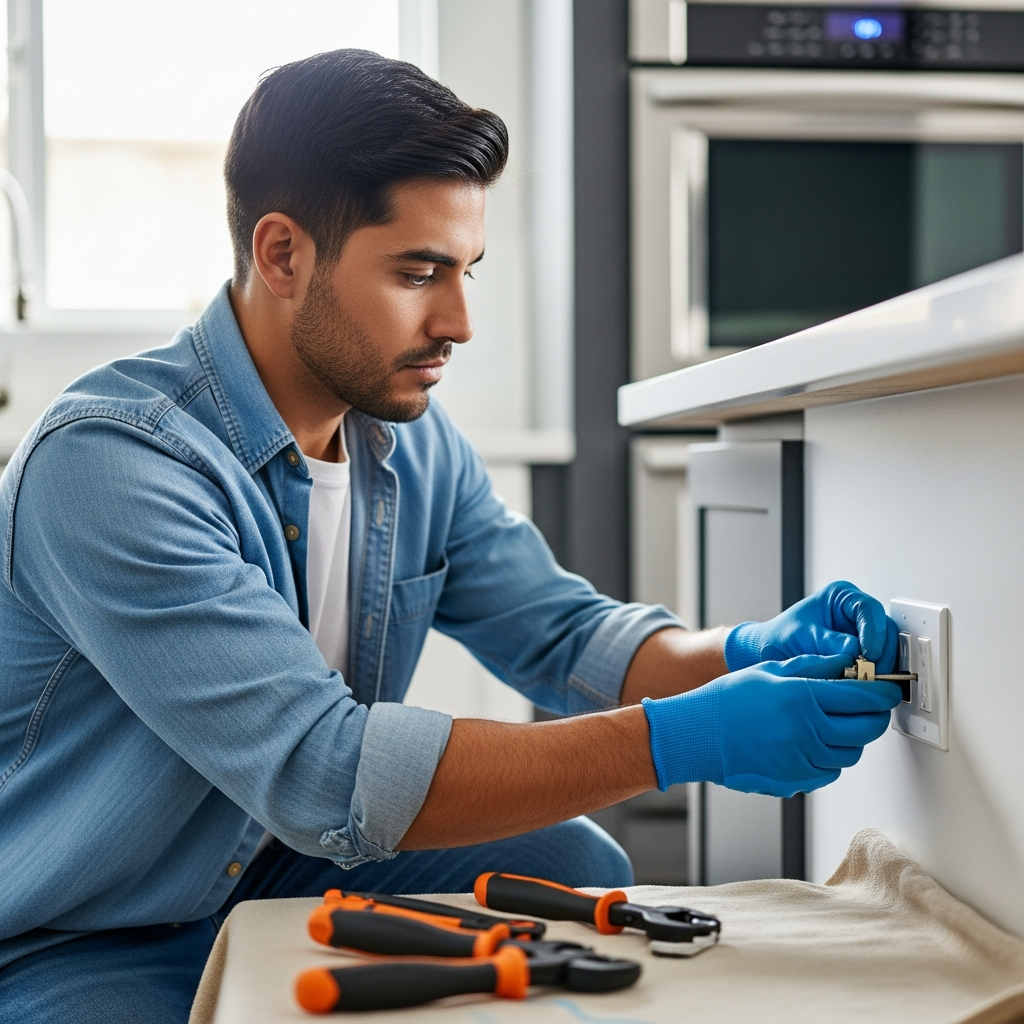
But there are some things you can handle safely. Replacing a standard outlet or light switch is usually straightforward – just turn off the power at the breaker first and test with a voltage tester to make sure it’s really off. Actually, let me repeat that: always test with a voltage tester. Don’t trust the breaker label – I’ve seen too many mislabeled panels.
The Power of Prevention
Look, the best fire prevention strategy is staying ahead of problems. Have your electrical system inspected every few years, especially if your home is over 20 years old. Yeah, it costs money upfront, but it’s way less expensive than dealing with fire damage… or worse.
And here’s something insurance companies don’t always tell you: many policies require electrical inspections for older homes. Better to be proactive than sorry when you need to file a claim.
When You’re Not Sure If That Sparking Outlet Is “Normal”
Let’s be honest – most of us don’t exactly have electrical engineering degrees hanging on our walls. So when you see a tiny spark when plugging something in, or notice that one outlet feels warm to the touch, you’re left wondering: is this just how electricity works, or is my house about to burn down?
Here’s the thing that trips up almost everyone: minor electrical issues often feel normal until they’re not. That occasional flicker when the air conditioner kicks on? The way you have to wiggle the plug just right to get it to work? We adapt to these quirks like they’re just part of our home’s personality.
The challenge is that electrical problems are sneaky. They don’t announce themselves with dramatic fanfare – they whisper. A loose connection might work perfectly fine for months, then suddenly decide to overheat on a random Tuesday afternoon when you’re at work.
The “I Can Handle This Myself” Trap
YouTube has convinced us we can fix anything, hasn’t it? And sure, changing a light bulb or replacing a simple switch cover isn’t rocket science. But here’s where people get into trouble – they assume all electrical work exists on the same difficulty spectrum.
I’ve seen too many stories that start with “I thought I’d just replace this outlet real quick” and end with emergency room visits or insurance claims. The problem isn’t that you’re not capable – it’s that electricity doesn’t give you a practice round. There’s no gentle learning curve where you gradually work up to the dangerous stuff.
The solution isn’t to never touch anything electrical. It’s about knowing your limits and – this is crucial – understanding that those limits might be smaller than you think. If you’re dealing with anything beyond the most basic replacements, or if you feel even a tiny bit unsure, call someone. Your pride will recover from hiring an electrician. Your house might not recover from a mistake.
When Warning Signs Feel Like False Alarms
You know what’s really frustrating? When you finally decide to take that warm outlet seriously and call an electrician, only to have them show up and everything seems fine. The outlet’s cool, nothing’s sparking, and you feel like you’ve wasted everyone’s time.
But here’s what I’ve learned from talking to actual electricians (and from my own embarrassing false alarm experiences) – intermittent problems are often the most dangerous ones. That outlet that was warm yesterday but seems fine today? It’s probably still developing whatever issue made it warm in the first place.
Don’t let one “normal” day convince you to ignore what you observed. Keep a simple log – yeah, I know, who has time for another list? But just jot down when you notice something odd. “Kitchen outlet warm, 3pm Tuesday.” “Basement lights flickered when dishwasher started.” These patterns help electricians identify problems that might not be obvious during a quick inspection.
The Overwhelm of “Everything Needs Fixing”
Sometimes you start looking into one electrical issue and realize… oh no. The whole house needs work. The outlets are old, the wiring looks questionable, and suddenly you’re staring at estimates that make your mortgage payment look reasonable.
This is where a lot of people either panic-spend or completely shut down and do nothing. Neither approach serves you well.
Start with safety, not perfection. Ask your electrician to prioritize the list – what needs to happen immediately, what should happen this year, and what can wait. Most electrical problems don’t require everything to be fixed at once. Yes, that 1960s electrical panel should probably be updated eventually, but if it’s functioning safely right now, you can plan for that expense rather than panic about it.
Making Peace with Professional Help
Maybe the biggest challenge is admitting when we’re out of our depth. There’s something about electrical work that makes us feel like we should understand it better than we do. After all, we flip switches every day – how complicated can it be?
The truth is, you don’t need to understand how electricity works to keep your home safe. You just need to recognize when something’s not right and know who to call. Think of it like your car – you don’t need to be a mechanic to know when that weird noise means trouble.
And here’s a perspective shift that might help: hiring an electrician isn’t admitting defeat. It’s being smart with your most valuable assets – your home and your family’s safety.
What to Expect During an Electrical Safety Assessment
So you’ve recognized some warning signs and you’re ready to take action – that’s honestly the hardest part. But let’s be real about what comes next, because I don’t want you walking into this with unrealistic expectations.
A thorough electrical inspection isn’t something that happens in twenty minutes while you’re making coffee. We’re talking about a process that typically takes 2-4 hours for an average home, sometimes longer if your place is older or larger. The electrician will need to check your main panel, test outlets throughout the house, examine visible wiring, and assess your overall electrical load.
Here’s what might surprise you – they’ll probably find *something*. Don’t panic. Most homes have at least minor electrical issues, especially if they’re more than 20 years old. It’s like going to the dentist… you know there’s probably going to be at least one cavity, right?
Timeline Reality Check
If you’re expecting same-day fixes for everything, I need to pump the brakes a little. Simple issues – like replacing a faulty outlet or fixing a loose connection – can often be handled on the spot. But bigger problems? That’s where things get more complicated.
Major panel upgrades can take anywhere from a full day to several days, depending on what needs to be done. Rewiring sections of your home… well, that’s looking at weeks, not days. And if permits are required (which they often are for substantial work), add extra time for inspections and approvals.
The good news? Your electrician should prioritize safety issues. If they find something that poses an immediate fire risk, they’ll typically address the most dangerous problems first, even if it means coming back later for the less urgent stuff.
Understanding the Costs
Let’s talk money – because I know that’s weighing on your mind. Electrical work isn’t cheap, but it’s one of those things where cutting corners can literally cost you everything.
Basic outlet repairs might run you $100-200. Panel upgrades? You’re looking at $1,500-4,000 depending on your home’s needs. Partial rewiring can range from $2,000-8,000, while whole-house rewiring… that’s a significant investment, often $8,000-15,000 or more.
I know those numbers might make your stomach drop a little. But here’s how I think about it – it’s insurance. Really expensive insurance, but insurance nonetheless. And unlike your regular insurance, this actually prevents the problem rather than just paying for it afterward.
Living Through the Work
If you’re facing major electrical work, you’re probably wondering about the disruption. Will you need to move out? Will you be without power for days?
For most electrical projects, you can stay in your home. The power might be off for periods throughout the day – sometimes a few hours at a time – but rarely for entire days. Your electrician should give you a heads up about when to expect outages so you can plan accordingly.
Pro tip: charge all your devices the night before work begins, and maybe invest in a cooler if your fridge will be off for extended periods. It’s the little things that make the process more bearable.
The Follow-Up Plan
Once the immediate safety issues are resolved, don’t just forget about your electrical system. Think of this as the beginning of a better relationship with your home’s wiring, not a one-and-done fix.
Most electricians will recommend follow-up inspections, especially if you’ve had major work done. This isn’t them trying to squeeze more money out of you – it’s genuinely good practice. Electrical systems settle and age, and catching small issues before they become big ones is always the smarter play.
Moving Forward with Confidence
Look, dealing with electrical problems isn’t fun, and it’s rarely convenient. But once you’ve addressed the safety issues, you’ll sleep better knowing you’ve dramatically reduced your fire risk.
Keep copies of all your electrical work permits and inspections – they’re valuable for insurance purposes and future home sales. And remember, modern electrical systems are incredibly reliable when properly installed and maintained. You’re not signing up for constant repairs by fixing things now.
The peace of mind that comes with knowing your electrical system is safe? That’s worth more than any price tag.
You know, when I think about all the electrical issues we’ve covered – from those flickering lights that seem almost charming to the more serious problems like overloaded circuits and faulty wiring – it really comes down to one thing: your peace of mind matters.
Taking Control of Your Home’s Safety
Here’s the thing… most of us live with these little electrical quirks for way too long. That outlet that sparks occasionally? We just avoid using it. The breaker that trips every few weeks? We reset it and move on. But deep down, there’s always that nagging worry in the back of your mind.
And honestly? That worry is your intuition talking. It’s worth listening to.
I’ve seen too many families who wish they’d acted sooner – not because something terrible happened (thankfully), but because they spent months or even years feeling anxious about their home’s electrical system. That’s no way to live, especially in the place where you’re supposed to feel most safe and comfortable.
Your Home Should Feel Like a Haven
The beautiful thing about electrical problems is that they’re fixable. Unlike some home issues that require major overhauls or break the bank, most electrical safety concerns can be addressed relatively quickly by the right professional. Sometimes it’s as simple as updating a few outlets or replacing an old panel. Other times, yes, it might require more extensive work – but even then, you’re investing in something that protects everything else you care about.
Think of it this way: you wouldn’t ignore a weird noise your car was making, right? Your home’s electrical system deserves the same attention. Actually, probably more – since you can pull over with a car, but your house… well, that’s where you sleep at night.
You Don’t Have to Figure This Out Alone
If you’ve been reading this and feeling a little overwhelmed – maybe recognizing some of these warning signs in your own home – take a breath. You’re not expected to become an electrical expert overnight. That’s what professionals are for.
The smartest thing you can do right now is simply acknowledge what you’ve learned and take one small step forward. Maybe that’s scheduling an electrical inspection, or finally calling someone about that outlet that’s been acting up, or getting a second opinion on work that was done years ago.
Whatever’s been keeping you up at night, electrically speaking… you don’t have to live with that uncertainty anymore.
Ready to get some answers? Our team has helped hundreds of homeowners just like you create safer, more reliable electrical systems. We’re not here to sell you anything you don’t need – we’re here to help you understand what’s going on and give you options that make sense for your situation and budget.
Give us a call, and let’s talk about what’s happening in your home. Sometimes a quick conversation can put your mind at ease. Other times, we might recommend having someone take a look. Either way, you’ll know where you stand – and that’s always better than wondering.
Your home should be your safe space. Let’s make sure it stays that way.