How Electricians Diagnose Hidden Electrical Issues

You flip the light switch and… nothing. Again. This is the third time this week the kitchen lights have decided to play hide and seek, and you’re starting to wonder if your house is haunted – or worse, if you’re about to get hit with a massive repair bill.
Sound familiar? We’ve all been there. That sinking feeling when something electrical just isn’t quite right, but you can’t put your finger on what’s wrong. Maybe it’s lights that flicker when you run the microwave, outlets that work sometimes but not others, or that weird burning smell that comes and goes faster than you can track it down.
Here’s the thing – and this might surprise you – most electrical problems aren’t actually visible. Sure, you might spot a obviously fried outlet or a switch plate that’s literally smoking (please call someone immediately if that’s happening), but the real troublemakers? They’re hiding behind your walls, lurking in junction boxes, slowly degrading connections that worked perfectly fine… until they didn’t.
It’s kind of like having chest pain and trying to figure out if it’s heartburn or something more serious. You know something’s off, but without the right tools and knowledge, you’re basically guessing. And with electricity – well, guessing wrong can be expensive at best, dangerous at worst.
That’s where electricians become detectives.
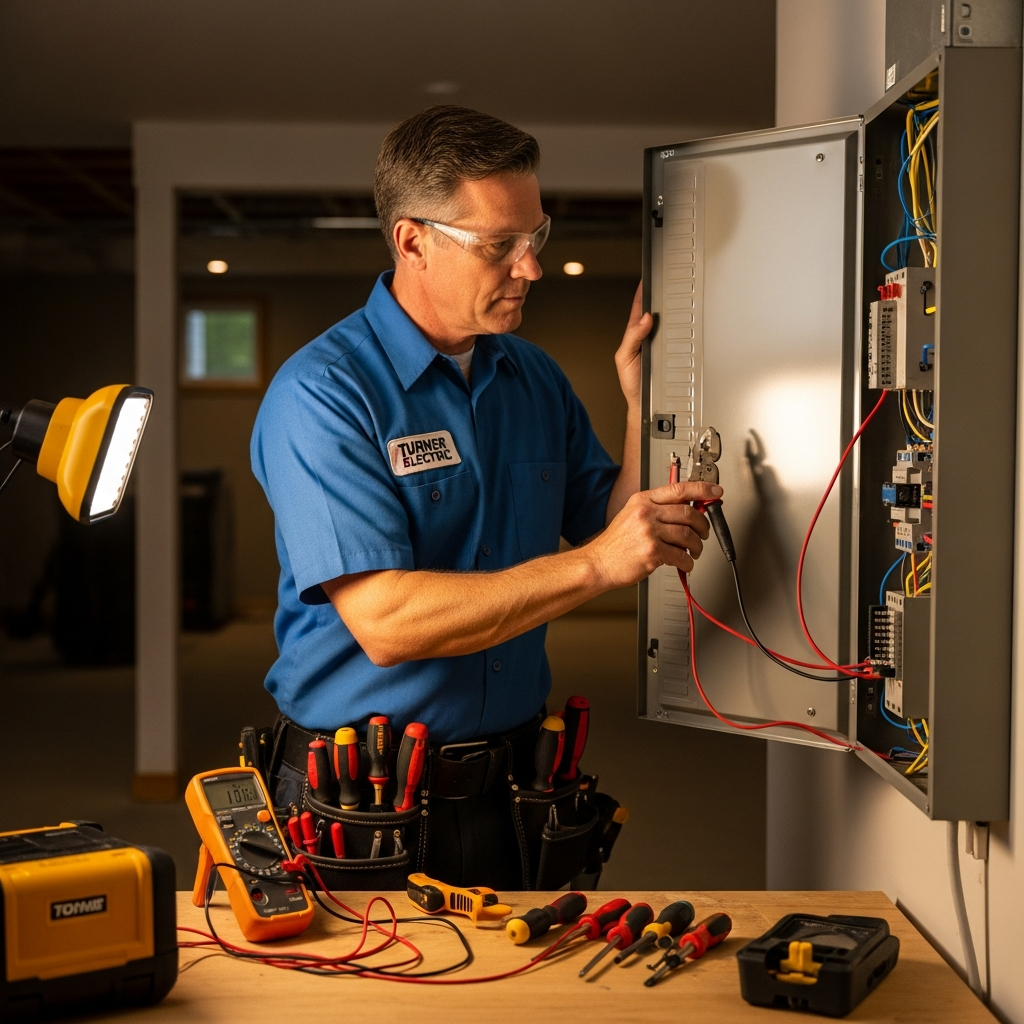
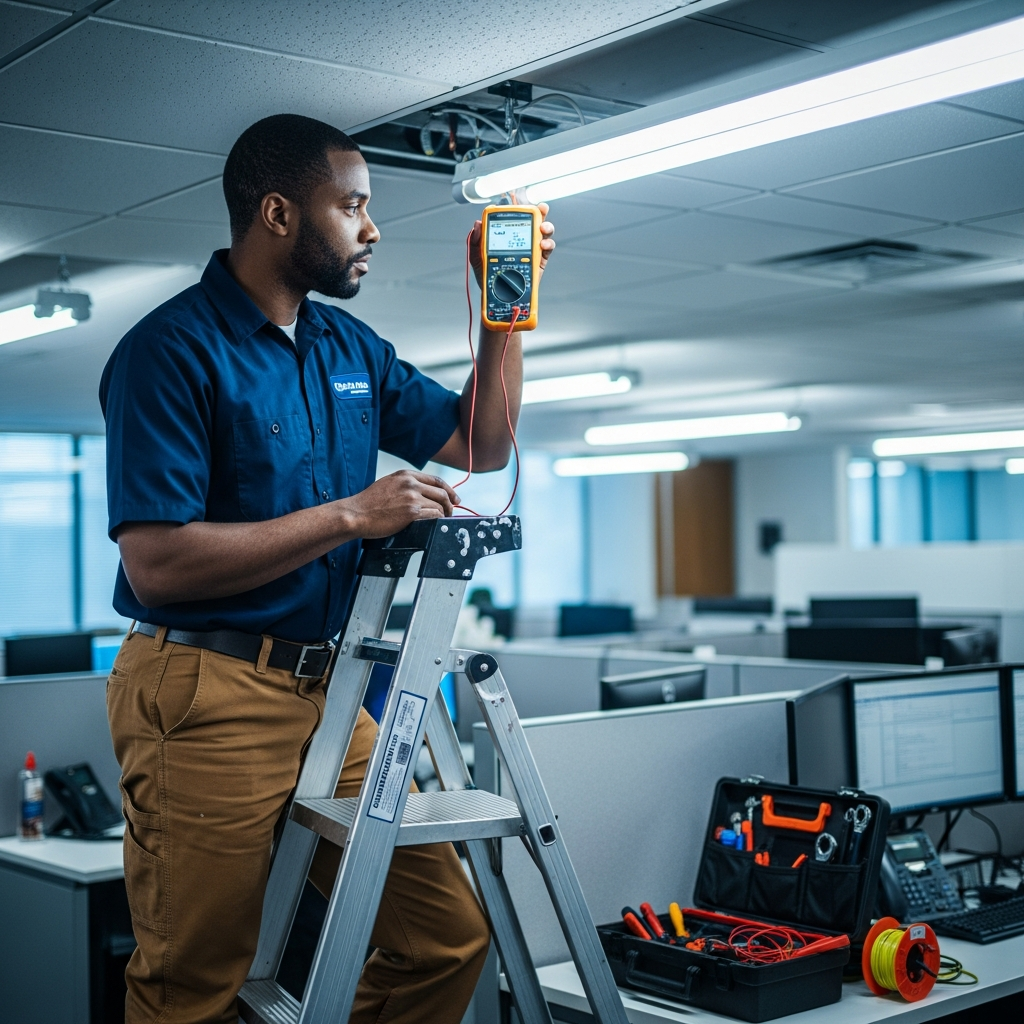
Think about it – they show up to your house with what looks like a toolkit from the future, armed with gadgets that can “see” electricity flowing through your walls. They’re not just changing light bulbs (though they’ll do that too). They’re forensic investigators, piecing together clues that most of us would never even notice.
The outlet that’s warm to the touch? That’s not just quirky – it’s evidence. The breaker that trips randomly? Another clue. The fact that your vacuum cleaner works in the living room but makes the lights dim in the bedroom? Plot twist in the electrical mystery novel that is your home’s wiring.
But here’s what really matters to you: understanding how they work their magic can save you serious money and stress. When you know what an electrician is actually looking for, you can spot warning signs early – before that flickering light becomes a house fire, before that “sometimes” outlet becomes a “never” outlet, before that small electrical hiccup becomes a whole-house rewiring project.
And let’s be honest, electrical work can feel intimidating. When someone starts throwing around terms like “ground fault” and “arc fault” while holding a device that beeps mysteriously at your walls, it’s easy to feel like you’re at their mercy. But when you understand their process – even just the basics – you become a more informed homeowner. You can ask better questions, make smarter decisions, and avoid that awful feeling of wondering if you’re being taken for a ride.
Plus, there’s something oddly satisfying about understanding how things work, isn’t there? Like finally figuring out why your car makes that weird noise, or why your WiFi always cuts out in that one corner of the house. Knowledge is power – literally, in this case.
So whether you’re dealing with an electrical mystery right now, or you just want to be prepared for when (not if) something electrical goes sideways in your home, you’re in the right place. We’re going to walk through how electricians actually diagnose hidden electrical problems – the tools they use, the signs they look for, the process they follow.
You’ll learn what those fancy meters actually do (spoiler: they’re not magic wands, though they might as well be), why your electrician is poking around in places that seem completely unrelated to your problem, and how to tell the difference between a quick fix and a symptom of something bigger lurking behind your walls.
Think of this as your backstage pass to the electrical detective show happening in homes everywhere. By the time we’re done, you’ll never look at a flickering light the same way again.
The Detective Work Behind Your Walls
You know that feeling when your car makes a weird noise, but only when you’re turning left on Tuesdays? Electrical problems can be just as maddening – and honestly, way more mysterious. Unlike plumbing where you can usually see the leak (eventually), electrical issues love to play hide and seek behind drywall, inside panels, and throughout the maze of wiring that snakes through your home.
Think of your electrical system like your body’s circulatory system. You’ve got main arteries – those thick cables coming from your panel – branching into smaller vessels that feed every outlet, switch, and fixture. When something goes wrong, the symptoms might show up far from the actual problem. That flickering light in your kitchen? The real culprit could be a loose connection in your basement, or even a failing breaker that’s slowly giving up the ghost.
Why Hidden Problems Are Actually Pretty Common
Here’s something that might surprise you – most electrical issues start small and stay hidden for months, sometimes years. It’s not like a burst pipe that announces itself with a dramatic flood. Instead, you get these little hints: lights that dim when the AC kicks on, outlets that work… sometimes, or that one circuit breaker that seems a bit moody.
The tricky part is that electricity is invisible (obviously), and it’s constantly moving through your system whether you’re using it or not. A connection can be loose enough to cause problems but still make contact most of the time. It’s like having a wobbly table leg – everything seems fine until you put pressure in just the wrong spot.
The Challenge of Modern Homes
Actually, let me back up for a second… modern homes are electrical marvels compared to houses from even 30 years ago. We’ve got smart switches, USB outlets, whole-home surge protection, and enough gadgets plugged in to power a small village. But all this convenience comes with complexity.
Your grandfather’s house might have had 30 circuits. Your house? Probably double that, minimum. Each circuit is like a separate highway, and when traffic gets backed up on one, it can affect the others in ways that aren’t immediately obvious.
Plus – and this is where it gets really fun – electrical codes have changed dramatically over the decades. So you might have sections of your home wired to 1970s standards connected to sections wired to current codes, all trying to play nicely together. It’s like having parts of your neighborhood with different traffic rules.
The Language of Electrical Problems
Electrical systems speak in symptoms, not words. A GFCI outlet that keeps tripping might be crying for help about moisture somewhere in the circuit. Lights that flicker could mean anything from a loose bulb (fingers crossed) to an overloaded circuit, failing connections, or even problems with your main panel.
The really sneaky issues are the ones that happen intermittently. Maybe your garbage disposal works perfectly… except when it’s humid. Or your bedroom outlets cut out, but only when you’re running the microwave and the hair dryer at the same time. These patterns are clues, but they require someone who knows how to read the electrical tea leaves.
Heat, Vibration, and Time – The Triple Threat
Here’s something most homeowners don’t realize: electrical connections hate three things above all else – heat, vibration, and time. Every time electricity flows through a loose connection, it creates a tiny bit of heat. That heat expands the metal, which cools and contracts, making the connection even looser. It’s like a really slow-motion electrical death spiral.
Throw in the normal vibrations from your home settling, appliances running, and even heavy trucks passing by, and connections that seemed solid during installation can work themselves loose over years.
The most frustrating part? These problems often develop so gradually that you adapt without realizing it. You unconsciously avoid using certain outlets, you automatically jiggle that one light switch, or you’ve just accepted that the kitchen lights dim when the dishwasher starts. Your brain is remarkably good at working around electrical quirks… until suddenly it can’t.
Understanding these fundamentals helps explain why electrical troubleshooting isn’t just about flipping breakers and checking outlets. It’s about understanding how your entire system works together – and where it might be quietly falling apart.
Start With the Obvious (But Check It Thoroughly)
Look, I know you’re probably thinking “of course I checked the obvious stuff” – but hear me out. Some of the sneakiest electrical gremlins hide behind what seems like simple fixes. That flickering light? Sure, swap the bulb first, but also wiggle it while it’s on. If the flicker changes, you’ve got a loose connection that’s slowly cooking itself to death.
Check your circuit breakers too, but don’t just look – actually flip them off and back on. Sometimes they’ll *look* like they’re in the “on” position but they’re actually sitting in that weird middle ground. It’s like when your teenager says they cleaned their room but really just shoved everything under the bed.
The Touch Test (When It’s Safe)
Here’s something most people don’t think about – your electrical system talks to you through temperature. Warm outlets, switch plates, or breaker panels? That’s your house whispering “help me” before it starts screaming.
Run your hand along walls near outlets without actually touching them. You’re feeling for heat signatures that don’t belong. A consistently warm spot on a wall might mean wiring is working overtime behind the drywall. Just remember – if something feels actually hot (not just warm), step away and call a professional. We’re playing detective here, not daredevil.
Listen to Your House’s Electrical Heartbeat
Your home’s electrical system has a rhythm, and when that rhythm changes… well, that’s when you need to pay attention. Dimming lights when the AC kicks on? That could mean your electrical panel is struggling to keep up – like an aging heart working too hard.
But here’s a pro tip most people miss: listen for the sounds that don’t belong. A faint buzzing from an outlet, clicking from switches when you’re not using them, or that weird humming from your breaker box. These aren’t just quirks – they’re symptoms. Document when you hear them. Is it always at night? Only when certain appliances run? Pattern recognition is your friend here.
The Load Detective Work
This is where it gets interesting – and where you can actually solve some mysteries yourself. Grab a notebook (or use your phone, I’m not judging) and map out what happens when. When you run the microwave AND the hair dryer, does something else shut off?
Try this: turn off everything in your house. I mean everything – unplug what you can, flip switches, make it dark and quiet. Then slowly add things back one at a time. It’s like elimination diet for your electrical system. You might discover that your “random” breaker trips aren’t random at all – they happen when you hit a specific combination of loads.
The Circuit Mapping Game
Most homes have electrical panels that look like they were labeled by someone who spoke in code. “Kitchen” might control half the living room and that weird outlet in the garage. This confusion isn’t just annoying – it can hide problems.
Spend a weekend mapping your actual circuits. Get a helper, some sticky notes, and a simple outlet tester (they’re like ten bucks at any hardware store). Have your helper flip breakers while you test every outlet, switch, and light fixture. You’ll probably discover some… creative wiring choices from previous owners.
Actually, that reminds me – while you’re doing this, take photos of your breaker panel with everything labeled correctly. Future you will thank present you when something trips at 11 PM on a Sunday.
When Your Sleuthing Hits a Wall
Sometimes your detective work will point to problems that need professional eyes. Maybe you’ve traced weird voltage fluctuations to a specific area, or you’ve found warm spots that don’t make sense, or – and this is important – you smell that metallic, electrical burning smell even faintly.
Don’t feel defeated when you hit these moments. You’ve done the valuable work of narrowing down the problem. When you call an electrician and say “I’ve isolated the issue to this specific circuit, and here’s what I’ve tried,” you’re not just saving money – you’re getting better service because they can focus their expertise where it’s actually needed.
The key is knowing when to step back. If your investigation reveals anything involving the main panel, underground wiring, or situations where multiple circuits are affected in ways that don’t make sense… that’s when you hand over the magnifying glass to someone with the right tools and insurance.
When the “Obvious” Isn’t Obvious at All
Here’s the thing about electrical troubleshooting – what looks like a slam dunk often turns into a head-scratcher. You’d think a dead outlet would be simple, right? Check the breaker, maybe swap the outlet, call it a day. But then you discover the problem’s actually a loose wire connection three rooms away… or a GFCI that tripped in the basement bathroom that somehow controls half your kitchen.
The challenge isn’t just finding the problem – it’s fighting the urge to jump to conclusions. Most of us (electricians included) want to fix things fast. We see symptoms and our brains immediately start connecting dots that might not actually connect. That flickering light? Must be a bad bulb. Except it’s not. It’s a loose neutral wire that’s creating voltage fluctuations throughout that entire circuit.
The “Intermittent Issue” Nightmare
Nothing – and I mean nothing – frustrates electricians more than problems that come and go. Your outlets work fine all morning, then randomly stop working after lunch. The lights flicker, but only on Tuesdays when it’s humid. Okay, maybe not that specific, but you get the idea.
These intermittent issues are like trying to catch smoke. The problem happens when you’re not looking, then mysteriously resolves itself before anyone can investigate. Temperature changes, humidity, vibration from foot traffic – all these factors can make loose connections or failing components act up sporadically.
The solution? Good electricians have learned to be detectives here. They’ll recreate conditions when possible – load up circuits to generate heat, check connections during different weather conditions, use monitoring equipment that can capture problems over time. Sometimes they’ll even install temporary logging devices that record voltage and current patterns over several days.
The “Everything’s Connected to Everything” Problem
Modern homes aren’t wired like they used to be. Back in the day, each room might have had its own simple circuit. Now? You’ve got GFCI protection, AFCI breakers, smart switches, LED drivers, and circuits that snake through the house in ways that would make your grandfather’s electrician weep.
That means when something goes wrong, the source could be anywhere. Your bathroom outlet stops working, but the problem’s actually in the kitchen where moisture got into a wire nut. Or your bedroom lights dim when you run the microwave because someone used the wrong gauge wire twenty years ago and you’re just now pushing the system hard enough to notice.
The real challenge here isn’t technical – it’s time and cost. Tracing these interconnected problems takes patience and systematic testing. Each connection point, each junction box, each device in the circuit becomes a potential culprit.
When Technology Fights Back
Here’s something that trips up even experienced electricians: modern electrical devices that don’t play nice with diagnostic tools. LED bulbs that create electrical noise, making it harder to trace wiring paths. Smart switches that hold residual charge and give false readings. Variable frequency drives in appliances that create harmonics throughout your electrical system.
Traditional troubleshooting methods assume predictable loads and straightforward electrical behavior. But when your dimmer switch is essentially a tiny computer, and your refrigerator has more processing power than the space shuttle… well, things get complicated.
The Solution Most People Don’t Want to Hear
Sometimes – actually, more often than anyone wants to admit – the real solution involves more investigation than anyone budgeted for. That “quick fix” becomes a proper diagnostic session with specialized equipment, methodical testing, and documentation.
The electricians who consistently solve these tricky problems? They’ve learned to slow down. They use thermal cameras to spot hot connections, oscilloscopes to analyze complex electrical patterns, and circuit tracers that can distinguish between similar wire paths.
But here’s what really sets them apart – they communicate throughout the process. They explain what they’re finding, why certain tests take time, and what the options look like. Because the worst challenge isn’t technical… it’s when everyone’s frustrated because a “simple” problem turned into something more complex.
The best electricians have learned that being honest about uncertainty actually builds more trust than pretending everything’s straightforward. “I need to run a few more tests” beats “this should be quick” when it clearly won’t be.
What to Expect During the Diagnostic Process
You’re probably wondering how long this whole thing is going to take – and honestly, that’s the first question most homeowners ask. The truth is, it depends on what we’re dealing with. A simple circuit overload? Your electrician might spot that in twenty minutes. But intermittent problems that only happen when your neighbor runs their air conditioning while you’re using the microwave… well, those can be trickier.
Most diagnostic visits take anywhere from one to three hours. I know that sounds like a wide range, but electrical detective work isn’t always predictable. Your electrician might need to test multiple circuits, check connections in your panel, or even wait for a problem to occur if it’s intermittent. Think of it like going to the doctor for chest pain – sometimes it’s obvious, sometimes they need to run more tests.
Don’t be surprised if your electrician asks you to recreate the problem. “Show me exactly what you were doing when the lights flickered” is a common request. They might also ask you to turn things on and off while they monitor readings on their equipment. It’s not that they don’t believe you – they’re just trying to catch the issue in the act.
When One Visit Isn’t Enough
Here’s something that might frustrate you… sometimes the first visit doesn’t solve everything. Electrical gremlins can be sneaky, and some problems only show up under specific conditions. Your electrician might need to
– Monitor your system over several days with specialized equipment – Return during peak usage hours when the problem typically occurs – Coordinate with your utility company if they suspect external issues
This doesn’t mean your electrician isn’t good at their job. Actually, a thorough professional will sometimes say, “I need to dig deeper into this” rather than guessing. You want someone who’s methodical, not someone who throws parts at the problem hoping something sticks.
Understanding the Cost Structure
Most electricians charge a diagnostic fee upfront – typically between $150 and $300 depending on your area. This covers their time, expertise, and specialized equipment. Think of it as paying for their detective skills, not just their labor.
Here’s what’s fair to expect: if they find the problem and you hire them to fix it, many electricians will apply that diagnostic fee toward the repair cost. But if you decide to get a second opinion or handle the repair yourself (please don’t, by the way), you’ve still paid for valuable information about your home’s electrical system.
Some larger issues might require additional diagnostic time. Your electrician should be upfront about this – something like, “I’ve found one problem, but there might be related issues. Do you want me to investigate further?” Don’t feel pressured to say yes immediately. A good electrician will give you options and let you decide how thorough you want to be.
The Repair Conversation
Once they’ve identified the problem, your electrician should explain what they found in terms you can understand. Red flag: if they use nothing but technical jargon and seem annoyed when you ask questions. You deserve to understand what’s wrong with your home.
Expect them to discuss:
– What specifically is causing the problem – Whether it’s a safety issue (and how urgent) – Different repair options and their costs – Timeline for getting the work done
Don’t be afraid to ask about temporary solutions if the repair is expensive or needs to be scheduled for later. Sometimes there are safe workarounds – like avoiding certain electrical combinations – while you plan for the permanent fix.
After the Diagnosis
A professional electrician will document what they found and provide you with a written estimate for repairs. This isn’t just good business practice – it protects both of you and gives you something concrete to reference later.
They should also give you guidance on immediate safety concerns. If something needs immediate attention, they’ll be clear about it. But don’t panic if they recommend repairs that aren’t urgent – prioritizing electrical work is part of being a responsible homeowner.
Remember, electrical problems rarely fix themselves. That flickering light or occasional burning smell? It’s your home’s way of asking for help. Getting a proper diagnosis now can prevent bigger, more expensive problems down the road. And honestly… it’ll give you peace of mind, which is worth quite a bit when it comes to your family’s safety.
You know what’s fascinating? After walking through all these diagnostic methods, it really hits you just how much skill goes into figuring out what’s wrong when your electrical system starts acting up. It’s not just about having the right tools – though those thermal cameras and circuit analyzers are pretty amazing – it’s about having the experience to know what to look for and the patience to keep digging until you find the real culprit.
And here’s something I find reassuring… these hidden electrical issues? They’re way more common than most people think. That flickering light that’s been bugging you for months, or the outlet that works sometimes but not others – you’re not imagining it, and it’s definitely not something you should just live with. Your home is trying to tell you something, and the sooner you listen, the better off you’ll be.
Trust Your Instincts (And the Professionals)
I’ve noticed that homeowners often have this gut feeling when something’s not quite right with their electrical system. Maybe it’s a slight burning smell you can’t quite place, or the way certain lights dim when the air conditioner kicks on. Don’t dismiss those instincts – they’re usually pointing you toward a real problem that needs attention.
The thing is, while it’s great to understand how electricians work their diagnostic magic, actually tracking down these hidden issues requires tools, training, and honestly… a healthy respect for electrical safety that most of us just don’t have. And that’s perfectly okay! Some things are worth leaving to the experts, and your family’s safety is definitely one of them.
When Problems Hide, They Usually Multiply
What really gets me is how these hidden electrical issues have this sneaky way of getting worse over time. That loose connection that’s causing occasional flickering today? Next month it might be causing heat buildup that could damage your appliances or worse. It’s like that small leak under your sink – ignore it long enough, and you’ll be dealing with water damage and mold.
The good news is that catching these problems early usually means simpler, less expensive fixes. Electricians can often spot and resolve issues before they turn into major headaches… or major expenses.
You Don’t Have to Figure This Out Alone
Look, if any of this sounds familiar – if you’ve got those nagging electrical quirks that just don’t seem right – you don’t have to keep wondering or worrying about it. Professional electricians do this detective work every single day, and they’re really good at it.
Why not give yourself some peace of mind? A thorough electrical inspection can either confirm that everything’s working as it should, or catch problems before they become dangerous or expensive. Either way, you win.
If you’ve been putting off getting those electrical mysteries solved, maybe it’s time to make that call. You deserve to feel confident and safe in your home, and there are skilled professionals ready to help make that happen. Don’t let those hidden issues stay hidden any longer than they have to.