10 Signs Your Home Needs Electrical Repairs

You’re scrolling through Netflix at 10 PM when suddenly the lights flicker. Once. Twice. Then everything goes dark except for the eerie glow of your phone screen. Your heart does that little skip-beat thing as you fumble for the flashlight app, wondering if you forgot to pay the electric bill… again.
But here’s the thing – when the power comes back on two minutes later, you shrug it off. Maybe it was just the neighbor’s new hot tub overloading the grid. Or that storm last week finally catching up with the electrical lines. We’re really good at convincing ourselves these little electrical hiccups are no big deal.
I get it. Nobody wants to think about electrical problems because, honestly? They’re expensive, inconvenient, and slightly terrifying. Plus, electricity is one of those mysterious forces that most of us understand about as well as we understand quantum physics or why our teenagers are always hungry.
But – and this is important – your home’s electrical system is a lot like your body. It gives you warning signs when something’s wrong. The difference is, when your knee starts aching before it rains, the worst that happens is you need some ibuprofen. When your electrical system starts acting up, you’re looking at potential house fires, damaged appliances, and repair bills that make your car payment look reasonable.
Why Your Electrical System Deserves Some Attention
Think about everything in your home that needs electricity. Your fridge keeping your groceries fresh. That coffee maker that’s basically life support every morning. The HVAC system keeping you comfortable. Your phone charger, laptop, washing machine, garage door opener… the list goes on.
Now imagine half of those things randomly failing because your electrical system decided to throw a tantrum.
I’ve talked to homeowners who ignored flickering lights for months, thinking they just had “moody bulbs.” Others who got used to that slightly warm outlet in the kitchen – you know, the one where you have to wiggle the plug just right to get it to work. One woman told me she’d been resetting the same circuit breaker every few weeks for over a year because “it wasn’t that big of a deal.”
Until it was.
The tricky part about electrical issues is they’re often subtle at first. Unlike a leaky roof that drips on your favorite chair or a furnace that just stops working entirely, electrical problems tend to start small. They whisper before they shout. And by the time they’re shouting – sparks flying, outlets not working, breakers constantly tripping – you’re usually looking at a much bigger (and more expensive) repair.
What You’re About to Learn
That’s exactly why I wanted to walk through the early warning signs your electrical system might be trying to get your attention. We’re going to cover ten specific red flags that range from “hmm, that’s odd” to “call an electrician right now” – and more importantly, I’ll help you figure out which category each one falls into.
You’ll learn which problems you can safely monitor for a while and which ones need immediate attention. Because let’s be honest – not every electrical issue is an emergency, but some definitely are. The trick is knowing the difference.
We’ll talk about why these problems happen in the first place. Sometimes it’s just age – homes built in the 1960s weren’t designed for today’s electrical demands. Sometimes it’s wear and tear. And sometimes… well, sometimes it’s because someone tried to install a ceiling fan using a YouTube video and their grandfather’s toolbox.
I’ll also share some simple things you can check yourself (safely) and when it’s time to step back and call in a professional. Because while I’m all for DIY projects, electricity isn’t really the place to wing it.
By the time we’re done, you’ll have a much better sense of what’s normal electrical behavior and what’s your house trying to tell you something important. Think of it as learning to speak your home’s language – because trust me, it’s definitely trying to communicate with you.
Your Home’s Electrical System: More Complex Than You’d Think
Look, I’ll be honest – most of us take electricity for granted until something goes wrong. You flip a switch, lights turn on. You plug something in, it works. But behind your walls, there’s this intricate network that’s honestly kind of amazing… and sometimes a little temperamental.
Think of your home’s electrical system like the circulatory system in your body. You’ve got the main artery – that’s your electrical panel – pumping power throughout your house. From there, smaller “blood vessels” (your wiring) carry electricity to every outlet, switch, and fixture. Just like with your health, small problems can become big ones if you ignore the warning signs.
The Players in Your Electrical System
Your electrical panel is basically mission control. It’s where power from the utility company gets distributed throughout your home, and it’s designed with built-in safety features – those circuit breakers that trip when something’s not right. They’re actually doing you a favor when they shut off, even though it’s annoying.
The wiring itself… well, that’s where things get interesting. If your house was built before 1960, you might have what’s called knob-and-tube wiring. It’s like having a rotary phone in the age of smartphones – it worked fine for its time, but it’s not really cut out for today’s electrical demands. Houses from the 60s and 70s often have aluminum wiring, which seemed like a good idea then but turned out to have some quirks that can cause problems.
Actually, that reminds me – one thing that surprises people is how much more electricity we use now compared to even 20 years ago. Your grandparents’ house might have had one TV and a few lamps. Now? We’ve got multiple computers, phone chargers, gaming systems, smart home devices… the list goes on.
When Good Electrical Systems Go Bad
Here’s something that might sound counterintuitive: your electrical system can develop problems even when it’s working “fine.” It’s kind of like how you might feel okay but still have high blood pressure – the symptoms aren’t always obvious at first.
Wiring degrades over time. The insulation around wires can crack, connections can loosen, and components can simply wear out. Temperature changes make materials expand and contract, which puts stress on connections. Moisture is another enemy – even small amounts can cause corrosion that creates resistance and heat.
The Heat Problem Nobody Talks About
This is where things get a bit scary, but stick with me. When electrical connections aren’t perfect – and I mean really perfect – they create resistance. Resistance creates heat. And heat? Well, that’s how electrical fires start.
You know how your phone charger sometimes feels warm? That’s normal resistance at work. But when you’ve got loose connections behind your walls generating heat… that’s not something you can feel or see until it’s potentially too late.
Modern Demands on Old Systems
Here’s what’s really happening in a lot of homes: you’ve got a 40-year-old electrical system trying to handle 21st-century power needs. It’s like asking a horse-drawn carriage to keep up on the highway – it’s just not designed for that kind of load.
Every time you add a new appliance, install LED lights, or plug in another device, you’re asking your electrical system to work a little harder. Most of the time, it handles it fine. But sometimes – especially in older homes – you’re pushing things beyond their comfort zone.
The tricky part is that electrical problems often develop gradually. A connection might get a little loose, creating a tiny bit of extra heat. Over months or years, that heat makes the problem worse, which creates more heat, and… you get the picture.
Why Your Nose Might Be Your Best Early Warning System
One thing that catches people off guard is that many electrical problems announce themselves with smells before you see any obvious signs. That faint burning odor that comes and goes? The metallic smell near an outlet? Your system might be trying to tell you something.
Of course, not every electrical issue smells like anything – which is exactly why it’s worth knowing what other signs to watch for. Because honestly? Your home’s electrical system is usually pretty good at giving you hints when something’s not quite right. You just need to know what to look for.
When to Call a Pro vs. DIY Fixes
Look, I get it – you’re trying to save money (especially if you’re investing in your health journey with us), and some electrical issues seem like no-brainers to fix yourself. But here’s the thing… electricity doesn’t forgive mistakes.
The “absolutely call someone” list includes anything involving your main panel, rewiring, or adding new circuits. If you’re seeing sparks, smelling burning, or dealing with frequent breaker trips – yeah, that’s professional territory. Actually, here’s a good rule of thumb: if you have to ask “should I call someone?” you probably should.
The few things you *can* handle? Replacing outlets (with the power off!), swapping light switches, and changing fixtures. But even then, if you feel the slightest bit unsure… don’t be a hero.
Creating Your Home Electrical Safety Plan
This might sound overly cautious, but trust me – having a plan beats panicking when something goes wrong at 10 PM on a Sunday.
First, know where your main breaker is. Sounds obvious, but you’d be surprised how many people have lived in their homes for years without locating it. Take a photo of your electrical panel with all the breakers labeled – or better yet, make sure they’re actually labeled correctly. That “mystery switch” that no one knows what it controls? Figure it out now, not during an emergency.
Keep a basic electrical toolkit handy: a non-contact voltage tester (seriously, get one – they’re like $15 and could save your life), a decent flashlight, and the contact info for a trusted electrician. Because here’s what always happens – electrical problems love to show up when it’s dark, raining, or both.
The Hidden Costs of Ignoring Problems
I’ve seen people put off electrical repairs for months, thinking they’re being financially responsible. But here’s what actually happens…
That flickering light you’ve been ignoring? It’s probably a loose connection that’s creating heat. Over time, that heat degrades the wiring around it. What could’ve been a $150 fix becomes a $800 rewiring job. It’s like ignoring that weird pain in your knee until you need surgery – prevention is always cheaper than the cure.
Plus – and this is important – most home insurance policies have clauses about electrical maintenance. If you have a fire and they find out you ignored obvious warning signs? You might be looking at some serious out-of-pocket expenses.
Smart Monitoring and Prevention
Here’s something most people don’t think about: your home is constantly telling you about its electrical health. You just need to know how to listen.
Get into the habit of doing a monthly walk-through. Check outlets for warmth (just touch them – they shouldn’t feel hot). Test your GFCI outlets with those little test buttons. Look for any new scorch marks around switches or outlets. It takes maybe 10 minutes, but it’s like doing a wellness check on your house.
Consider getting a whole-home surge protector if you don’t have one. Yeah, it’s an upfront cost, but think about everything plugged into your walls right now – computers, TVs, appliances… a major surge could wipe out thousands of dollars worth of electronics in seconds.
Building Your Emergency Response Kit
When electrical problems strike, you don’t want to be running around looking for supplies. Keep these basics somewhere accessible
A good flashlight (not your phone – save that battery). Battery-powered radio. Your electrician’s contact info written down – because when the power’s out, your phone might be dead too. And here’s one most people forget: cash. If you need emergency service, some contractors prefer payment upfront, and credit card machines don’t work without power.
Also, make sure everyone in your house knows the basics. Where’s the main breaker? What do you do if you smell burning? When should you just get out and call 911? These conversations feel dramatic until you need them.
The truth is, most electrical problems don’t happen overnight. They build up slowly, giving you plenty of warning signs if you’re paying attention. The key is catching them early – when they’re still annoying inconveniences rather than dangerous emergencies.
Your home’s electrical system is a lot like your health, actually. Regular check-ups, attention to warning signs, and prompt treatment of small issues… it all adds up to a safer, more reliable system that’ll serve you well for years to come.
The “I’ll Just Ignore It” Trap
Look, we’ve all been there. You flip a switch and the lights flicker – just for a second – and you think, “Eh, it’s probably nothing.” Maybe you’ve got that one outlet in the kitchen that only works if you wiggle the plug just right, and you’ve become a master at the wiggle technique.
But here’s the thing about electrical problems… they don’t get better with time. They’re not like a pulled muscle that heals if you rest it. Actually, they’re more like that weird noise your car makes – ignore it long enough, and you’ll find yourself stranded on the highway at midnight.
The challenge isn’t recognizing the signs (though we’ll get to that). The real challenge is overcoming that voice in your head that says, “It’s worked this long, right?”
Solution: Set yourself a rule. If you notice the same electrical issue twice, call someone. Not the third time, not when it gets “really bad” – the second time. Your future self will thank you, and your insurance company won’t have to investigate a mysterious house fire.
The DIY Dilemma
YouTube has convinced us we can fix anything, hasn’t it? And sure, you might be handy with a wrench or pretty decent at tiling a bathroom. But electricity? That’s where confidence can get dangerous.
I get it – hiring an electrician feels expensive. You’re looking at what seems like a simple problem thinking, “How hard could it be?” Well, electricity doesn’t care about your confidence level. It doesn’t care that you aced shop class or that you’ve changed a few light fixtures.
The brutal truth is that electrical work isn’t just about making something work – it’s about making it work safely, and safely in a way that meets code, and in a way that won’t cause problems five years from now when you’ve forgotten exactly what you did.
Solution: Draw a hard line. Changing light bulbs, replacing outlet covers, swapping out fixtures (where you’re just connecting wire to wire in an existing box) – that’s fair game. Everything else? That’s electrician territory. Think of it like this: the cost of an electrician is always less than the cost of rebuilding your house.
The “It’s an Old House” Excuse
This one’s tricky because… well, sometimes it really is just an old house being an old house. That vintage home with the original 1960s wiring and the quirky electrical habits? Yeah, some of those quirks are just character.
But here’s where people get stuck – they assume that because their house is old, every electrical oddity is normal and expected. The lights dim when the dishwasher starts? “Oh, that’s just how old houses are.” The outlet in the bathroom doesn’t work? “Well, they didn’t have the same standards back then.”
Sometimes that’s true. Sometimes it’s not. And figuring out the difference… that’s actually harder than you might think.
Solution: Don’t use your house’s age as a blanket excuse, but do use it as context. When you call an electrician, mention your home’s age upfront. A good electrician will help you distinguish between “old house quirks you can live with” and “old house problems that need fixing.” Get an electrical inspection if you’ve never had one – think of it as a physical for your house.
The False Economy Problem
Here’s something nobody talks about: sometimes the “cheap” fix ends up being the most expensive option. You’ve got a circuit that keeps tripping, so you keep resetting it. You’ve got an outlet that’s warm to the touch, so you just… don’t use it much.
These temporary solutions feel practical – you’re being resourceful, making do, stretching your budget. But what you’re actually doing is setting yourself up for a much bigger (and more expensive) problem down the road.
Solution: When you call for estimates, ask about the difference between “fixing this specific problem” and “fixing this properly.” Sometimes they’re the same thing. Sometimes fixing it properly costs a bit more upfront but saves you from having to deal with related problems later. Get the full picture before you decide.
The Information Overload Spiral
These days, you can Google your electrical symptoms and find seventeen different explanations, twelve different solutions, and at least three people insisting the house is definitely going to burn down. It’s enough to make you want to shut off the main breaker and live by candlelight.
Solution: Stop Googling electrical problems. Seriously. Use the internet to find qualified local electricians, read their reviews, check their licenses. But don’t try to diagnose electrical issues online – you’ll just stress yourself out and probably get bad information anyway.
Setting Realistic Expectations for Your Electrical Project
Look, I get it – you’ve probably spent the last few minutes reading through that list thinking, “Great, my house is basically a fire hazard.” Take a deep breath. Most electrical issues aren’t emergencies that require you to evacuate immediately, but they do need attention.
Here’s the thing about electrical work: it’s not like painting a room where you can knock it out over a weekend. Good electrical repairs take time, and honestly? You want them to take time. When someone’s messing with the invisible force that powers your entire life, rushing isn’t exactly ideal.
Minor repairs – things like replacing a few outlets or fixing a flickering light – might take a day or two. Bigger projects like rewiring circuits or upgrading your electrical panel? We’re talking anywhere from a few days to a couple of weeks, depending on your home’s size and the extent of the work needed.
And here’s something nobody tells you: there will probably be some inconvenience. Your electrician might need to shut off power to certain areas while they work. You might discover additional issues once they open up walls (it’s like home renovation’s version of going to the dentist – they always find something else). That’s completely normal, not a sign that you picked a bad contractor.
Finding the Right Electrical Professional
This isn’t the time to go with your cousin’s friend who “knows about wires.” You want a licensed electrician – someone who’s actually trained to handle the complexity of modern electrical systems.
When you’re calling around for quotes, don’t just focus on price. Ask about their licensing (every state has different requirements, but they should be able to show you their credentials). Find out how long they’ve been in business. Get references if possible, though I know that feels awkward.
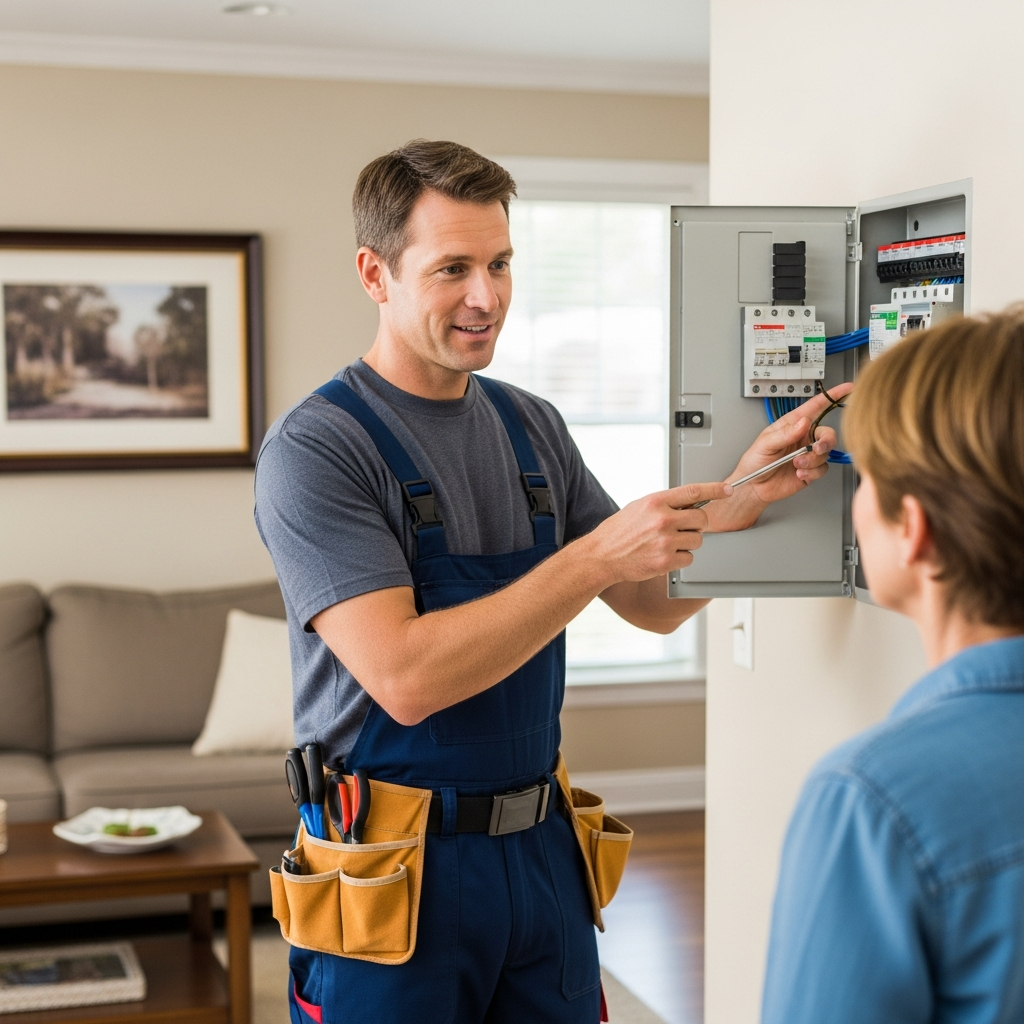
A good electrician will walk through your home and explain what they’re seeing in terms you can understand. They shouldn’t make you feel stupid for asking questions – if anything, they should appreciate that you care enough to ask. Red flag: anyone who tries to upsell you on a complete rewiring job without thoroughly explaining why it’s necessary.
The permit process can be… well, bureaucratic. Depending on your local requirements, some repairs need permits and inspections. Your electrician should handle most of this paperwork, but it can add time to the project. Don’t skip permits to save time or money – they exist for good reasons (mainly keeping your house from burning down).
What Happens After the Work is Done
Once everything’s finished, you’ll probably get a final inspection – either from the city or from your electrician doing their own quality check. Don’t feel weird about asking questions during this walkthrough. This is your chance to understand what was done and what you should watch for going forward.
You might notice that your electrical bills change slightly after major work. Sometimes they go down (more efficient systems), sometimes up (if you’ve added circuits or outlets). Either way, it usually evens out over time.
Keep all your paperwork – permits, inspection certificates, warranties. I know, I know, nobody likes filing paperwork, but future buyers will appreciate it, and you’ll need it if any issues come up later.
Maintaining Your Investment
The good news? Once you’ve addressed these electrical issues, you shouldn’t need major work again for years – sometimes decades. But there are simple things you can do to keep everything running smoothly.
Don’t overload circuits (you know that power strip daisy-chain situation you’ve got going on behind your entertainment center?). Test your GFCI outlets monthly – there’s usually a little button you press. Keep an eye out for any of those warning signs we talked about earlier.
Most importantly, trust your instincts. If something seems off – a new sound, smell, or behavior from your electrical system – don’t ignore it. That’s not paranoia; that’s being a responsible homeowner.
The thing is, dealing with electrical issues isn’t fun, but it’s one of those adulting responsibilities that actually pays off. You’ll sleep better knowing your home’s electrical system is safe and up to code. And honestly? There’s something pretty satisfying about flipping a light switch and having it just… work properly.
You know, after going through all these warning signs, I hope you’re feeling more confident about spotting potential electrical issues in your home. It’s funny how we can live with flickering lights or that one outlet that doesn’t quite work right for months – or even years – before realizing these aren’t just quirky house characteristics. They’re actually your home trying to tell you something important.
Trust Your Instincts
Here’s the thing I’ve learned from talking with countless homeowners: that little voice in your head that says “something doesn’t feel right” is usually spot-on. Maybe it’s the way a certain switch feels warm to the touch, or how you’ve started unconsciously avoiding that one corner of the basement because something just seems… off. Your subconscious picks up on things your busy mind might dismiss.
And honestly? There’s no shame in not knowing everything about electrical systems. I mean, we don’t expect ourselves to be experts in plumbing, car mechanics, or brain surgery – why should electricity be any different? The important thing is recognizing when it’s time to call in someone who does know.
It’s About More Than Just Convenience
Sure, dealing with electrical repairs can feel like just another item on that never-ending homeowner to-do list. But when you think about it, this isn’t like putting off painting the guest bedroom or fixing that squeaky door. Your family’s safety is wrapped up in every wire, every outlet, every connection in your home.
I’ve seen too many people put off electrical work because they’re worried about the cost, or they think they can live with the problem a little longer. But here’s what I want you to remember: addressing these issues now – when they’re manageable – is almost always less expensive and less stressful than dealing with an emergency later.
You Don’t Have to Figure This Out Alone
Maybe you’re sitting there right now, mentally going through your house and realizing you’ve got two… or three… or maybe even more of these warning signs. That can feel overwhelming, I get it. Where do you even start?
The beautiful thing about working with a qualified electrician is that they can help you prioritize. They’ll look at your whole situation and tell you what needs immediate attention and what can wait a bit. Think of it like getting a health checkup – sometimes you need urgent care, sometimes it’s just routine maintenance, and sometimes it’s somewhere in between.
Ready to Take the Next Step?
If any of this has resonated with you – if you’ve recognized your home in these descriptions – I’d love to help you connect with someone who can give you peace of mind. Whether you’re dealing with one concerning issue or you’ve realized your electrical system needs a more comprehensive look, you don’t have to navigate this alone.
Give us a call, and we’ll match you with a trusted electrical professional who can assess your specific situation. No pressure, no sales pitch – just honest guidance about what your home needs and when it needs it. Because at the end of the day, your family’s safety and your peace of mind are worth that conversation.
Your home has been looking out for you – now let’s make sure we’re looking out for it too.