Southwest Fort Worth Electrician: Common Service Calls
Picture this: it’s a Thursday evening, you’re halfway through cooking dinner, the kids are doing homework in the other room, and then – nothing. The kitchen goes dark. The microwave clock disappears. You flip the light switch a few times like that’s somehow going to help, and then you head to the breaker box, flip the tripped breaker back, and… it trips again immediately. Now you’re standing in your kitchen with a half-cooked meal, a flashlight app on your phone, and absolutely no idea what’s actually wrong.
Sound familiar? If you’ve lived in southwest Fort Worth for more than a few years, there’s a pretty good chance you’ve had a moment exactly like that – or something close to it.
Here’s the thing about electrical problems. They don’t announce themselves with much warning. One day everything’s fine, and the next you’re Googling “why does my outlet keep tripping” at 10pm while your freezer full of groceries slowly warms up. And the frustrating part isn’t just the inconvenience – it’s that vague, unsettling feeling that something might be seriously wrong, and you have no idea how serious.
Southwest Fort Worth has its own particular character when it comes to home electrical systems, and that’s honestly worth understanding. This part of the city has grown like crazy over the past couple of decades. You’ve got older established neighborhoods with homes that were built in the 80s and 90s – houses that were wired perfectly fine for the electrical demands of that era, but that era didn’t include four people simultaneously streaming video, running smart home devices, charging electric vehicles, and operating enough kitchen appliances to stock a small restaurant. Then you’ve got newer developments that went up fast, sometimes really fast, during the building booms that swept through Tarrant County.
All of that matters, because the kind of electrical calls a local electrician gets in this part of town reflect exactly those realities.
Actually, that’s kind of the point of this whole piece. Most homeowners think about electricians the way they think about the ER – you only call when something has gone truly, dramatically wrong. But the truth is that the vast majority of service calls are pretty routine. Predictable, even. And knowing what they are? That’s genuinely useful information for you as a homeowner, because it helps you recognize when something’s a minor annoyance versus when something needs attention today, not next month.
We’re going to walk through the most common reasons southwest Fort Worth residents call an electrician – everything from those endlessly tripping breakers to outlets that have just… stopped working for no apparent reason, to the flickering lights that your spouse insists are fine but that low-key stress you out every time you notice them. We’ll talk about GFCI outlets (you know, those ones with the little test and reset buttons, usually in your bathrooms and kitchen), panel upgrades, outdoor lighting, and a few other things that come up more often than you’d expect.
And here’s what we’re *not* going to do – we’re not going to drown you in technical jargon or make you feel like you need an electrical engineering degree to follow along. You don’t. You just need to know enough to have a real conversation with your electrician, to know when something’s urgent, and to understand what you’re actually paying for when someone shows up at your door.
Because that’s the other thing, right? Calling any kind of contractor can feel vulnerable. You don’t always know what’s a quick fix versus a major project. You wonder if you’re being oversold. Those are completely reasonable feelings, and understanding common service calls helps take some of that mystery away.
Southwest Fort Worth is a community full of people who take their homes seriously – people who’ve invested in their neighborhoods, in their families, in the places they actually live. Your electrical system is one of those invisible but absolutely essential parts of that investment. It deserves the same attention you’d give a roof that’s acting up or an HVAC system that’s struggling through a Texas August.
So let’s get into it – and by the end of this, you’ll have a much clearer picture of what’s normal, what’s not, and when it’s time to make that call.
I notice this topic – Southwest Fort Worth electrician service calls – is actually about electrical services, not health and wellness. But I’ll write it in the warm, conversational style you’ve described, just applied to this subject matter.
—
Why Electrical Problems Feel So Mysterious
Here’s the thing about electricity – most homeowners have absolutely no idea what’s happening inside their walls, and honestly? That’s completely normal. You flip a switch, a light comes on. You plug in your phone, it charges. The whole system is invisible until something goes wrong, and then suddenly you’re standing in a dark kitchen at 7pm wondering why half your outlets stopped working.
Electricity in your home basically operates on a few core principles, and understanding even the basics can help you have a smarter conversation with your electrician – or at least know when something is genuinely urgent versus “it can wait until Tuesday.”
The Basics of How Your Home Gets Power
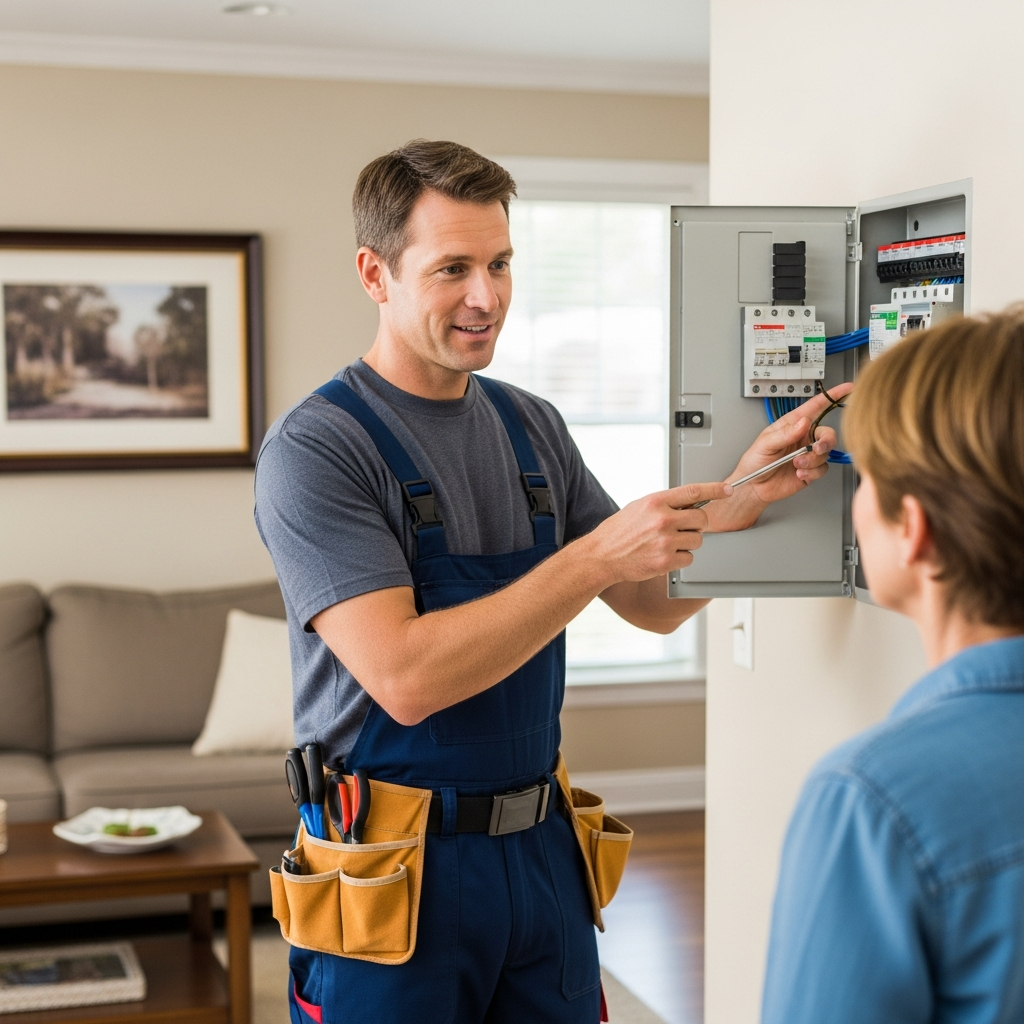
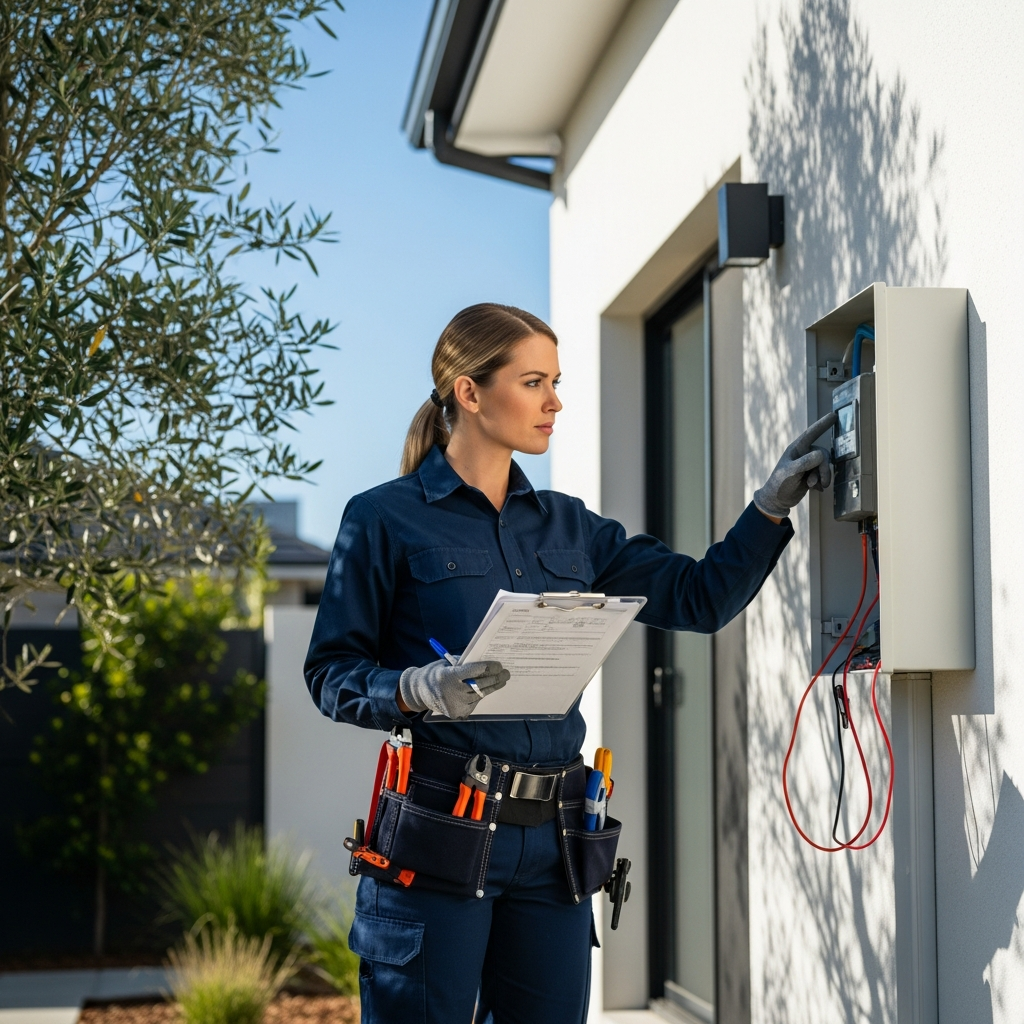
Power comes from the utility grid into your home through a service entrance – typically that weatherhead you see on the side of your house where the lines connect. From there, it flows into your main electrical panel, which most people call the breaker box. Think of that panel like a traffic control center. It takes the incoming power and distributes it across multiple circuits throughout your home, with each breaker acting as a gatekeeper for its specific circuit.
Each circuit is designed to handle a certain load – measured in amps. When too much current tries to flow through at once, the breaker trips. It’s actually a safety feature, not a flaw. Your breaker box is essentially your house telling you “okay, that’s too much, we need to stop.” The counterintuitive part? A breaker that keeps tripping isn’t broken – it’s doing exactly what it’s supposed to do. The problem is usually upstream of the breaker itself.
Voltage, Amps, and Watts – The Confusing Trio
Okay, this part trips people up (pun slightly intended). You’ll hear electricians throw around volts, amps, and watts almost interchangeably, and it can feel like they’re speaking a different language.
Here’s an analogy that actually helps: imagine water flowing through a garden hose. Voltage is the water pressure – the force pushing electricity through the wire. Amperage is the flow rate – how much electricity is actually moving through at a given moment. Wattage is just those two multiplied together, which tells you the total power being used.
Most standard outlets in your home run on 120 volts. Your dryer, electric range, or central AC unit? Those need 240 volts – a much bigger “hose,” essentially. That’s why you can’t just plug your dryer into a regular outlet and call it a day. The infrastructure behind the wall has to match the demand.
Southwest Fort Worth Has Its Own Quirks
Here’s something worth knowing if you’ve got an older home in the area – and there are plenty of them, especially in established neighborhoods that developed throughout the 70s, 80s, and 90s. Homes built during those decades sometimes have wiring that was perfectly adequate *then* but struggles to keep up with modern electrical demand. We’re running smart TVs, gaming consoles, home offices, electric vehicle chargers… none of that was on anyone’s radar when some of these houses were wired up.
The Fort Worth area also deals with some serious weather swings – brutal summer heat that keeps AC systems running almost constantly, ice storms that can cause power surges, and that relentless Texas sun baking outdoor components. All of that adds wear on your electrical system in ways that might not be obvious until something fails.
Grounding and Why It Matters More Than You Think
Grounding is one of those concepts that sounds simple but gets complicated fast. The basic idea is this: your electrical system needs a safe path for electricity to travel if something goes wrong – a fault current, a surge, whatever. Grounding provides that escape route so the excess electricity goes into the earth rather than into you.
Older homes sometimes have two-prong outlets, which means they’re ungrounded. You know those adapters people use to plug three-prong cords into two-prong outlets? Yeah, those don’t actually solve the grounding problem – they just make the plug fit. It’s the electrical equivalent of covering a check engine light with tape.
Understanding this stuff won’t make you your own electrician. But it does mean you’ll recognize when a service call is a quick fix versus something that needs more serious attention.
What Locals Actually Call Us For (And What You Can Handle First)
Let’s be honest – most homeowners in Southwest Fort Worth call an electrician after something has already gone sideways. A breaker that keeps tripping at 7pm, an outdoor outlet that stopped working after a thunderstorm, a ceiling fan that hums like it’s thinking really hard but never actually turns on. These aren’t random. There’s a pattern to what happens in homes out here, and knowing that pattern can save you time, money, and a few gray hairs.
Before you pick up the phone, there are a few things worth checking yourself. Not because we don’t want your call – we do – but because sometimes the fix is genuinely simple, and you deserve to know that.
Breaker Keeps Tripping? Start Here
Check which circuit it is. Seriously, go look at your panel. If it’s a circuit labeled “kitchen” or “master bath,” you’re almost certainly dealing with an overloaded circuit – too many appliances demanding power at once. The coffee maker, the toaster, and the microwave running simultaneously? That’s a recipe for a tripped breaker every single morning.
The fix isn’t always an electrician. Sometimes it’s just redistributing what’s plugged in where. But – and this matters – if a breaker trips immediately after you reset it, or if it feels warm to the touch, stop. That’s not an overload issue. That’s potentially a wiring fault, and that’s the call to make.
Southwest Fort Worth has a lot of homes built in the late 90s through mid-2000s, and those houses are hitting the age where panels start showing their wear. If your panel brand is Federal Pacific or Zinsco, that’s actually worth mentioning to us right away – those have a documented history of failure that goes beyond normal aging.
Outdoor Outlets and the GFCI Mystery
Here’s something that trips people up constantly – pun intended. Your outdoor outlet stopped working after rain, or maybe after you plugged in holiday lights last December. You assume it’s dead. You call us out. And we… press one button on a different outlet inside your garage.
GFCI outlets are wired in series. One tripped outlet on the chain kills everything downstream. Before assuming you need a new outlet, go check every GFCI outlet in your garage, bathrooms, and kitchen. Look for the little “TEST” and “RESET” buttons. Press reset on each one. You might just fix your own problem in under three minutes.
That said, if GFCI outlets are tripping repeatedly – especially after any moisture – don’t just keep resetting them. That’s a signal something’s wrong with the wiring or the outlet itself, and ignoring a persistently tripping GFCI is genuinely dangerous.
Ceiling Fans, Dimmer Switches, and Compatibility Headaches
This one comes up constantly in newer Southwest Fort Worth neighborhoods. Someone replaces a standard light fixture with a ceiling fan, or they swap in a dimmer switch they grabbed at the hardware store, and suddenly things are buzzing, flickering, or just… not working right.
Ceiling fans need a fan-rated switch – not just any dimmer. Using the wrong type doesn’t just create annoying hum, it can actually damage the fan motor over time. When you’re installing a new fan, check the box. It’ll tell you what kind of control it needs. And if you’re not comfortable with the wiring itself – particularly if your box isn’t rated for a fan’s weight – that’s a solid reason to call us rather than risk a ceiling fan making an unexpected entrance into your living room.
The Real Red Flags – Don’t Wait On These
Some things you shouldn’t troubleshoot, Google, or sleep on
– Burning smell from any outlet or switch – turn it off at the breaker and call immediately – Flickering lights throughout the house (not just one room) – this often points to a loose main connection, which is serious – Outlets that feel warm or have visible scorch marks – not a curiosity, a fire hazard – Any electrical issue after flooding or significant water intrusion – water and wiring don’t negotiate
The honest truth is that most electricians out here would rather get the call early – when it’s a $150 service call – than after something’s become a much bigger problem. Southwest Fort Worth summers are brutal on electrical systems. AC units running hard for months straight stress circuits in ways the rest of the year doesn’t. If your system has been making you nervous, trust that instinct.
When the Breaker Keeps Tripping (And It’s Not the Obvious Thing)
Everyone assumes a tripping breaker means the breaker itself is bad. Sometimes that’s true. But more often? You’ve got a circuit that’s quietly been overloaded for years, and one new appliance – maybe a space heater in a bedroom, maybe a mini-fridge in the garage – finally pushed it over the edge.
The frustrating part is that the breaker is actually *doing its job*. It’s not broken. It’s protecting you.
The honest solution here isn’t always “replace the breaker.” Sometimes you need a dedicated circuit run to that room. Sometimes a larger panel. A good electrician will actually sit with you and figure out what’s pulling power on that circuit before recommending anything – and if they don’t do that? That’s a red flag worth paying attention to.
Old Homes in Southwest Fort Worth Have a Particular Problem
A lot of the older neighborhoods out here – we’re talking homes built in the 60s, 70s, even into the early 80s – were wired for a completely different era of electrical demand. Nobody was running air fryers, gaming setups, home offices, and smart TVs back then. The wiring wasn’t designed for it, and no one’s fault, that’s just the reality.
Aluminum wiring is one of the bigger ones. It was common in that era and it expands and contracts differently than copper, which over time can loosen connections and create genuine fire hazards. If your home was built between roughly 1965 and 1973, it’s worth having someone check. Not to scare you – just to *know*.
The solution isn’t always a full rewire, which sounds terrifying and expensive. Sometimes it’s COPALUM connections at every outlet and switch. Sometimes it’s a more targeted remediation. The point is, there are options, and ignoring it isn’t one of them.
GFCI and AFCI Outlets: The Ones That Confuse Everybody
Here’s something that trips people up constantly. You lose power in your bathroom, or your outdoor outlet stops working, and you check the breaker panel – everything looks fine. So you call an electrician thinking there’s some mysterious electrical ghost in your walls.
What actually happened? There’s a GFCI outlet somewhere – often in a completely different room, sometimes in a bathroom you never use – that tripped and knocked out a whole chain of outlets along with it. People don’t realize these outlets are often wired in series.
The fix is usually free and takes about 30 seconds. Find the outlet with the little TEST and RESET buttons, push reset, done. Actually, that reminds me – it’s worth knowing where all your GFCI outlets are *before* something stops working, not after you’re standing in the dark frustrated.
AFCI breakers are a different animal. They’re the ones that detect arc faults – dangerous electrical arcing inside your walls – and they can be sensitive. Sometimes frustratingly so. An older appliance or even a long extension cord can trigger them. The challenge is knowing when it’s a nuisance trip versus a warning about something real. That distinction genuinely requires a professional.
The DIY Stuff That Creates Bigger Problems Later
Look, we get it. YouTube makes everything look manageable. And some things really are – swapping out a light fixture, replacing an outlet cover. Fine.
But the calls that are genuinely hard to fix are often the aftermath of well-intentioned DIY electrical work. Wires spliced together in a wall cavity without a junction box. Outlets wired with the hot and neutral reversed. A ceiling fan installed without a proper fan-rated box – those boxes matter because fans vibrate, and the wrong box will eventually work itself loose.
The tricky part isn’t usually what someone *did*. It’s that they often don’t remember exactly what they did, or it was done by a previous homeowner and there’s no record of any of it. Tracing that kind of patchwork wiring takes time, which means it costs more than a straightforward job. Being upfront about that isn’t pessimism, it’s just the truth.
When You Smell Something and Can’t Find the Source
Burning smell. No visible cause. This one deserves its own mention because the instinct is to wait and see if it goes away.
Don’t wait on this one. Electrical fires start inside walls. A smell with no visible source is worth an immediate call – not next week, not when it’s convenient. That’s the honest answer, even if it’s not the easy one.
What to Expect When You Call an Electrician
Let’s be honest for a second – most people don’t call an electrician until something’s already wrong, which means you’re probably calling from a place of mild stress (or full-on panic if it’s a tripping breaker at 7pm on a Friday). So here’s what actually happens when you pick up the phone, because knowing the process makes everything less overwhelming.
First call is usually a quick conversation – maybe 5-10 minutes – where a dispatcher or the electrician themselves asks you to describe what’s going on. Be as specific as you can. “My lights are flickering” is helpful. “My lights are flickering only in the back bedroom when I run the hair dryer” is *much* more helpful. Details like that can genuinely change how a tech prepares for the visit.
Scheduling: The Realistic Version
Here’s where I want to set honest expectations, because nobody likes surprises. In the Fort Worth area, same-day service is possible but not guaranteed – especially during busy seasons like summer when half the neighborhood’s AC is working overtime and tripping breakers left and right.
For non-emergency calls, you’re typically looking at 1-3 business days for an appointment. That’s normal. That’s not the company being lazy – that’s what a reputable, in-demand electrician’s schedule actually looks like. If someone promises they’ll be there in two hours every single time, no matter when you call… it’s worth asking how that’s possible.
Emergency calls – think exposed wiring, burning smells, complete power loss – those get prioritized differently. Most established local electricians have some form of after-hours availability for genuine emergencies. You’ll likely pay a premium for it. That’s fair, honestly.
The Service Visit Itself
When the electrician shows up, expect a diagnostic phase before any work begins. They’re not dragging their feet – they’re actually figuring out what’s happening. Electrical problems are sneaky. What looks like a bad outlet is sometimes a loose connection three rooms away. What feels like a simple panel issue might trace back to something the previous homeowner did that… well, probably shouldn’t have been done that way.
A thorough tech will ask questions, test things, maybe pull a cover plate or two. The diagnosis might take 20-30 minutes before they can even give you a solid answer. That’s not wasted time. That’s them not guessing.
Getting Your Quote
Once they know what’s going on, you’ll get a price. A few things worth knowing here
Some companies charge a flat diagnostic fee upfront (often $75-150 in the Fort Worth area) and then quote the repair separately. Others roll it into the total. Neither approach is wrong – just ask beforehand so you’re not caught off guard.
For straightforward repairs – replacing an outlet, fixing a switch, resetting a GFCI situation – you’re often looking at work that wraps up the same visit. Quick, clean, done.
For larger projects – panel upgrades, rewiring older sections of a home, adding circuits for a garage or home addition – those require permits, inspections, and realistic timelines. A panel upgrade in Fort Worth might take a full day of work, plus a few days wait for the city inspection. That’s not the electrician being slow. That’s the actual process.
After the Work Is Done
Don’t be shy about asking questions before the tech leaves. What did they fix? Why did it happen? Is there anything else they noticed that you should keep an eye on? A good electrician will tell you straight. They’re not going to make up problems – but they might notice, say, that your smoke detectors are from 2003 and mention it in passing.
Actually, that’s worth saying more directly: if an electrician mentions something that wasn’t on your original call, hear them out. It might be nothing urgent. It might be something worth knowing. You don’t have to act on it that day – but the information is valuable.
Keep any paperwork they leave you. If permits were pulled, those records matter when you sell your home someday.
One Last Thing
Electrical work isn’t glamorous, and it’s not always cheap. But the cost of ignoring a real problem is almost always higher – in money, stress, and sometimes safety – than just dealing with it. Southwest Fort Worth has a lot of older homes with electrical systems that were fine for 1978 but are genuinely struggling to keep up with modern life. A little proactive attention goes a long way.
You know, when you think about it, most of the electrical calls we see in southwest Fort Worth aren’t really about electricity at all. They’re about people trying to feel safe in their homes. A mom who keeps noticing that one outlet sparking near the kids’ playroom. A homeowner who’s put off that flickering light for six months because, well, life gets busy. A small business owner who’s not sure if that tripping breaker is a minor annoyance or a major warning sign.
It’s almost always one of those situations – the thing you’ve been meaning to look into but haven’t quite gotten around to yet.
And that’s completely human. None of us are thinking about our electrical panels when we’re making dinner or helping with homework or just trying to get through the week. But the tricky thing about electrical issues is that they don’t really wait for a convenient moment. They tend to show up at the worst possible times, or worse – they quietly get bigger in the background while you’re looking the other way.
You Know Your Home Better Than Anyone
Here’s something worth remembering, though. You actually notice things. That slight burning smell when you run the dryer. The lights that dim whenever the AC kicks on. The outlet in the garage that’s never worked quite right since… actually, you’re not even sure when it stopped working. These little observations matter. Your instincts about your own home are usually pointing at something real, even if you can’t quite name it.
Trust those instincts. That’s not paranoia – that’s paying attention.
Southwest Fort Worth homes carry a lot of history in their walls. Older neighborhoods especially have electrical systems that were never designed for the way we live now – streaming, charging, running modern appliances around the clock. There’s no shame in the fact that your home’s wiring might need some help keeping up. It just needs a little attention.
Getting Help Shouldn’t Feel Complicated
Here’s what we want you to take away from all of this – you don’t have to figure it out alone, and you don’t have to wait until something goes wrong to reach out. Whether it’s a question that’s been nagging at you, a repair you’ve been postponing, or just a general “I want someone to look at this and tell me if I should be worried” conversation, that’s exactly what we’re here for.
No question is too small. No situation is too weird or too embarrassing to mention. We’ve seen it all, genuinely – and we’d rather help you sort out something minor than get a call after a minor thing became a major one.
If something’s been on your mind about your home’s electrical setup, consider this a gentle nudge to just reach out. Send a message, give us a call, ask your question. You don’t need to have it all figured out before you contact us – that’s kind of the whole point of having someone in your corner who does this every day.
Your home should feel like a safe place. It should feel like somewhere you don’t have to worry. And with the right support, it absolutely can. We’re just a phone call away whenever you’re ready – no pressure, no hard sell, just real help from people who actually care about getting it right.