What Causes Electrical Outlets to Stop Working?
Picture this: it’s Sunday morning, you’ve got your coffee brewing, your phone is at 3% battery, and you go to plug in your charger – nothing. The outlet just… sits there, completely dead. You wiggle the plug. You try a different charger. You even do that thing where you unplug and replug it three times like that’s somehow going to help. Still nothing.
Sound familiar? Yeah, we’ve all been there.
It’s one of those household mysteries that’s genuinely maddening because it feels so random. The outlet worked yesterday. Nothing happened. Nobody touched anything. And yet here you are, on your knees behind the couch, wondering if your house is secretly falling apart around you.
Here’s the thing though – dead outlets are almost never as mysterious as they seem. There are actually only a handful of reasons why an electrical outlet stops working, and once you understand what’s going on behind that little plastic faceplate, the whole thing starts to make a lot more sense. Not “I can fix this myself with a YouTube tutorial at midnight” sense, necessarily – some of this stuff genuinely needs a licensed electrician, and we’ll be honest with you about that. But at least you’ll know *what* you’re dealing with instead of just staring at the wall hoping for a miracle.
And honestly? That knowledge matters more than people realize.
Why This Is Worth Understanding
Think about how much of your daily life runs through your electrical outlets. Your phone charger, obviously. But also your coffee maker, your laptop, your kid’s tablet, the lamp you actually like reading by, the air purifier you spent way too much money on… the list goes on. When one outlet goes dark, it’s an inconvenience. When multiple outlets fail – which, as we’ll explain, can absolutely happen – it can genuinely disrupt your day in ways that ripple out further than you’d expect.
There’s also a safety angle here that we’d be doing you a disservice to gloss over. Some of the reasons outlets stop working are completely benign. A tripped breaker, a worn-out connection, a simple fix. But others are warning signs of something more serious happening inside your walls – things like faulty wiring or overloaded circuits that, if ignored, can create real fire hazards. We’re not trying to scare you. We just think you deserve the full picture.
What You’re Actually Going to Learn Here
So in this article, we’re going to walk through all the main culprits – the usual suspects that electricians see time and time again. We’ll talk about tripped circuit breakers (and why they trip in the first place, because that part matters). We’ll get into GFCI outlets, which are those funny little outlets with the TEST and RESET buttons that you’ve probably hit by accident in a bathroom at some point – turns out they’re connected to way more outlets in your home than you’d expect.
We’ll also talk about loose or damaged wiring, which is one of those topics that sounds technical but actually has some pretty clear warning signs you can watch for. And we’ll cover some of the less obvious causes – things like a failed outlet that just wore out from years of use, or a tripped arc fault circuit interrupter (don’t worry, we’ll explain that one in plain English).
Actually, one thing that surprises a lot of people is learning that a single dead outlet isn’t always about *that* outlet at all. Sometimes the problem is upstream, somewhere else in the system entirely. That’s part of what makes electrical troubleshooting feel so disorienting – the symptom and the source aren’t always in the same place.
By the end of this, you’ll know how to do some basic, safe troubleshooting on your own. You’ll know which situations are genuinely no big deal and which ones should have you picking up the phone to call a professional. And you’ll never have to feel completely helpless staring at a dead outlet again.
Well. Maybe a little helpless. Electrical stuff can be humbling like that. But at least you’ll be an *informed* kind of helpless, and that’s a pretty solid place to start.
Your Home’s Electrical System Is Basically a Giant Loop
Here’s the thing most people don’t realize about electricity in their homes – it’s not just flowing *to* your outlets, it’s flowing in a continuous loop. Power comes in from the utility company, travels through your panel, out through the “hot” wires to your outlets and appliances, and then returns back through the neutral wires. Think of it like a water fountain that continuously recirculates the same water. Break the loop anywhere, and everything stops.
That’s actually why so many outlet problems are weirdly mysterious at first. The failure point might be nowhere near the outlet that stopped working.
The Circuit Panel: Your Home’s Traffic Controller
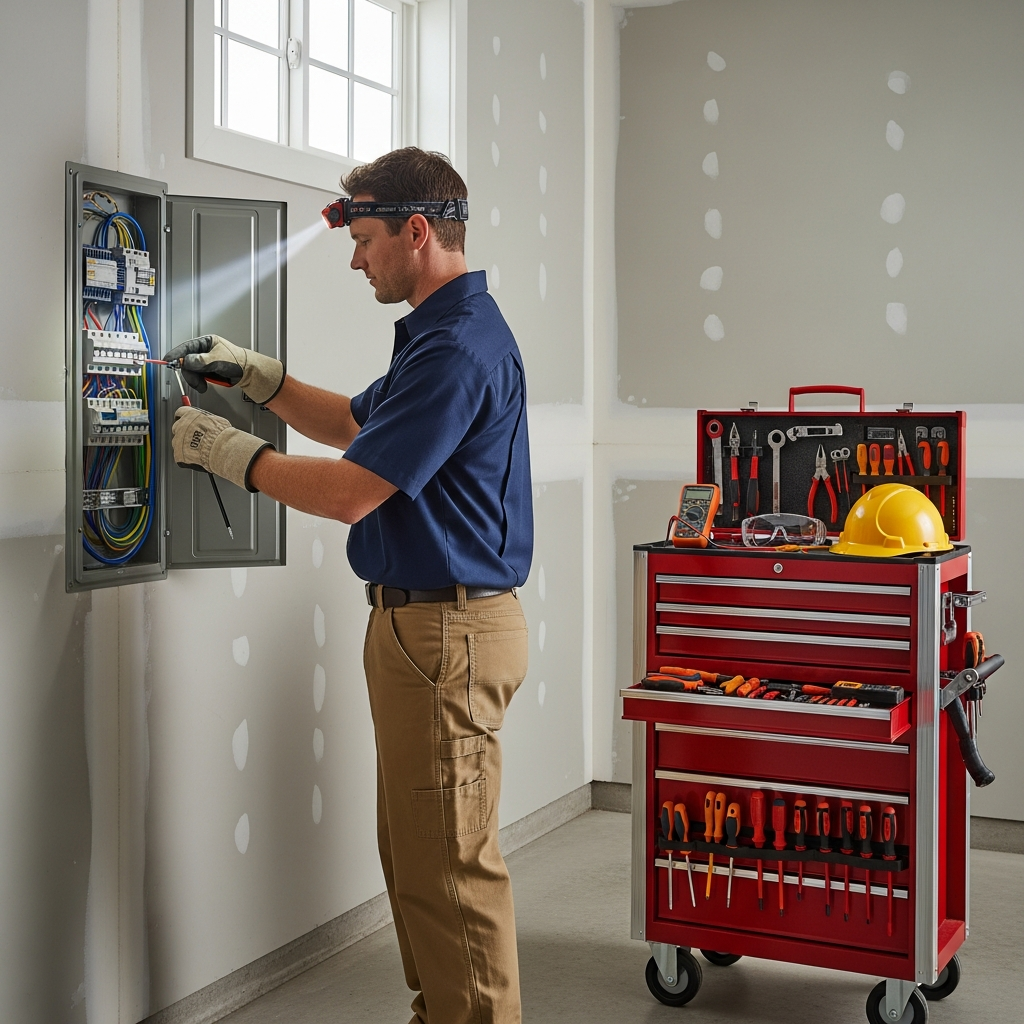
Your electrical panel – that gray metal box in the garage or utility room that you probably ignore until something goes wrong – is essentially managing traffic for every electrical circuit in your house. Each breaker in that panel protects a specific circuit, which typically serves a group of outlets and fixtures in a related area of your home.
When too much electricity tries to flow through a circuit at once, the breaker trips. It’s a safety feature, not a flaw. The breaker is doing exactly what it’s supposed to do – sacrificing itself (temporarily) to protect your wiring from overheating. Old wiring wasn’t designed to handle the electrical load of modern life, by the way. We’re running so many more devices than houses were originally built for.
GFCI Outlets: The Confusing Ones That Trip Other Outlets
Okay, this is where things get genuinely counterintuitive, and honestly? It confuses even fairly handy people. You may have noticed outlets in your bathroom or kitchen with little “Test” and “Reset” buttons on them. Those are GFCI outlets – Ground Fault Circuit Interrupter – and they’re designed to cut power instantly if they detect any imbalance in the electrical flow, like what might happen if electricity started traveling through, say, a person.
Here’s the part nobody tells you: one GFCI outlet can control multiple regular outlets downstream from it. So if the GFCI outlet in your master bathroom trips, it might knock out power to outlets in a completely different bathroom, or even a hallway. This drives people absolutely crazy – they’ll check the panel, find nothing tripped, and assume they have a major problem. Sometimes the answer is embarrassingly simple. You just need to find the right GFCI outlet and push the reset button.
Actually, that reminds me – a lot of garages and outdoor outlets are controlled by a GFCI that’s physically located *inside* the house. Electricians have their reasons for wiring things this way, but it’s not exactly intuitive from a homeowner’s perspective.
Why Outlets Wear Out (Yes, They Just… Wear Out)
Most people think of outlets as permanent fixtures, basically forever parts of their home. They’re not. The little spring-loaded contacts inside an outlet that grip your plug are mechanical components, and mechanical components wear out over time. An outlet that’s been plugged and unplugged thousands of times over 20 or 30 years might simply be loose and making poor contact.
You know that slightly wobbly plug that doesn’t quite sit right in a certain outlet? That’s not just annoying – it’s a sign of worn contacts, and worn contacts can cause intermittent power issues or, in worse cases, heat buildup. Loose connections and electricity don’t get along well together.
The Hidden Culprit: Connections Inside the Wall
Wires don’t just magically attach themselves to outlets and junction boxes – they’re connected using wire nuts, screws, or push-in connectors. And connections can loosen over time, especially with the natural expansion and contraction that happens as temperatures change. A slightly loose wire behind an outlet is enough to cause anything from intermittent power loss to a complete failure.
This is also why – and please don’t skip this part – electrical problems that seem minor sometimes aren’t. A loose connection can arc, meaning electricity literally jumps across a small gap. That generates heat. Heat in a wall cavity, near wood framing and insulation, is exactly as concerning as it sounds. Most outlet problems are benign. But some of them aren’t, and it’s worth knowing the difference.
Understanding these fundamentals doesn’t make you an electrician, but it does make you a smarter troubleshooter – and it helps you describe the problem accurately when you do need to call someone.
Start With the Dumbest-Sounding Fix First
Seriously. Before you call an electrician or tear apart your walls, go check your circuit breaker. I know, I know – you’ve probably already thought of that. But here’s the thing most people miss: a tripped breaker doesn’t always look tripped. The switch won’t always be fully flipped to the “off” position. Sometimes it’s just sitting in that annoying middle zone, barely budged from center. Push it firmly all the way to “off” first, then flip it back to “on.” That satisfying click means you’ve actually reset it.
While you’re at the panel, look for any breakers that feel warm to the touch. That’s not normal, and it’s worth noting before you move on.
Hunt Down Your GFCI Outlets Before Doing Anything Else
This is the one that stumps people constantly – and honestly, electricians probably love it because it means more service calls. GFCI outlets (the ones with the little “test” and “reset” buttons, usually in bathrooms, kitchens, or garages) can knock out *other* outlets in your home when they trip. Outlets in completely different rooms. Your dead bedroom outlet might be controlled by the GFCI in your bathroom down the hall.
So here’s what you do: walk every inch of your home and find every GFCI outlet. Press the reset button on each one, even if it doesn’t look tripped. You’ll sometimes hear or feel a small click when it resets. Then go back and test your dead outlet. About half the time? Problem solved. No tools required.
Use a Cheap Outlet Tester – It’s Worth Every Penny
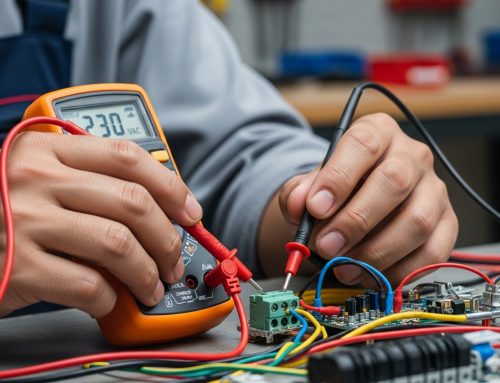
You can grab a plug-in outlet tester at any hardware store for around $10-15. It’s a little device that tells you immediately whether an outlet has power, whether it’s wired correctly, or whether it has a wiring fault like reversed polarity or a missing ground. Plug it in, read the light pattern, done.
This matters because an outlet can appear completely dead when it’s actually just wired incorrectly – and that distinction changes everything about what fix you need. Don’t skip this step. It’s one of those small tools that pays for itself the first time you use it.
Check for the Hidden Culprit: Loose Wire Connections
If you’ve reset every breaker, found every GFCI, and your outlet tester confirms there’s genuinely no power… it might be a loose wire. This happens more often in older homes, but really it can happen anywhere. Outlets are often wired in a “daisy chain” – meaning one outlet feeds power to the next one in line. A single loose connection can cut power to every outlet downstream from that point.
If you’re comfortable turning off the breaker and removing the outlet cover, you can visually inspect the wires. Look for any wire that’s pulled back from its terminal, or scorch marks (which, fair warning, means you should stop and call someone). Tighten any obviously loose connections with a screwdriver – but don’t poke around if you’re uncertain. Electricity is genuinely unforgiving.
Know When to Put Down the Screwdriver
Here’s the honest part. Some outlet problems are DIY-friendly. A tripped breaker? Absolutely handle that yourself. A GFCI reset? Easy. Even swapping out a visibly damaged outlet receptacle is manageable if you’re careful and methodical.
But if you’re seeing scorch marks, smelling something burnt, finding melted plastic, or if the same breaker keeps tripping every time you reset it – that’s your signal to stop. Repeatedly tripping breakers usually means something is drawing too much current, and that something could be a serious fault or even early-stage wiring failure. That’s not a YouTube tutorial situation.
A Quick Note on Older Homes
If your home was built before 1980, keep in mind that aluminum wiring and older outlet designs can cause intermittent failures that seem mysterious. The outlet might work sometimes and not others. That inconsistency is actually *more* concerning than a straightforward dead outlet, because it suggests a connection that’s arcing – essentially creating tiny sparks inside your wall. Get a licensed electrician involved sooner rather than later on that one.
Most dead outlets turn out to be simple fixes. Work through these steps methodically, and you’ll likely find your answer before spending a dime on a service call.
When the “Obvious” Fix Doesn’t Work
You’ve reset the GFCI. You’ve checked the breaker. You’ve tested the outlet with a lamp you *know* works. And still – nothing. This is the moment most people start questioning their sanity, and honestly? It’s the most common place people get stuck.
Here’s what’s probably happening: your home’s electrical system is wired in a chain, and a GFCI outlet can protect multiple regular outlets downstream from it. So the dead outlet in your bedroom might actually be controlled by a GFCI in your bathroom. Or your garage. Or – this is genuinely maddening – a GFCI outlet in your basement that the previous homeowner installed and never told you about.
The solution is tedious but it works: walk every room and press the “test” and “reset” buttons on every GFCI outlet you can find. Yes, all of them. Yes, even the ones that seem unrelated.
The Breaker That Lies to You
This one trips people up constantly. A breaker can be tripped without visually appearing tripped. It’ll sit there looking like it’s in the “on” position while actually being in a subtle middle position – not quite off, not quite on. The panel is basically gaslighting you.
The fix? Don’t just look at it. Push it firmly to “off” first, then push it back to “on.” You’ll often feel (and hear) a click that tells you it actually reset. If it trips again immediately… that’s a bigger conversation. That usually means there’s a short circuit or the circuit is genuinely overloaded, and it’s time to call a professional. Don’t keep resetting a breaker that keeps tripping. It’s not being stubborn – it’s doing its job.
Outlets That “Work” But Don’t Actually Work
Some outlets have what electricians call a “loose connection” – and they’re sneaky because the outlet might work *sometimes*. Your phone charger works if you push the plug in at a certain angle. The lamp flickers. Things work, sort of, until they don’t.
This is actually one of the more serious situations, even though it feels minor. Loose connections generate heat. Heat causes fires. The fix here isn’t something most people should DIY – it requires pulling the outlet out, inspecting the wire connections, and either tightening them or replacing the outlet entirely. If an outlet feels warm to the touch or you see any discoloration around it, stop using it immediately.
Older Homes and the “It’s Just Old” Problem
If your home was built before 1985 or so, you might be dealing with issues that go beyond a simple fix. Aluminum wiring (common in the 60s and 70s), two-prong ungrounded outlets, and wiring that’s simply deteriorated over decades… these aren’t problems you can troubleshoot your way around.
People often get frustrated because they follow all the right steps and still can’t solve the problem – and the reason is that the problem isn’t a tripped breaker or a bad GFCI. The problem is infrastructure. It’s like trying to fix a pothole with duct tape. At some point, the road just needs to be repaved.
If you’re in this situation, an electrician can do an assessment and at least tell you what you’re working with. It doesn’t always mean a full rewire – sometimes it’s more manageable than you’d expect.
Finding an Outlet That Has No Business Being Dead
Sometimes an outlet stops working and there’s genuinely no clear reason. The breaker is fine, there’s no GFCI in sight, the outlet looks perfectly normal. What now?
Actually, this reminds me of something worth mentioning – some outlets, especially in older homes, are switched. Meaning they’re controlled by a wall switch. Check every switch in that room, including ones you thought controlled a light fixture. You’d be surprised how often this is the answer, and how silly you feel when you find it.
If it’s truly not that, the next step is checking whether the outlet is simply worn out. Outlets have a lifespan. After years of use, the internal contacts weaken and stop gripping plugs firmly. Replacing an outlet is a relatively simple fix – but if you’re not comfortable working inside an electrical box, there’s no shame in calling someone. Electricity genuinely doesn’t care how handy you think you are.
What to Expect When You’re Dealing With a Dead Outlet
Okay, so you’ve figured out your outlet isn’t working. Maybe you’ve already done some basic troubleshooting – checked the breaker, tested a few things – or maybe you’re just staring at it wondering what comes next. Either way, let’s talk about realistic timelines and what “normal” actually looks like here, because it varies a lot depending on what’s causing the problem.
The honest truth? Some outlet issues get resolved in five minutes. Others take a few days, especially if you need to schedule an electrician or wait on parts. And a small number – like outdated wiring in older homes – can be the start of a bigger conversation about your electrical system overall. Not trying to alarm you, just want you to go in with clear eyes.
The Easy Fixes Happen Fast (When They Apply)
If your outlet stopped working because of a tripped breaker or a GFCI outlet that needs to be reset, you’re probably looking at literally a few minutes to get things back up and running. These are the best-case scenarios, and they happen more often than you’d think. So before you do anything else – seriously, before you call anyone – check your breaker panel and look for any GFCI outlets nearby with a tripped reset button. It sounds almost too simple. But it works often enough that it’s always worth trying first.
If the fix is this quick, great. If it’s not… that’s when things get a little more involved.
When You Actually Need an Electrician
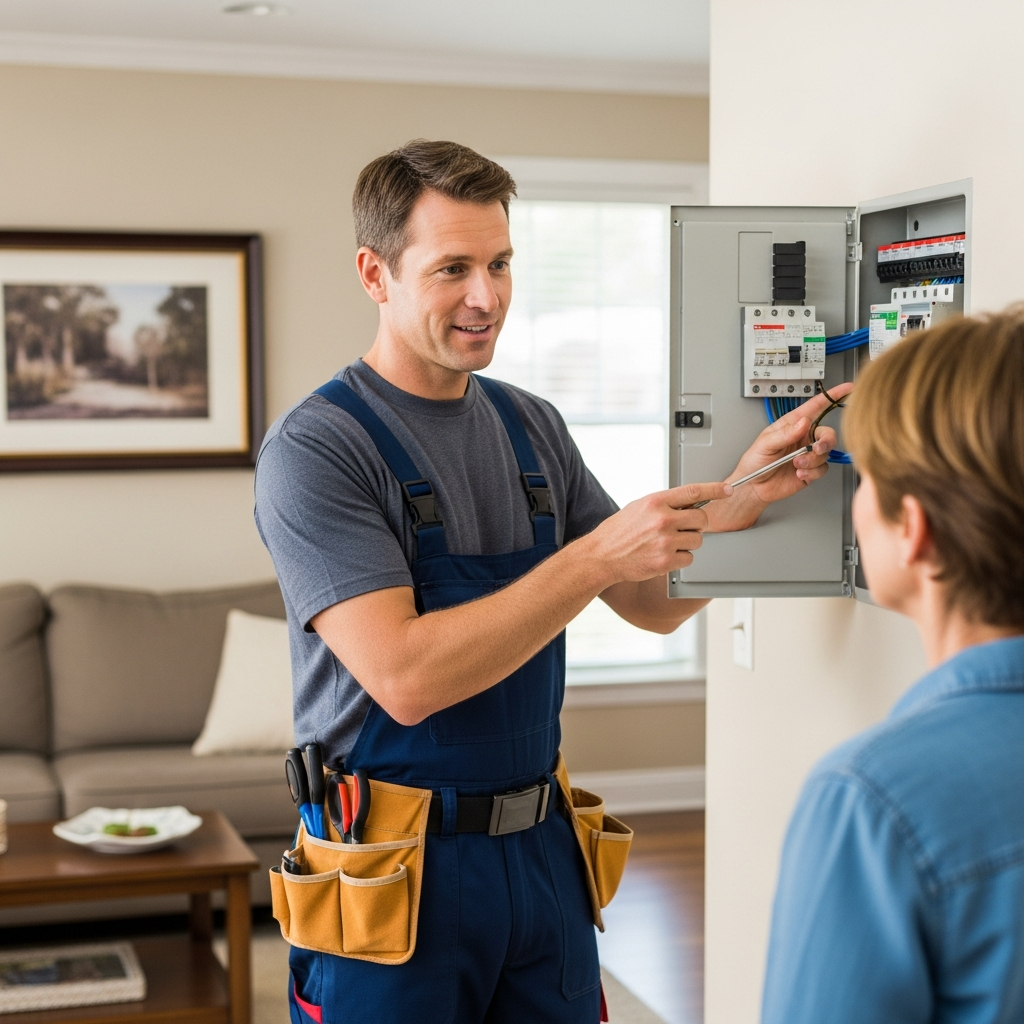
Let’s say you’ve reset the breaker, you’ve found and reset every GFCI outlet in the area, and nothing has changed. Now you’re probably looking at a wiring issue – a loose connection, a burned wire, something deeper in the circuit. This is where you call a licensed electrician, and honestly, there’s no shame in that. Electrical work done wrong is genuinely dangerous.
Scheduling-wise, for a non-emergency outlet repair, most electricians can get to you within a few days to a week, depending on how busy they are in your area. If you’re in a rush or dealing with something that feels urgent – like you smell burning, or you see scorch marks around the outlet – don’t wait. That’s an emergency call.
The actual repair, once the electrician is there, is often surprisingly quick. A loose connection or a faulty outlet that needs replacing? That might take 30-45 minutes, including the time to properly diagnose what went wrong. More complex issues – like a section of damaged wiring that needs to be replaced – could take longer and cost more. Your electrician should be able to give you a clearer estimate once they’ve actually looked at things.
Older Homes Deserve a Separate Conversation
If you live in a house that’s 40, 50, or more years old, a dead outlet might be pointing to something bigger. Older wiring systems – knob-and-tube, aluminum wiring, two-prong ungrounded outlets – weren’t designed for how we use electricity today. This doesn’t mean your house is about to burn down, but it does mean the outlet issue might be a symptom rather than the whole problem.
In these situations, an electrician might recommend a more thorough inspection. That’s a reasonable suggestion, not a scare tactic. Getting a clearer picture of your home’s electrical health is actually worth doing – especially if outlets have been acting up in multiple spots.
What “Normal” Looks Like After the Repair
After a proper repair, your outlet should work reliably – no flickering, no warmth when you touch the faceplate, no tripped breakers happening again and again. If any of those things keep occurring after the fix, something was either missed or there’s an underlying issue that needs more attention. Don’t just accept a recurring problem as “just how it is.” It’s not.
Give it a week or two of normal use and see how things feel. Most repairs stick. Most people flip that outlet back on, plug in their lamp or phone charger, and never think about it again.
That’s the goal here – boring reliability. Nothing exciting. Just a working outlet doing its job, day after day, exactly like you’d expect.
There’s something oddly reassuring about understanding why things go wrong. A dead outlet goes from being this mysterious, slightly alarming problem to something that actually makes sense – a tripped breaker, a worn-out GFCI, a connection that’s simply given up after years of faithful service. And honestly? Most of the time, the fix is simpler than you’d expect.
That said, electricity isn’t something to bluff your way through. Knowing *why* an outlet stopped working is genuinely useful – it helps you have smarter conversations with electricians, catch problems before they become expensive, and feel less panicked when you’re standing there with a dead phone and a lamp that won’t turn on. But knowing when to step back and call a professional? That’s equally important. Maybe more so.
Here’s the thing about your home’s electrical system – it’s a lot like your body in some ways. Small warning signs that seem minor on the surface can sometimes point to something bigger happening underneath. A single outlet that goes dead is usually no big deal. But outlets that keep failing, breakers that trip repeatedly, outlets that feel warm to the touch, or any hint of burning smell… those are your house telling you something. Don’t ignore it.
If you’ve worked through the basics – checked the breaker, reset the GFCI, tested the outlet – and you’re still coming up empty, that’s completely okay. It doesn’t mean you failed some homeowner test. It just means it’s time to bring in someone who does this every day and has the tools to look deeper.
Actually, one of the most common things we hear from people is that they waited *way* too long to ask for help because they felt embarrassed not knowing what was wrong, or worried the problem would turn out to be something expensive. We get it. But catching an electrical issue early is almost always cheaper and safer than waiting until it forces your hand.
Whether you’re dealing with a single stubborn outlet, something that’s been quietly bugging you for months, or a situation that’s starting to feel a little urgent – you don’t have to figure it out alone. Our team is genuinely here to help, and there’s no question too small or too “basic.” We’d rather you ask and get peace of mind than stay worried and wondering.
So if something in your home isn’t working the way it should – or if this article stirred up a concern you’ve been half-ignoring – reach out. You can give us a call, shoot us a message, or just stop by. No pressure, no judgment, just real help from people who want your home to be safe and working the way it should be.
Your home should feel like a refuge, not a source of low-grade anxiety. And you deserve to feel confident that the systems keeping it running are actually doing their job. Most of the time, that confidence is just one conversation away.