7 Electrical Wiring Mistakes That Cause Power Issues

You’re rushing to get ready for work, coffee brewing, when suddenly – *click*. The lights go out. Again. You flip the breaker, muttering under your breath about your “quirky” old house, and everything comes back online. But twenty minutes later? Same thing happens.
Sound familiar?
If you’re nodding right now, you’re definitely not alone. I can’t tell you how many times I’ve heard this exact story from friends, family, and honestly… from my own frustrated experiences. There’s something uniquely maddening about electrical problems – they always seem to happen at the worst possible moments, and they leave you feeling completely helpless.
Here’s the thing though: those annoying power hiccups aren’t just inconvenient. They’re actually trying to tell you something important about what’s happening behind your walls.
The Hidden World Behind Your Outlets
Most of us live our lives blissfully unaware of the electrical system humming away inside our walls. We flip switches, plug things in, and expect everything to just… work. And honestly? That’s exactly how it should be. But when things start going wrong – when outlets stop working, lights flicker, or that one room always trips the breaker – it’s usually because someone, somewhere along the line, cut a corner.
Maybe it was a well-meaning DIY weekend warrior (we’ve all been there). Maybe it was a contractor who was rushing to finish before the weekend. Or maybe it was just the way things were done “back in the day” when your house was built. Whatever the case, electrical mistakes have a way of making themselves known… eventually.
The frustrating part? These issues often start small. A outlet that works *most* of the time. A light that flickers just occasionally. You convince yourself it’s no big deal, that you’ll get around to fixing it later. But electrical problems are like that slow leak in your roof – ignore them long enough, and you’ll end up dealing with something much bigger (and more expensive) down the road.
Why Your House Keeps “Testing” You
Think about it this way: your electrical system is like the nervous system of your home. When something’s not wired correctly, it’s like having a pinched nerve – everything still functions, but not quite right. You might not notice it every day, but those little glitches? They add up.
And here’s what really gets me – most of these problems are completely preventable. They’re not mysterious electrical gremlins or signs that your house is just “getting old.” They’re usually the result of seven very specific, very common wiring mistakes that happen over and over again in homes across the country.
I started really paying attention to this stuff after my sister’s house kept having weird power issues. One day the kitchen outlets would work fine, the next day – nothing. Her electrician found not one, not two, but four different wiring mistakes that had been lurking in her walls for who knows how long. The crazy part? Once he fixed them, her electric bill actually went down. Turns out, bad wiring doesn’t just cause headaches – it can literally waste money every month.
What You’re About to Discover
So here’s what we’re going to talk about – those seven mistakes that keep causing problems in homes everywhere. Some of them might surprise you (seriously, who knew that using the wrong type of wire nuts could cause so many issues?). Others will probably make you want to go check your own electrical panel right now.
But here’s the best part: once you know what to look for, you’ll never be caught off guard again. You’ll understand why that outlet in your bathroom keeps shutting off, why your home office can’t seem to handle your computer setup, and yes – why your morning coffee routine keeps getting interrupted by mysterious power outages.
We’ll walk through each mistake, explain why it happens (spoiler alert: it’s usually about taking shortcuts), and more importantly – how to spot the warning signs before they turn into bigger problems. Because the last thing anyone needs is to discover their wiring issues during a power outage… or worse.
Why Your Home’s Electrical System Is Like Your Body’s Circulatory System
Think of your home’s electrical wiring like your circulatory system – and honestly, this comparison isn’t just some cute metaphor I’m throwing around. Your heart pumps blood through arteries, veins, and tiny capillaries to deliver oxygen and nutrients where they’re needed. Similarly, your electrical panel acts like the heart, pushing electricity through thick main wires (arteries), branch circuits (veins), and finally to individual outlets (capillaries) where your devices can “feed.”
And just like a blocked artery can cause a heart attack, a wiring problem can cause power issues that range from annoying to downright dangerous.
The Invisible Highway System in Your Walls
Most of us never think about what’s happening behind those outlet covers… until something goes wrong. Inside your walls runs this intricate network of copper wires – some thick as your thumb, others thin as spaghetti – all carefully sized for different jobs.
The thick wires? They’re like highways, carrying heavy electrical loads to major appliances. Your dryer, electric stove, air conditioning – these energy hogs need their own dedicated routes. The thinner wires are more like residential streets, perfect for lights, outlets, and smaller devices.
Here’s where it gets counterintuitive (and honestly, this confused me for years): electricity doesn’t just flow from point A to point B and disappear. It actually needs to complete a full circle back to the electrical panel. That’s why you’ll always see at least two wires – one carrying the electricity to your device, and another bringing it back home.
Understanding Electrical Load – It’s Not What You Think
When electricians talk about “load,” they’re not talking about laundry. Think of electrical load like water pressure in your plumbing. You can probably run your kitchen sink and bathroom faucet at the same time without issues. But try running every faucet, the washing machine, dishwasher, and filling the bathtub simultaneously? Your water pressure drops to a pathetic trickle.
Electrical circuits work the same way. Each circuit can handle a specific amount of electrical “pressure” – measured in amperes or amps. Most household circuits are designed for 15 or 20 amps. Push beyond that limit by plugging in too many devices, and you’re asking for trouble.
The Safety Features That Keep Your House from Burning Down
Your electrical system has built-in safety features that are honestly pretty brilliant – when they work properly. Circuit breakers and fuses act like pressure relief valves. When they detect too much electrical flow (or an overload), they shut everything down before wires can overheat and start fires.
GFCI outlets – those ones with the little “test” and “reset” buttons you see in bathrooms and kitchens – are even smarter. They’re constantly monitoring the electricity going out versus coming back. If even a tiny amount goes astray (like through water or… gulp… through you), they cut power in milliseconds.
But here’s the thing – and this is crucial – these safety features only work if they’re installed correctly and maintained properly.
Why Modern Homes Need More Power Than Ever
Your grandparents’ house probably had maybe 60 amps of total electrical capacity. That was plenty for a few lights, a radio, and basic appliances. Today’s homes? We’re talking 200 amps minimum, and many new construction homes go even higher.
Why? Well, let’s see… you’ve got computers, phones charging constantly, big-screen TVs, gaming systems, electric vehicles, smart home devices, multiple refrigerators, microwaves, hair dryers, space heaters… the list goes on. Each generation of appliances seems to demand more juice.
Actually, that reminds me – even “energy-efficient” devices can cause problems when you have too many of them. It’s like death by a thousand paper cuts, electrically speaking.
The Hidden Complexity of “Simple” Electrical Work
Here’s something that surprises people: electrical work isn’t just about connecting wires. There’s a whole science behind wire sizing, load calculations, voltage drop, grounding systems, and code requirements that change regularly.
I’ve seen DIY enthusiasts confidently swap out a light fixture, only to discover they’ve created a fire hazard because they didn’t account for the fixture’s weight requirements or heat generation. What looks simple on the surface often has layers of complexity hiding underneath – kind of like an iceberg, where 90% of the mass is invisible below the waterline.
The good news? Understanding these fundamentals helps you spot potential problems before they become expensive disasters.
Start with the Basics: Turn Off the Power (And Actually Check It)
Here’s something most DIY guides gloss over – that little voltage tester is your best friend, not just a suggestion. I can’t tell you how many times I’ve seen people flip a breaker and assume they’re safe. But here’s the thing… breakers can be mislabeled, or you might have a shared neutral that’s still carrying current.
Get yourself a non-contact voltage tester (they’re like $15 at any hardware store) and actually test the wires before you touch anything. Hold it near the wire – if it beeps or lights up, there’s still juice flowing. And honestly? Even after it shows clear, I still treat every wire like it’s live. Call it paranoia, but I’ve got all my fingers for a reason.
Read Your Panel Like a Detective
Your electrical panel tells a story – you just need to know how to read it. Those little numbers on your breakers? They’re not random. A 20-amp breaker should only have 12-gauge wire attached, while 15-amp gets 14-gauge wire. If you see thick 12-gauge wire on a 15-amp breaker, someone was being overly cautious (which is fine). But thin 14-gauge wire on a 20-amp breaker? That’s a fire waiting to happen.
Here’s a quick trick most electricians use: shine a flashlight into your panel and look for any brown or black marks around the breakers or wire connections. That discoloration means heat damage – basically, your electrical system is telling you there’s a problem before it becomes a bigger problem.
The Wire Nut Reality Check
Wire nuts seem simple enough, right? Twist and go. But there’s actually a technique that makes all the difference. Strip your wires about 3/4 inch (not more, not less), hold them parallel – not twisted together – and then screw the wire nut on clockwise. You should see the plastic threads grab the copper, and when you’re done, you shouldn’t be able to pull the wires out with a firm tug.
And here’s something they don’t tell you in the instructions: different colored wire nuts have different capacities. Yellow ones are for smaller connections, red for larger ones. Using a yellow wire nut on three 12-gauge wires? You’re asking for trouble. The connection will be loose, it’ll heat up, and eventually… well, you know where this is going.
GFCI Outlets: More Than Just Bathroom Protection
Everyone knows you need GFCI outlets in bathrooms, but here’s what catches people off guard – you need them in garages, basements, crawl spaces, and anywhere within six feet of a sink. That includes your kitchen island if there’s a prep sink nearby.
But here’s the real secret: if your GFCI outlet keeps tripping, don’t just reset it and hope for the best. It’s trying to tell you something. Maybe there’s moisture getting into a connection somewhere, or you’ve got a small current leak. Start by unplugging everything on that circuit and see if it still trips. If it does, you’ve got a wiring issue that needs professional attention.
Load Calculations That Actually Matter
This is where most people’s eyes glaze over, but stick with me – this is important stuff. Every circuit in your house has a capacity, and exceeding it is like trying to drink a milkshake through a coffee stirrer. It might work for a while, but eventually something’s going to give.
Here’s a practical way to think about it: a typical bedroom circuit (15 amps) can handle about 1,800 watts safely. That’s maybe a space heater OR a hair dryer OR a window AC unit – not all three running simultaneously. Your kitchen circuits should be 20 amps (2,400 watts) because that’s where your high-draw appliances live.
When to Call in the Professionals
Look, I’m all for DIY projects, but there’s a line you shouldn’t cross – and it’s usually at your main panel. Adding a new circuit, upgrading your electrical service, or anything involving the meter… that’s when you need to swallow your pride and call a licensed electrician.
Actually, let me be more specific: if you’re uncomfortable doing something, don’t do it. Your gut instinct about electrical work is usually right. And if you live in an older house (pre-1960s), be extra cautious. Those old systems have their own quirks and potential hazards that aren’t always obvious to the untrained eye.
The money you spend on a professional now beats the money you’d spend rebuilding your house after an electrical fire. Trust me on this one.
When Good Intentions Meet Bad Reality
Look, we’ve all been there – standing in front of an electrical panel at 9 PM on a Sunday, wondering why half the house just went dark. You thought you knew what you were doing. Maybe you even watched a few YouTube videos (and honestly, who hasn’t?). But electrical work has this sneaky way of humbling even the most confident DIYers.
The thing is, most wiring mistakes don’t announce themselves with dramatic sparks and smoke. They’re more like that slow leak under your sink – quietly creating problems until something finally gives way.
The Overconfidence Trap
Here’s what trips up most homeowners: electrical work looks deceptively simple. Three wires, some wire nuts, how hard can it be? But electricity doesn’t forgive shortcuts or assumptions. It’s not like hanging a picture where “close enough” works just fine.
I’ve seen people confidently wire an outlet, only to discover months later that they’ve created a fire hazard because they mixed up the hot and neutral wires. The outlet works – lights turn on, phones charge – so everything seems fine. Until it’s not.
The solution isn’t to never touch electrical work (though honestly, that’s not terrible advice for complex projects). It’s about knowing your limits and… this sounds boring but stick with me… actually understanding what you’re doing before you start twisting wires together.
The “It Worked Before” Mindset
This one drives electricians crazy, and for good reason. Just because your grandfather’s 1960s wiring hasn’t burned the house down doesn’t mean it’s safe or up to code. Electrical standards exist for reasons written in someone else’s misfortune.
When you’re adding a new circuit or outlet, you can’t just copy whatever’s already there. Code requirements change – what was acceptable decades ago might be dangerous now. GFCI outlets in bathrooms weren’t always required, but try explaining that to your insurance company after water meets electricity in creative ways.
The fix? Start fresh. Treat each project like it needs to meet today’s standards, because it does. Yeah, it might cost more upfront, but it’s cheaper than rewiring after a problem develops.
Circuit Overloading – The Slow Burn Problem
Most people think circuit overloads happen dramatically – breakers trip, lights flicker, obvious stuff. But chronic overloading is more insidious. Your circuit might handle the load… most of the time. Until that day when the air conditioner kicks on while someone’s using the microwave and charging their laptop.
The real challenge here isn’t technical – it’s lifestyle. We keep adding devices to our homes without thinking about the electrical infrastructure. Your house’s wiring was designed for the way people lived when it was built, not for today’s device-heavy reality.
The DIY vs Professional Line
Here’s where I’m going to be brutally honest: some electrical work should never be DIY projects. Panel upgrades, adding new circuits, anything involving your main electrical service – these aren’t weekend projects unless you’re actually an electrician.
But replacing a switch or outlet? Installing a ceiling fan on an existing box rated for it? These are reasonable DIY projects… if you educate yourself first. The key word being *if*.
The middle ground – and this is where most people find success – is doing the research and prep work yourself, then having an electrician check your plan before you start. Most will spend 15 minutes looking at your setup for a reasonable fee. It’s like having someone proofread an important email before you send it.
When Things Go Wrong (Because They Will)
Even professional electricians make mistakes sometimes. The difference is they know how to troubleshoot safely and systematically. When your DIY project doesn’t work, resist the urge to just try random things until something works.
Start with the basics: Are all connections tight? Did you turn the power back on? (Yes, we’ve all been there.) Is the breaker actually on, not just in the middle position? Sometimes the solution is embarrassingly simple.
But if you’re getting shocked, smelling burning, or seeing sparks – just stop. Turn off the power and call someone. Your pride isn’t worth a trip to the emergency room or a house fire.
The thing about electrical work is that it demands respect, not fear. Approach it thoughtfully, know when you’re out of your depth, and remember – there’s no shame in calling a professional. There’s only shame in creating dangerous situations that could have been avoided.
What to Expect When You Call an Electrician
Okay, so you’ve spotted some of these warning signs around your house. Your lights are doing that annoying flicker-dance, or maybe you’re playing outlet roulette every time you plug something in. The big question now? What happens next.
First things first – don’t panic if an electrician can’t come out today. Good electrical contractors are usually booked out at least a week or two, sometimes longer during busy seasons. That said, if you’re dealing with sparks, burning smells, or outlets that are hot to the touch… yeah, those are “call for an emergency visit” situations.
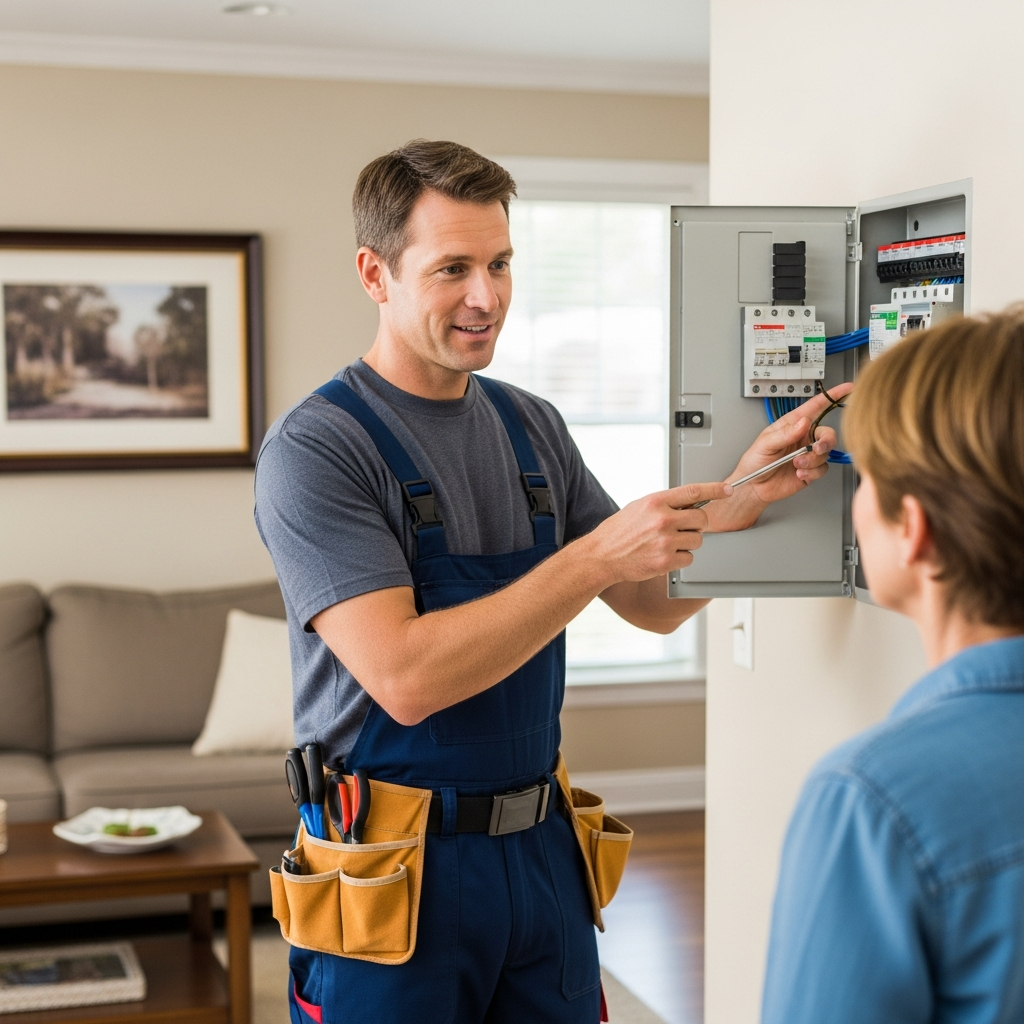
When they do show up, expect them to spend time just looking around before they touch anything. A decent electrician will want to understand your home’s electrical personality – how old it is, what’s been modified over the years, where the main issues seem to be clustering. They’re basically playing detective with your wiring.
The Inspection Process (And Why It Takes Time)
Here’s something that catches people off guard – a thorough electrical inspection isn’t a quick peek-and-poke situation. Your electrician might spend an hour or more just figuring out what’s going on before they even quote you a price.
They’ll probably start at your electrical panel, checking connections, looking for signs of overheating, making sure everything’s labeled properly. Then they’ll work through your house systematically – testing outlets, checking switches, maybe even pulling a few covers off to see what’s hiding behind them.
Don’t be surprised if they find issues you weren’t expecting. It’s like going to the dentist and finding out you need more work than you thought… except with electricity instead of teeth. That flickering light you called about? It might be connected to a bigger wiring problem that’s been lurking in your walls.
Realistic Timelines for Common Fixes
Simple stuff – replacing a faulty outlet or switch – can often happen the same day, assuming they have the parts. We’re talking maybe 30 minutes to an hour of work.
But if you’re dealing with bigger issues like outdated wiring or overloaded circuits? That’s a different story entirely. Adding new circuits usually means a trip to get permits, scheduling an inspection, and potentially cutting into walls. You’re looking at anywhere from a few days to a couple of weeks, depending on how extensive the work is.
Full electrical panel upgrades – which honestly, a lot of older homes need – can take several days. Your power will be off for chunks of time during the work, so you’ll want to plan accordingly. Stock up on ice for your coolers, charge your devices, maybe arrange to stay elsewhere if the timing works out badly.
Getting Multiple Quotes (Yes, Really)
I know, I know – getting quotes is about as fun as scheduling root canals. But electrical work can vary wildly in price, and not all electricians approach problems the same way.
Some might want to rewire your entire kitchen when really you just need a couple of new circuits. Others might suggest a more targeted fix that solves your immediate problem without breaking the bank. Getting two or three opinions helps you figure out what’s actually necessary versus what’s “nice to have.”
Just remember – the cheapest quote isn’t always the best deal. You want someone who’s licensed, insured, and won’t disappear if something goes wrong six months from now.
Living with the Work (And the Mess)
Let’s be real about this part – electrical work can be disruptive. If they need to run new wiring, there might be holes in your walls. Dust. The occasional moment where you’re standing there holding a flashlight while they work in your electrical panel.
Most good electricians will try to minimize the chaos, but some mess is pretty much inevitable. They’ll usually patch any holes they make, though you might be left with some touch-up painting.
After the Work Is Done
Once everything’s finished, you’ll probably get a quick walkthrough of what was done. Don’t be shy about asking questions – where are the new circuits? What should you watch for? When should you schedule your next electrical checkup?
Most reputable electricians guarantee their work for at least a year. Keep those receipts and contact info handy. And honestly? If something seems off after they leave, call them back. Better to check on a weird noise or smell than to ignore it and hope it goes away.
Your electrical system should feel… boring after good work is done. Lights that just work, outlets that don’t make you nervous, circuit breakers that aren’t constantly tripping. Sometimes boring is exactly what you want.
Getting Your Electrical System Back on Track
You know what? After walking through all these potential wiring issues, it might feel a bit overwhelming – like you’ve suddenly discovered your house is held together with electrical duct tape and good intentions. But here’s the thing… most homes have at least one of these problems lurking behind the walls, and you’re definitely not alone in this.
I’ve seen homeowners beat themselves up for not knowing about loose connections or outdated panels, but honestly? Unless you’re an electrician, why would you know that your GFCI outlets need testing every month or that aluminum wiring was basically the house-building equivalent of a bad haircut from the 70s?
The real victory here isn’t becoming an electrical expert overnight – it’s recognizing when something’s not quite right. Maybe it’s that subtle dimming when the dishwasher kicks on, or perhaps you’ve been playing musical chairs with power strips because you never seem to have enough outlets. These aren’t character flaws or signs that you’re failing at homeownership… they’re just clues that your electrical system needs some attention.
And let’s be honest – electrical work isn’t exactly a DIY weekend project. Sure, you might feel confident changing a light fixture (with the power off, obviously), but rewiring circuits or upgrading panels? That’s like trying to perform surgery after watching a YouTube video. Some things are just better left to the professionals.
What I love about addressing these issues is how much relief people feel afterward. It’s not just about preventing flickering lights or avoiding that annoying breaker that trips every time someone uses a hair dryer. It’s about peace of mind – knowing that the invisible network powering your daily life is solid, safe, and ready for whatever you throw at it.
If you’re sitting there thinking about that one outlet that’s been acting weird, or remembering how the lights dimmed during last week’s dinner party… trust that instinct. Your home is probably trying to tell you something, and it’s worth listening.
We’re Here When You’re Ready
Look, I get it – calling an electrician can feel like opening Pandora’s box. What if they find more problems? What if it’s expensive? What if you’ve been living with something dangerous and didn’t even know it?
Here’s what I want you to know: we’ve helped hundreds of homeowners work through electrical issues, from simple outlet additions to complete panel upgrades. We’re not here to judge your DIY attempts or make you feel bad about that extension cord situation in the basement (we’ve all been there).
If any of this resonates with you – if you’ve got questions, concerns, or just want someone to take a look and give you an honest assessment – reach out to us. Sometimes a quick conversation can put your mind at ease, and if there is work needed, we’ll walk you through everything step by step.
Your home should feel safe and comfortable, not like you’re crossing your fingers every time you flip a switch. We’re here to help make that happen.