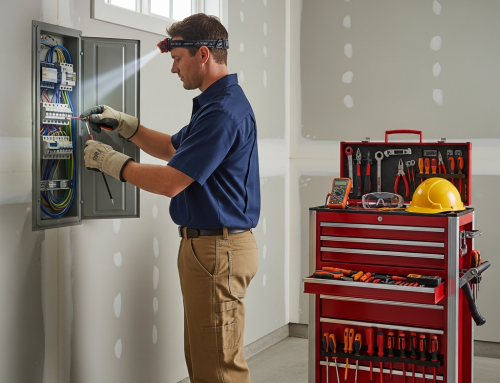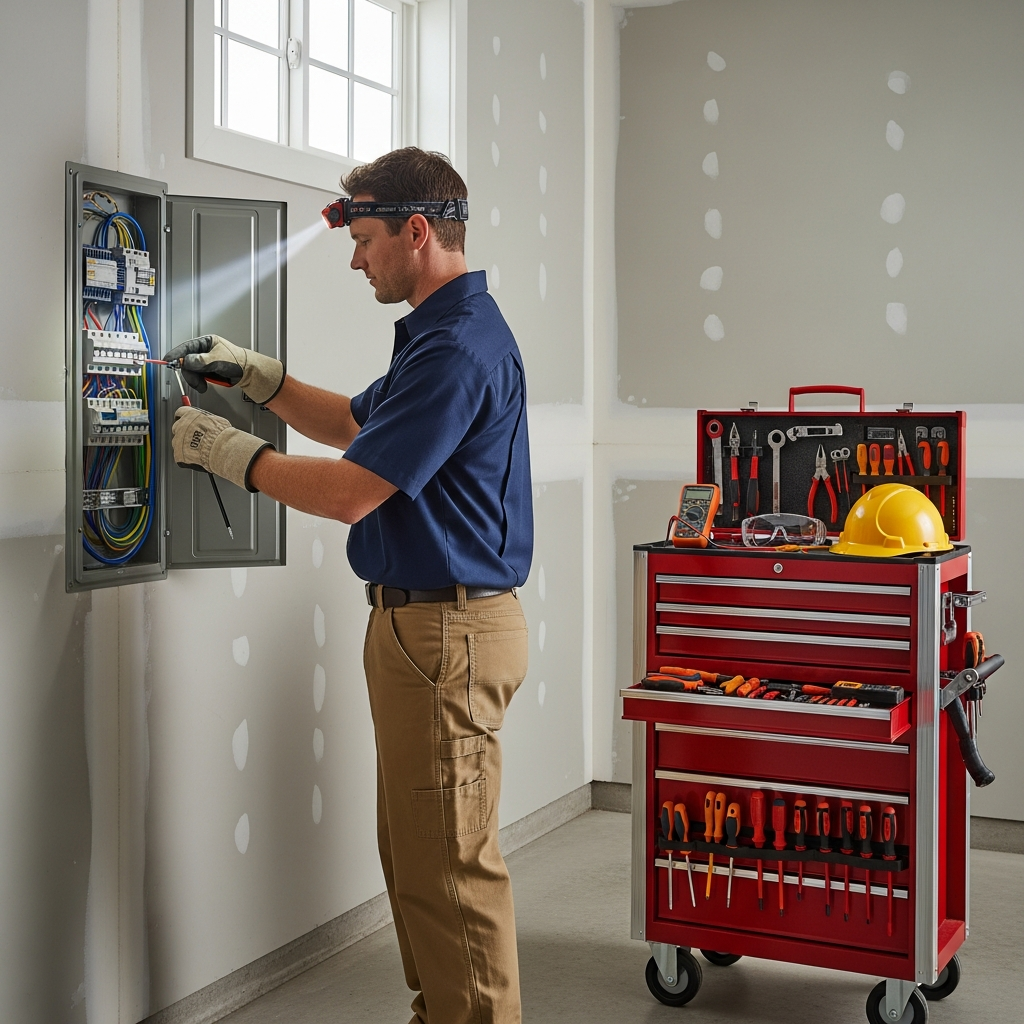
Ridglea Electrical Repairs: Old Homes vs New Builds
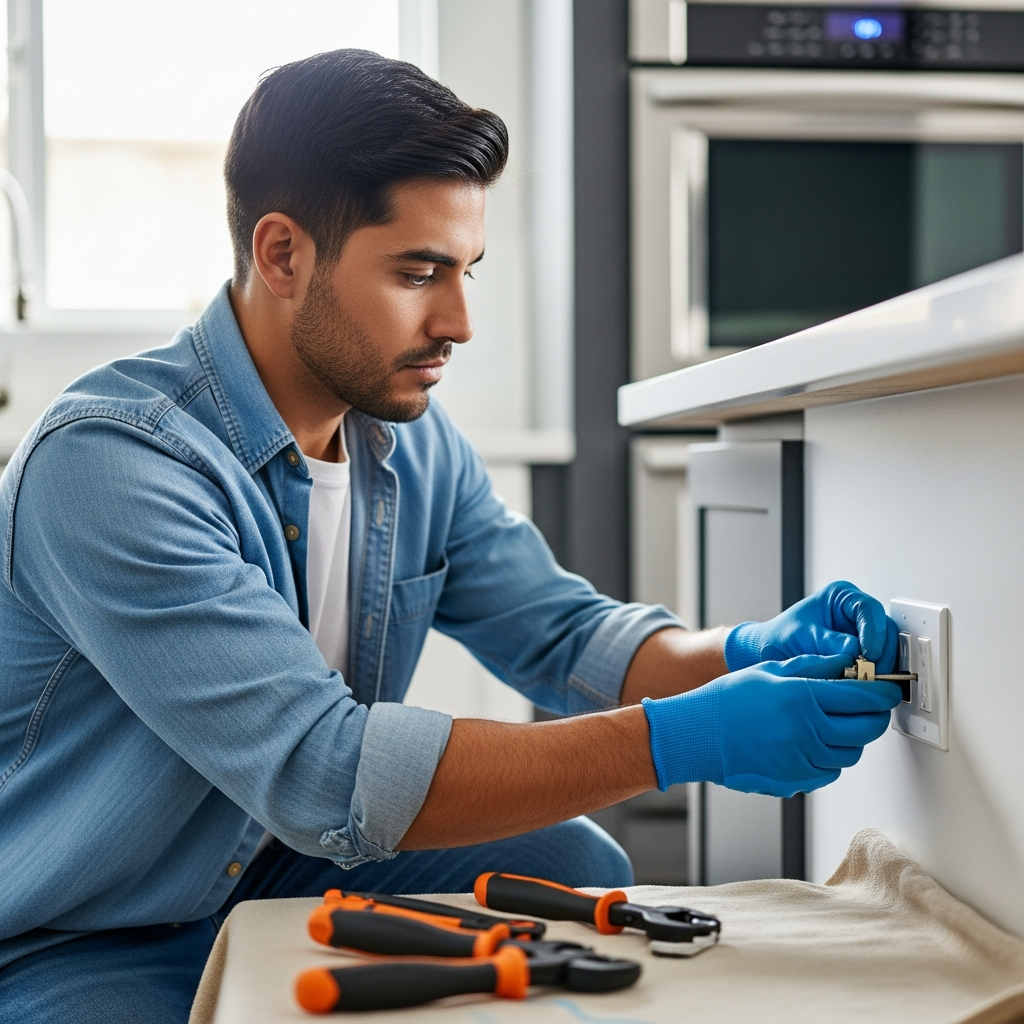
There’s a particular kind of dread that hits when you flip a light switch and nothing happens. Not the casual inconvenience of a burned-out bulb – we’re talking about that deeper, stomach-dropping moment when you realize something’s genuinely *wrong*. Maybe a circuit breaker tripped again. Maybe there’s a faint burning smell you’ve been quietly ignoring for two weeks. Maybe an electrician friend came over for dinner and spent the whole evening side-eyeing your outlet covers with a look you really didn’t like.
Whether you’re living in a charming 1940s craftsman in the older Ridglea North neighborhood or a gleaming new build on the western edge of Fort Worth, that moment of electrical uncertainty hits differently depending on what’s actually hiding inside your walls.
And that difference? It matters more than most homeowners realize.
Why Your Home’s Age Changes Everything
Here’s something worth sitting with for a second. Two homes on opposite ends of Ridglea can look equally well-maintained from the curb – fresh paint, tidy landscaping, updated kitchens – and have electrical systems that are essentially worlds apart. One might be quietly humming along with modern wiring that’ll handle your home office, EV charger, and smart home setup without blinking. The other might be running on infrastructure that was never designed to power anything more demanding than a radio and a few table lamps.
Neither homeowner necessarily *knows* which situation they’re in. That’s the thing that keeps electricians busy.
Old homes carry a kind of electrical history – layers of it, actually – that tells the story of every previous owner’s priorities and, let’s be honest, shortcuts. New builds come with their own set of considerations too, because “new” doesn’t automatically mean “problem-free.” It just means the problems are different.
What You’re Actually Going to Learn Here
This article is going to walk you through the real, practical differences between electrical repair work in older Ridglea homes versus newer construction. Not in a dry, textbook way – but in the way that actually helps you make smarter decisions when something goes wrong (or when you’re trying to prevent something from going wrong in the first place).
We’re going to talk about what warning signs actually mean in an older home – because that flickering light might be a minor fix or it might be evidence of wiring that was already outdated when your parents were teenagers. We’ll cover the specific challenges electricians face when they’re working inside walls that haven’t been opened in decades, and why those challenges translate directly to cost, timeline, and what questions you should be asking.
For newer homeowners, we’ll get into why warranty work and builder-grade electrical components deserve more scrutiny than most people give them. Actually, that reminds me – the number of new-build owners who assume everything is fine because it’s “under warranty” is genuinely surprising. Warranties cover a lot of things. They don’t cover the headaches that come from understanding what you’ve got before problems surface.
The Ridglea Factor
There’s also something specific about this area worth mentioning. Ridglea sits in an interesting position – it’s a neighborhood with genuine historical character bumping up against newer development, which means electrical contractors here regularly navigate both worlds. An electrician doing repeat work in this part of Fort Worth isn’t just troubleshooting generic residential issues. They’re reading homes that have their own personalities, their own quirks, and their own demands.
Knowing how to approach a knob-and-tube system hiding beneath modern-looking renovations is a genuinely different skill set than diagnosing why a two-year-old home’s arc fault circuit interrupters keep tripping. Both matter. Both require expertise. And as a homeowner, understanding the basic framework of each situation makes you a far better advocate for yourself when you’re getting quotes, asking questions, or deciding how urgently something needs attention.
By the time you finish reading, you’ll have a clearer picture of what your home’s electrical system likely needs based on its age, what to watch for before small issues become expensive ones, and how to have a more informed conversation with any electrician you bring in.
Because ultimately, electricity isn’t an area where vague feels okay. It’s one of those things – like your car’s brakes or your roof – where knowing a little more is always worth it.
Why Older Homes and New Builds Are Basically Different Animals
Here’s the thing that surprises a lot of homeowners when they first start thinking about electrical work: it’s not just about age. It’s about *philosophy*. The way a 1940s craftsman bungalow was wired reflects an entirely different set of assumptions about how people live than a 2019 new build does. Back then, nobody was running space heaters, gaming computers, and a whole kitchen full of appliances simultaneously. Electricity was almost… modest. A luxury, really, rather than something every single corner of your life depends on.
New construction is designed from the ground up with modern load demands in mind – more circuits, more outlets, arc fault protection, GFCI outlets in every wet area. The electrical panel in a newer home is essentially already thinking ahead. Older homes? They were built for a world that no longer exists, and they’ve usually been patched, added to, and jury-rigged by a long line of previous owners, some of whom definitely should not have touched the wiring.
What’s Actually Inside Those Walls
If you’re in an older Ridglea home – especially anything built before the 1970s – there are a few specific things worth understanding. The first is knob-and-tube wiring, which sounds quaint because it is. It’s a system of ceramic knobs that hold the wires in place and ceramic tubes where wires pass through wood framing. It actually worked fine for what it was designed for. The problem is that it has no ground wire, it degrades over time, and insulation blown into old walls can cause it to overheat. Not great.
Then there’s aluminum wiring, which was used heavily in the late 1960s and 1970s when copper got expensive. Aluminum expands and contracts differently than copper, which can cause connections to loosen over time and create fire hazards. It’s a little counterintuitive – aluminum conducts electricity just fine, so why is it a problem? The issue is at the connection points, not the wire itself. That’s a distinction that matters.
And then there’s the panel situation. Older homes often have Federal Pacific or Zinsco panels – brands that were popular decades ago but have since been found to have serious reliability issues with breakers not tripping when they should. Electricians in Ridglea flag these constantly. If your home has one of these, it’s not a “someday” problem.
New Builds Have Their Own Quirks (Yes, Really)
You’d think newer construction would be problem-free, and mostly it is – but “mostly” is doing some heavy lifting there. New builds are sometimes wired quickly by crews under deadline pressure, and while everything meets code at inspection, the quality of workmanship can vary. Connections that aren’t quite tight enough, circuits that were planned but not quite thought through for how a real family lives…
There’s also the smart home wiring complexity. Modern homes often have low-voltage wiring for security systems, data, and automation running alongside standard electrical, and when something goes wrong it can be genuinely hard to trace. It’s like having two different road maps printed on top of each other.
The Code Question (This Is Where It Gets Confusing)
Here’s something that trips people up constantly: electrical code isn’t retroactive. If your 1955 home was wired to code in 1955, you’re not automatically required to bring everything up to 2024 standards just because time passed. However – and this is a big however – if you’re doing renovations, adding circuits, or making significant changes, that work has to meet current code. And sometimes updating one thing reveals that everything around it also needs attention.
It’s a bit like pulling a loose thread on a sweater. You meant to fix one small thing…
This is why electrical estimates in older Ridglea homes can sometimes be a moving target. A good electrician will be honest with you about this upfront rather than presenting you with surprise findings mid-project. Ask about it directly before any work starts.
The Ridglea Factor Specifically
Ridglea’s housing stock is genuinely mixed – you’ve got beautiful older homes in the historic areas alongside newer construction further out. That mix means local electricians here deal with the full range regularly, which is actually a good thing. An electrician who only works new construction may not know what they’re looking at inside a 1940s home, and vice versa.
What to Actually Look For Before Calling Anyone
Here’s the thing most electricians won’t tell you upfront – the age of your home changes *everything* about how you should approach electrical problems. Not just the solutions, but the questions you ask, the red flags you watch for, and honestly, how much you should budget.
If you’re in an older Ridglea home – we’re talking pre-1980s, maybe even pre-60s – your starting assumption should be that the system needs a full evaluation before any single repair gets done. Not because something’s definitely wrong, but because piecemeal fixes in older wiring can actually create new hazards. You fix one outlet, but nobody noticed the knob-and-tube wiring feeding it. That’s a problem.
New builds are a different animal. If your home is under 10 years old and something electrical is acting up, it’s almost always one of three things: a tripped AFCI breaker (arc fault circuit interrupter – they’re sensitive), a loose connection from construction settling, or a fixture that was installed wrong from day one. These are usually quick fixes. Don’t let anyone upsell you on a major overhaul if your home is newer.
The Specific Questions to Ask Your Electrician
Don’t just call and say “my lights are flickering.” Get specific, and make them get specific back.
For older Ridglea homes, ask directly: *”Is there any aluminum wiring in this house, and if so, which circuits?”* Aluminum wiring was common in the late 60s and 70s, and it expands and contracts differently than copper – which leads to loose connections over time. A good electrician will know immediately whether your home falls in that risk window.
Also ask: *”What type of grounding system do we have?”* Two-prong outlets everywhere usually means no grounding. That matters a lot if you’re plugging in modern electronics or appliances.
For newer builds, your questions look different. Ask: *”Are my AFCI and GFCI breakers up to current code?”* Codes have changed even in the last five years. If your builder cut corners or your home is from the early 2000s, you might have gaps. Also worth asking – *”Can you check the panel for any double-tapped breakers?”* It’s surprisingly common even in newer construction, and it’s a real safety issue.
Smart Repairs vs. Expensive Mistakes
Here’s where people get burned. In an old home, adding a single new outlet sounds simple. But if that outlet is on a circuit that’s already maxed out, or if the wiring feeding it is degraded, you’ve just put a fresh coat of paint on a car with a failing engine.
The smarter move: Ask for a load calculation on the circuit before any additions. A decent electrician will do this without blinking. If they don’t mention it, bring it up yourself – it signals you know what you’re talking about, and honestly, it changes the whole dynamic of the conversation.
For new builds, the mistake usually runs the opposite direction – people assume everything is fine and ignore small warning signs. A breaker that trips occasionally? That’s not normal, even in a new home. A GFCI outlet that keeps resetting in your bathroom? Don’t just reset it and move on. These are the electrical system telling you something worth listening to.
The Ridglea Factor – Older Neighborhoods Have Hidden Quirks
If you’re in the older parts of Ridglea specifically, there’s something worth knowing: the infrastructure outside your home matters too. Older service drops (that’s the line coming from the utility pole to your house) can be undersized for modern electrical demand. Your panel might be perfectly fine, but if your service entrance wiring is old or undersized, you’ll keep hitting capacity issues.
Ask your electrician to look at the service entrance, not just the panel inside. It’s an easy thing to overlook – and skip – during a routine repair visit.
One Last Thing Worth Remembering
Permits aren’t just bureaucratic hassle. In Ridglea, pulling the proper permits for electrical work protects you when you sell. An unpermitted panel upgrade can genuinely stall a home sale or tank your homeowner’s insurance claim if something goes wrong. Make sure whoever you hire pulls permits for anything beyond the most minor repairs – and if they suggest skipping it to save money, that’s your cue to find someone else.
When Old Houses Fight Back
Here’s the thing nobody tells you when you fall in love with a charming 1940s bungalow – the electrical system inside those beautiful plaster walls is basically a time capsule. And not the fun kind.
Knob-and-tube wiring is probably the biggest headache we see in older Ridglea homes. It’s not just outdated, it’s genuinely incompatible with how we live now. That wiring was designed for a world with a radio, a few lamps, and maybe a refrigerator. Try running a home office, a couple of smart TVs, a gaming system, and an air fryer on it… yeah. The circuit doesn’t stand a chance.
The real solution here isn’t patching. Homeowners get burned – sometimes literally – by the “just add a circuit” approach. If the underlying system is knob-and-tube, you need a licensed electrician to assess whether you’re looking at a partial or full rewire. It costs more upfront. It’s worth it.
And then there’s aluminum wiring – common in homes built between about 1965 and 1973. It expands and contracts differently than copper, which means connections loosen over time. Loose connections mean heat. Heat means fire risk. If your Ridglea home was built in that window, get it looked at. This isn’t scare tactics, it’s just math.
The “New Build” Assumption That Trips Everyone Up
People assume new construction means no electrical problems. That assumption will absolutely cost you money at some point.
New builds in Ridglea – especially the faster-constructed developments – sometimes have issues that aren’t obvious right away. Improperly torqued connections. Missing or incorrectly placed arc fault circuit interrupters (AFCIs). Circuits that were planned for a model home layout and then… sort of retrofitted when the actual build changed. It happens more than builders would like to admit.
The challenge with new construction is that everything looks clean and modern, so there’s a psychological resistance to questioning it. You just spent a significant amount of money on a new house – the last thing you want to hear is “there might be an electrical issue.” But catching a wiring problem at year two is dramatically better than catching it at year twelve when you’re also dealing with drywall damage.
Get a standalone electrical inspection from a third party, separate from your general home inspection. A general inspector is looking at everything. An electrician is looking at *this.*
The Permit Problem (And Why It Matters More Than You Think)
Whether you’re in an old Ridglea craftsman or a newer build, unpermitted electrical work is genuinely one of the trickiest situations to navigate. Previous owners do DIY work, skip the permit, and suddenly that’s your problem when you go to sell – or worse, when something goes wrong.
Tracing unpermitted work is frustrating because there’s no paper trail. The wiring might look fine. It might even function fine. But without knowing who did it, when, and whether it was done to code… you’re essentially flying blind. An electrician can often identify DIY or unpermitted work by the way connections are made, materials used, or how circuits are routed. It doesn’t always show up on a visual inspection though.
The solution – and yes, this is genuinely annoying – is documentation. When you buy a home, ask specifically about electrical permits pulled in the last 10-20 years. If there’s work you can’t account for, budget to have it evaluated before you need it evaluated urgently.
Capacity Creep in Both Home Types
This one sneaks up on everyone. You add an EV charger. Then a home gym. Then a she-shed with its own mini-split. Each addition makes total sense individually. Collectively? You’ve quietly overwhelmed a panel that wasn’t designed for any of it.
Old homes often have 60 or 100-amp service when modern life really wants 200. But newer homes can hit capacity too, faster than people expect.
The honest answer is that a load calculation – something a qualified electrician can do – tells you exactly where you stand. Not guessing, not hoping the breaker holds, actual numbers. If you’re planning any significant addition to your home’s electrical load, start there. It’s usually a relatively quick assessment, and it keeps you from spending money on additions that create bigger problems down the road.
None of this is meant to overwhelm you. Most electrical problems, old home or new, have clear solutions. They just require getting the right eyes on the right problem.
What to Actually Expect When You Call an Electrician
Let’s be honest about something: most people call an electrician expecting a quick fix and end up a little surprised by how involved the process can be. That’s not a criticism of you – it’s just that electrical work, especially in older homes, has a way of revealing itself layer by layer. You pull back one thing and find three more things underneath.
So before you pick up the phone, it helps to know what “normal” looks like.
The First Visit Isn’t Always a Fix
For anything beyond a straightforward repair – a tripped breaker, a single faulty outlet – your first appointment is often an assessment. The electrician needs to see what they’re actually dealing with. In an older Ridglea home especially, that means tracing wiring, checking your panel, and figuring out whether what you’re asking for is even possible given what’s already there.
This visit might take an hour. It might take three. Don’t panic if they don’t start any actual work that day. A good electrician isn’t stalling – they’re gathering information so they don’t create more problems than they solve.
Timelines Vary More Than People Expect
Here’s a rough idea of what different projects look like
Simple repairs (replacing an outlet, fixing a light switch, addressing a single tripped circuit) – often same-day or next-day, typically an hour or two of work.
Panel upgrades or replacements – plan for a full day, sometimes two. There’s also the matter of coordinating with your utility company for the power disconnect, which can add days to the schedule depending on their availability. This isn’t the electrician dragging their feet. It’s just how the utility system works.
Rewiring projects – this is where timelines really stretch. A partial rewire in an older home might take several days. A full rewire? We’re talking one to two weeks, sometimes more, depending on the size of the home and how accessible the walls are. If you’ve got plaster walls instead of drywall, that number can climb.
New construction wiring – actually tends to move faster because everything is accessible. Rough-in wiring before the walls close is a relatively smooth process. Inspections are the main variable here.
Inspections Are Part of the Process, Not a Delay
Speaking of inspections – any permitted electrical work in Fort Worth requires an inspection before the work is considered complete. Some homeowners see this as bureaucratic red tape. It isn’t. The inspection exists to confirm the work was done correctly and safely, and it protects you if you ever sell the home.
Your electrician will schedule this. It’s built into the process. Just know that inspection availability can sometimes add a few days to your overall timeline, especially during busy seasons.
What “Done” Actually Looks Like
For older homes, there’s sometimes a slightly awkward conversation that happens mid-project – the electrician finds something unexpected and needs to update the scope of work. This is genuinely normal, not a bait-and-switch. Old wiring has a way of hiding surprises, and any honest contractor will tell you upfront that their estimate was based on what they could see.
Ask questions if this happens. A good electrician will explain exactly what they found and why it matters. You’re allowed to understand what’s happening in your own home.
For new builds, “done” is usually more predictable – there’s a rough-in phase, a trim-out phase after drywall, and then final inspection. The milestones are clear.
After the Work Is Finished
Once everything’s wrapped up, take a few minutes to do a walkthrough with your electrician before they leave. Test the outlets, check the switches, confirm everything is labeled clearly in your panel. This is also a good time to ask any lingering questions – about what was replaced, what the condition of the rest of your system looks like, or whether there’s anything to watch for down the road.
Keep your documentation. Permits, inspection records, any warranties on materials – file them somewhere you’ll actually find them. If you ever refinance or sell, that paperwork matters more than you’d think.
Electrical work isn’t glamorous and it rarely goes completely according to plan. But knowing what’s realistic ahead of time means you won’t be caught off guard when reality shows up. And it usually does, one way or another.
Whether your home was built last year or has been standing since your grandparents were young, one thing’s true for every homeowner – electrical problems don’t care about your square footage or your zip code. They just show up, usually at the worst possible time, and they demand your attention.
But here’s what we hope you’re taking away from all of this: understanding *why* old homes and new builds face different electrical challenges makes you a smarter, more prepared homeowner. You’re not just waiting for something to go wrong. You’re paying attention. And honestly? That matters more than most people realize.
Older homes in Ridglea have a kind of character that new construction simply can’t replicate – the craftsmanship, the history, the way the light falls through original windows. But that charm sometimes comes with wiring that’s genuinely past its prime. Knob-and-tube, aluminum wiring, panels that were never designed to power a modern kitchen… these aren’t just inconveniences. They’re things worth taking seriously. Not to scare you – just to keep you safe.
New builds have their own set of surprises, which catches a lot of homeowners off guard. You’d think brand-new construction would mean zero problems, right? Not always. Installation issues, components that need settling, systems that haven’t been stress-tested by years of real-world use – it’s a different kind of vigilance, but vigilance all the same.
What ties all of this together is pretty simple, actually. Good electrical health is about consistent attention – knowing your system, recognizing when something feels off, and not talking yourself out of getting it checked because you’re hoping it’ll just… resolve itself. (It usually won’t. We all know this.)
The good news is you don’t have to figure any of this out alone. That’s genuinely what we’re here for.
If you’ve got questions rattling around – maybe you noticed a breaker that trips more than it should, or you’re moving into an older Ridglea home and want to know what you’re working with, or your new build just hit the one-year mark and you want a professional set of eyes on things – reach out. There’s no pressure, no judgment, and no such thing as a question too small. Electrical stuff can feel intimidating, and sometimes people wait too long because they don’t want to seem like they’re overreacting.
You’re not overreacting. Come talk to us.
Our team understands these neighborhoods – the older craftsman bungalows, the newer developments going up, all of it. We’ve seen the full range of what Ridglea homes look like behind the walls, and we bring that local knowledge to every call we get.
So whether you’re troubleshooting something specific, planning an upgrade, or just want a little peace of mind that everything’s in good shape – we’d love to hear from you. Give us a call, send a message, whatever’s easiest. We’ll take it from there, and we’ll make sure you feel informed and confident every step of the way.
Your home takes care of you. It’s worth taking care of it right back.