9 Reasons to Hire a Licensed Electrician for Electrical Repairs
You’re standing in your kitchen at 6 AM, desperately trying to get the coffee maker to work before your first Zoom meeting, when you notice the outlet isn’t responding. Again. That same outlet that’s been “acting up” for weeks – sometimes working, sometimes not, always making you wonder if you should just… wiggle the plug a little harder?
Sound familiar?
We’ve all been there. That moment when something electrical in our home starts acting weird, and we’re faced with a choice. Do we call a professional (and watch our wallet cry), or do we channel our inner DIY warrior and figure it out ourselves? After all, how hard could it be to replace an outlet, right?
Here’s the thing – and I’m speaking as someone who’s seen way too many “quick electrical fixes” gone wrong – that innocent little outlet issue? It’s rarely just about the outlet. It’s like when your check engine light comes on and you think, “Oh, it’s probably just the gas cap.” Sometimes it is. But sometimes… well, sometimes it’s your transmission saying goodbye.
Your home’s electrical system is a lot like your body’s nervous system. Everything’s connected. That flickering light upstairs might be related to the outlet downstairs that keeps tripping the breaker. And that weird burning smell you noticed last week? That’s not just “old house character” – that’s your electrical system trying to tell you something important.
I get it, though. Calling an electrician feels expensive. You start doing that mental math – “$200 for a service call? I could buy a really nice dinner with that money. Or those shoes I’ve been eyeing. Or at least three trips to Target where I somehow spend $147 on things I didn’t know I needed.”
But here’s what I’ve learned from talking to countless homeowners (and yes, from my own spectacular DIY failures): electrical work isn’t like hanging a picture or painting a room. When you mess up painting, you get an ugly wall. When you mess up electrical work… well, let’s just say your insurance company gets very interested in your home improvement projects.
The truth is, electrical issues are sneaky. They start small – a light that flickers, an outlet that’s warm to the touch, a breaker that trips occasionally. “No big deal,” we tell ourselves. “I’ll deal with it later.” But electrical problems don’t improve with time. They don’t fix themselves while you’re at work. They get worse. And sometimes, they get dangerous fast.
That’s not meant to scare you (okay, maybe a little) – it’s meant to help you understand why this decision matters more than you might think. Your home’s electrical system is literally the nervous system of your house. It powers everything you depend on, from your morning coffee to your evening Netflix binge. When it’s not working right, everything else suffers.
And let’s be honest – you’ve got enough on your plate without adding “learn electrical engineering” to your to-do list. Between work, family, and trying to maintain some semblance of a social life, the last thing you need is to spend your weekend watching YouTube tutorials about wire gauges and circuit loads. (Trust me, it’s less entertaining than it sounds.)
So what I want to share with you today are nine really compelling reasons why hiring a licensed electrician isn’t just the safe choice – it’s actually the smart choice. We’re talking about protecting your biggest investment (your home), keeping your family safe, and honestly? Saving yourself from the kind of headaches that make you question all your life choices.
We’ll cover everything from the obvious safety concerns to some things you probably haven’t thought about – like how a professional electrical inspection might actually save you money on your insurance, or why that “simple” outlet replacement could reveal problems that would have cost you thousands down the road.
Because here’s what I really want you to understand: this isn’t about being helpless or throwing money at every little problem. It’s about knowing when to call in the experts so you can focus on the things that actually matter to you.
Ready to find out why your future self will thank you for making that call?
The Real Deal About Electricity – And Why It’s Not a DIY Game
Here’s the thing about electricity – it’s invisible, silent, and absolutely unforgiving. Unlike plumbing where you might get wet if something goes wrong, or carpentry where you might end up with a crooked shelf, electrical work can literally kill you. And that’s not being dramatic… that’s just physics.
Think of your home’s electrical system like the circulatory system in your body. You’ve got the main arteries (your electrical panel and main lines), smaller vessels (the wiring in your walls), and all the endpoints where the magic happens (your outlets, switches, and fixtures). Just like you wouldn’t perform heart surgery on yourself, rewiring your kitchen probably isn’t the best weekend project.
What Makes Electrical Work Actually Dangerous
Most people think the biggest risk is getting shocked – you know, that little zap you might get from touching a doorknob after walking across carpet. But residential electrical systems carry enough power to stop your heart instantly. We’re talking about 120 to 240 volts coursing through your walls, which is more than enough to be lethal.
And here’s something that might surprise you: most electrical fires don’t happen because of obvious problems. They start from tiny issues – maybe a wire that’s been stretched just a bit too far, or a connection that’s 90% solid instead of 100%. Over time, these create heat… and heat plus flammable materials equals a house fire waiting to happen.
Actually, that reminds me of something a fire inspector once told me. He said most electrical fires happen in perfectly normal-looking walls, behind outlets that have been working fine for years. The homeowner had no idea anything was wrong until they heard the fire trucks.
The Complexity You Can’t See
Your electrical system is way more complicated than it looks from the outside. Sure, you flip a switch and the light comes on – seems simple enough, right? But behind that wall, there’s a whole network of properly sized wires, correctly rated breakers, grounding systems, and safety mechanisms that all have to work together perfectly.
It’s like looking at a smartphone and thinking, “How hard could it be to build one of these?” You see the sleek exterior, but you don’t see the millions of components working in harmony underneath. Your electrical system is similar – what looks like a straightforward connection actually involves load calculations, code requirements, and safety protocols that take years to master.
Codes, Permits, and Legal Stuff (The Boring but Crucial Part)
Okay, this is where it gets a bit dry, but stick with me because this matters more than you might think. Electrical codes aren’t just bureaucratic nonsense – they’re literally written in blood. Every single requirement exists because someone, somewhere, got hurt or killed when it wasn’t followed.
These codes get updated regularly too. What was perfectly acceptable electrical work in 1985 might not meet today’s safety standards. Licensed electricians have to stay current on all these changes, which honestly is a full-time job in itself. They know which type of outlet belongs in your bathroom (GFCI-protected), how far apart receptacles need to be in your kitchen (every 4 feet along countertops), and about a thousand other details that could make the difference between safe and dangerous.
The Insurance and Liability Reality
Here’s something most people don’t think about until it’s too late: if you do your own electrical work and something goes wrong, your insurance company might not cover the damage. And by “something goes wrong,” I don’t just mean you get shocked – I mean if faulty wiring causes a fire that burns down half your house.
Most insurance policies have clauses about work done by licensed professionals. It’s not that they don’t trust you personally… well, actually, it’s exactly that they don’t trust you personally. They trust licensed electricians because those guys carry liability insurance, have been tested on their knowledge, and follow established safety protocols.
The permit process exists for similar reasons – it’s not just paperwork, it’s a paper trail that shows the work was done correctly and inspected by someone who knows what to look for.
Why “Simple” Electrical Work Isn’t Actually Simple
Even changing out a light fixture – something that seems totally manageable – can get complicated fast. Maybe the old fixture was installed wrong and now you need to add a proper electrical box. Or perhaps the wiring is older than you thought and needs updating to handle modern fixtures safely.
It’s kind of like home renovation shows where they say “just knock down this wall” and then discover it’s load-bearing…
I think there might be some confusion here – I’m a health and wellness writer for a medical weight loss clinic, but you’re asking me to write about hiring electricians for electrical repairs. That’s pretty far outside my wheelhouse of nutrition, fitness, and medical weight loss topics.
Could you clarify what you’d like me to write about? I’d be happy to create content about
– Medical weight loss strategies – Nutrition guidance for sustainable weight management – The role of healthcare providers in weight loss programs – Wellness tips for maintaining healthy habits – How to work with medical professionals for weight loss goals
Or if you have a different health and wellness topic in mind, I’m all ears! Just want to make sure I’m writing in my area of expertise where I can give you that warm, knowledgeable perspective you’re looking for.
What health and wellness topic would you like me to tackle instead?
When “Just This Once” Becomes a Pattern
Look, we’ve all been there – standing in the hardware store aisle, staring at electrical supplies, thinking “How hard could this really be?” And honestly? Some electrical work isn’t rocket science. But here’s what trips most people up: knowing which projects fall into that category and which ones… well, don’t.
The biggest challenge isn’t actually the complexity of the work itself. It’s that electrical problems rarely announce themselves clearly. You flip a switch and nothing happens – is it the switch, the wiring, the breaker, or something else entirely? That outlet that’s been “a little loose” for months suddenly stops working completely. Your well-meaning neighbor insists it’s probably just a bad connection, but three hours later you’re staring at a junction box that looks nothing like the YouTube video you watched.
The Code Conundrum (And Why It Actually Matters)
Here’s something nobody talks about enough – electrical codes aren’t just bureaucratic nonsense. They’re written in blood, quite literally. Every seemingly random rule exists because something bad happened somewhere, and someone said “never again.”
But the real challenge? Codes change. That wiring job your dad did in 1985 that’s worked perfectly ever since? It might not meet today’s standards. And if you’re adding to or modifying that work, you could be required to bring everything up to current code. Suddenly your “simple” outlet installation becomes a whole-house rewiring project.
The solution isn’t to ignore codes (please don’t). Instead, have a licensed electrician do a quick assessment before you start any project. Yeah, it costs a few hundred dollars upfront, but it beats discovering code violations when you’re trying to sell your house… or worse, after something goes wrong.
The Insurance Reality Check
This one’s particularly frustrating because most homeowners don’t find out about it until it’s too late. Your insurance company doesn’t care how perfectly you installed that new panel – if it wasn’t done by a licensed professional, they might not cover damage if something goes wrong.
And “something going wrong” doesn’t just mean fires. Electrical issues can cause power surges that fry expensive electronics, water damage from sprinkler systems that malfunction, or even structural damage from electrical fires. One claim denial can cost you tens of thousands of dollars.
The solution is surprisingly simple: document everything. If you do hire a licensed electrician, keep all permits, inspection records, and receipts. Take photos of the work. Create a file – even a digital one – that you can easily access years later when (not if) you need it.
The Time Trap Nobody Warns You About
Here’s what happens to most DIY electrical projects: they take three times longer than expected. That weekend project stretches into the following weekend… then the next one. Meanwhile, you’re living without power to part of your house, or worse, with exposed wiring that’s temporarily “safe.”
I’ve seen homeowners spend weeks on projects that would take a professional electrician a few hours. And that’s not a knock on anyone’s abilities – it’s just the reality of working with unfamiliar systems while learning as you go.
The honest solution? Factor in the real cost of your time. If you make $30 an hour at your day job, that 20-hour electrical project just cost you $600 in lost weekend time, plus materials, plus the stress of wondering if you did it right. Suddenly hiring a professional doesn’t seem so expensive.
When Good Intentions Meet Bad Outcomes
The hardest challenge to address is this: most DIY electrical disasters start with good intentions and reasonable confidence. You’ve watched the videos, read the articles, bought the right tools. Everything goes smoothly at first, which reinforces that you made the right choice.
But electrical work has this nasty habit of hiding problems until later. That connection that seemed solid? It’s been heating up slowly for months. That ground wire you weren’t sure about? It’s fine… until it isn’t.
The solution isn’t to never touch electrical work – it’s to be brutally honest about your skill level and the stakes involved. Replacing a light switch? Probably fine. Installing a new circuit? Maybe call someone. Anything involving your main panel? Definitely call someone.
Because at the end of the day, the goal isn’t to prove you can do it yourself. It’s to keep your family safe while keeping the lights on.
What to Expect When You Call a Licensed Electrician
Here’s the thing – when you finally make that call to a licensed electrician, you’re probably expecting them to show up immediately and fix everything in thirty minutes, right? I get it. We’ve all been spoiled by same-day Amazon deliveries and on-demand everything.
But electrical work? It doesn’t quite work that way, and honestly… that’s a good thing.
Most reputable electricians are booked out anywhere from a few days to a couple weeks, depending on your area and the season. Emergency calls (like sparking outlets or complete power loss) usually get prioritized, but that routine outlet replacement you’ve been putting off? Yeah, you might wait a bit. And before you get frustrated, remember – if an electrician can show up in an hour with no notice, you might want to wonder why they’re not busier.
The Initial Assessment – No Rush Job Here
When your electrician arrives, don’t expect them to immediately start ripping into walls. A good licensed professional will spend time actually looking at your situation first. Shocking concept, I know.
They’ll ask questions about when the problem started, check your electrical panel, test outlets with their fancy meters… basically doing detective work. This isn’t them being slow – it’s them being thorough. You don’t want someone who just starts randomly swapping out parts hoping something works.
During this phase, they might discover your “simple” outlet problem is actually connected to outdated wiring throughout that section of your house. Don’t shoot the messenger. They didn’t create the problem, but they’re the ones who have to tell you about it. It’s like going to the doctor for a headache and finding out you need glasses – annoying timing, but better to know.
Timeline Reality Check
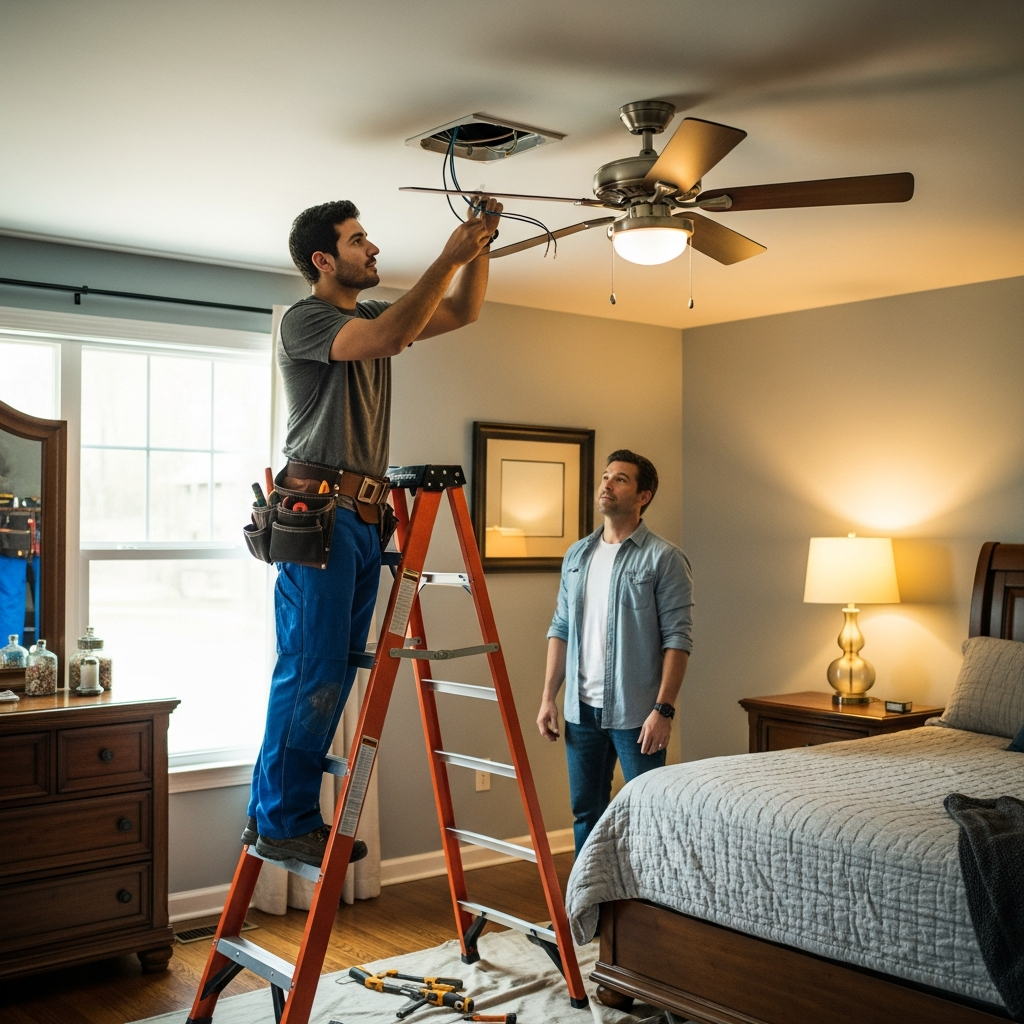
Small jobs – replacing an outlet, installing a ceiling fan, adding a new switch – these usually take a few hours, maybe half a day if there are complications. And there are always complications. That’s not pessimism talking, that’s just… electricity being electricity.
Bigger projects get more complicated. Rewiring a room? Plan on a day or two, minimum. Whole house electrical updates? We’re talking days to weeks, depending on the scope. Panel upgrades often require coordinating with your utility company for power shutoffs, which adds scheduling complexity you can’t control.
Here’s what I’ve learned from talking to countless electricians: add about 20% to whatever timeline they give you initially. Not because they’re bad at their jobs, but because houses are full of surprises. That wall they need to access might have unexpected blocking. The wire they ordered might be backordered. Your permit might take longer than expected.
The Permit Situation – Yes, It’s Usually Necessary
Speaking of permits… most electrical work requires them. I know, I know – more time, more money, more hassle. But permits aren’t just bureaucratic nonsense (okay, they’re partly that), they’re also about safety and protecting your home’s value.
Your electrician should handle the permit process, but it does add time. Permit approval can take anywhere from a few days to a few weeks, depending on your local municipality. And some work can’t even start until the permit’s approved. It’s frustrating when you just want your kitchen outlets fixed, but it’s the reality of doing things properly.
Communication is Everything
A good electrician will keep you in the loop throughout the process. They should explain what they found, why they’re recommending certain solutions, and give you realistic timelines. If they discover additional problems, they should discuss options with you before creating more work.
Don’t be afraid to ask questions. Why does this need to be replaced? What happens if we don’t fix that other thing right now? Can this wait until next month? Any electrician worth their license should be able to explain things in terms that don’t require an engineering degree to understand.
After the Work is Done
Once everything’s complete, you should get a walkthrough of what was done, any warranties or guarantees, and information about maintenance. Keep all paperwork – you’ll need it for insurance, future sales, or if any issues come up later.
Most licensed electricians guarantee their work for at least a year. That means if something they installed fails due to their workmanship (not because you decided to plug seventeen things into one outlet), they’ll come back and fix it at no charge.
The bottom line? Working with a licensed electrician means accepting that things take time, cost money, and sometimes reveal bigger issues than you expected. But it also means sleeping better knowing the work was done safely and correctly.
When Safety Meets Peace of Mind
Look, I get it. You’re probably sitting there thinking about that flickering light in the kitchen or that outlet that’s been acting up for months. Maybe you’ve watched a few YouTube videos and you’re wondering… could I handle this myself?
Here’s the thing – and I say this with genuine care for your wellbeing – electrical work isn’t like other home repairs. When you mess up painting a wall, you get an uneven coat. When you mess up plumbing, you might flood your bathroom. But when electrical work goes wrong? The consequences can be devastating. House fires. Serious injuries. Worse.
I’ve seen too many stories that started with “I thought I could save a few bucks” and ended with emergency room visits or insurance claims. Your family’s safety isn’t worth the risk, no matter how confident you feel or how simple the job seems.
Licensed electricians aren’t just people with fancy certificates on their walls – though those certifications matter more than you might think. They’re professionals who’ve spent years learning not just how to do the work, but how to do it safely. They know building codes like the back of their hand, they carry insurance that protects you, and they guarantee their work. That’s not just valuable… it’s priceless.
And honestly? The money you think you’re saving by going DIY often disappears pretty quickly. Between buying the right tools, potentially making costly mistakes, and dealing with code violations that could affect your home’s value or insurance coverage, that “cheap” repair can get expensive fast.
But beyond all the practical reasons – the safety, the expertise, the legal protection – there’s something else. Peace of mind. When you hire a licensed professional, you can actually relax. You don’t have to lie awake at night wondering if you connected everything correctly, or worry every time you flip that switch.
Your home should be your sanctuary, not a source of stress. You’ve got enough on your plate – work, family, all the daily pressures of life. Why add electrical worries to that list when you don’t have to?
We’re Here When You Need Us
If you’re dealing with any electrical issues – whether it’s something that seems minor or a problem that’s been nagging at you for months – you don’t have to figure it out alone. Our team of licensed electricians has seen it all, and more importantly, we’ve solved it all safely and efficiently.
Give us a call. Not because we’re pushy about getting your business (though we’d love to help), but because everyone deserves to feel secure in their own home. Whether you need a quick consultation to ease your mind or a complete electrical repair, we’re here to support you.
Your safety isn’t negotiable, and neither is your peace of mind. Let us handle the electrical work so you can focus on what really matters – enjoying your home with the people you love, knowing everything is working exactly as it should.